Cereal Box-Sized Telescope Finds Planets That Could Host Life
A space telescope the size of a cereal box just captured its first images of distant stars, bringing us closer to understanding which planets beyond Earth might support life. NASA's SPARCS CubeSat is now scanning the galaxy for clues about 50 billion potentially habitable worlds.
A tiny telescope no bigger than a family-sized cereal box just opened its eyes in space and immediately started hunting for signs of life across the galaxy.
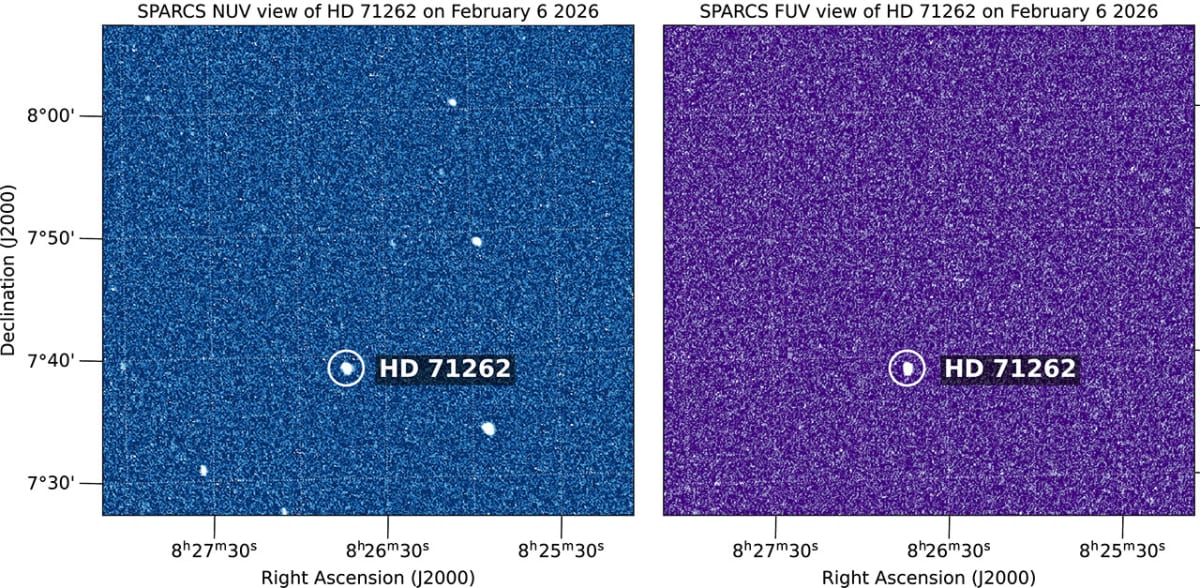
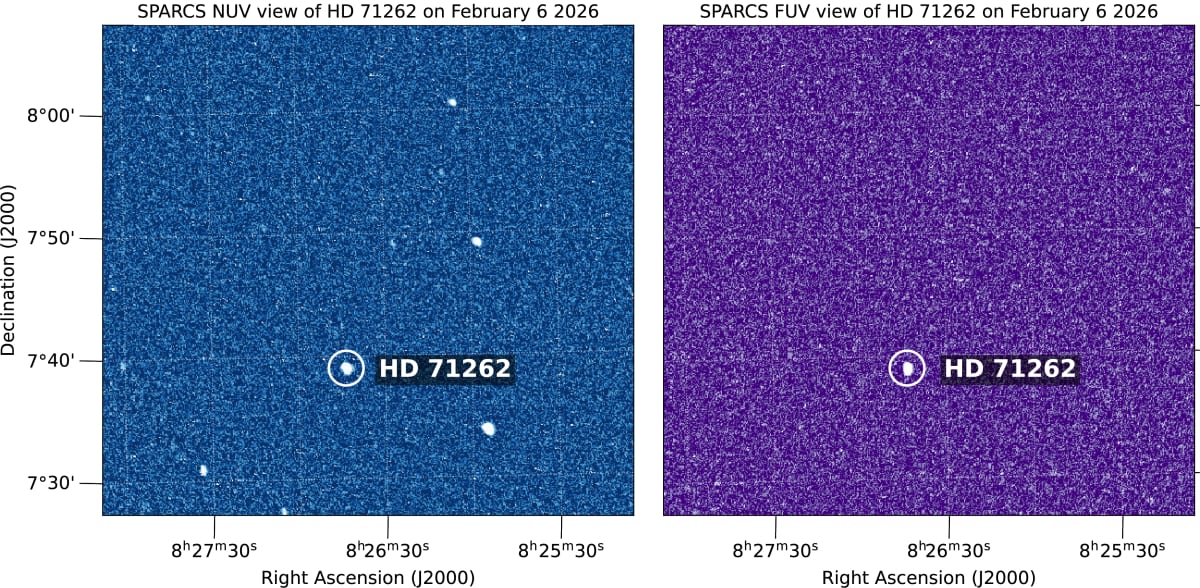
NASA's SPARCS spacecraft sent home its first images on February 6, just three weeks after launching into orbit. The photos show stars glowing in ultraviolet light, revealing their temperatures and behavior in ways never before possible.
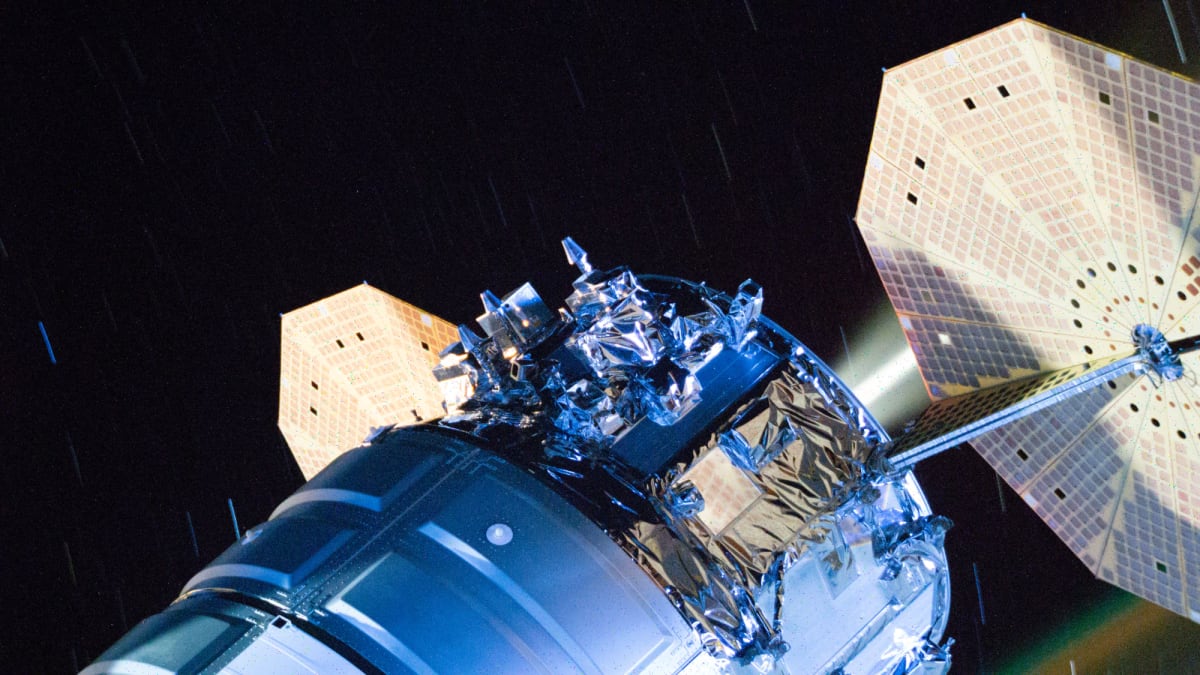
SPARCS stands for Star-Planet Activity Research CubeSat, and despite its small size, it's tackling one of astronomy's biggest questions. The telescope will spend the next year watching about 20 small stars to understand which of their orbiting planets might be friendly to life.
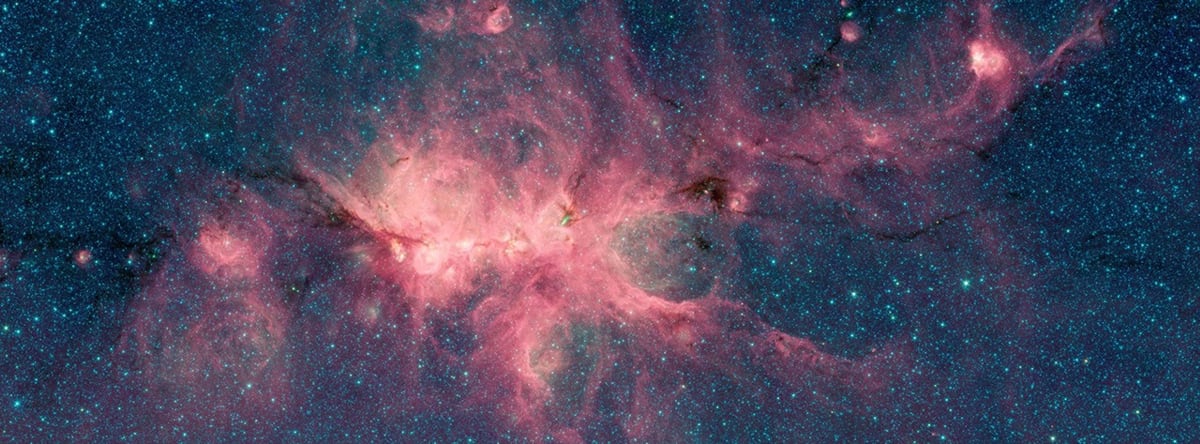
These aren't just any stars. Low-mass stars make up the majority of our Milky Way galaxy, and they host roughly 50 billion rocky planets in the habitable zone where liquid water could exist. That's 50 billion worlds where the conditions might be just right for life to emerge.
The challenge is that these stars can be temperamental. They throw off flares and sunspot activity that could either nurture life or make it impossible. SPARCS will monitor each target star for anywhere from five to 45 days, watching for these outbursts in both near and far ultraviolet light simultaneously.
What makes this tiny telescope special is its revolutionary camera technology. Engineers at NASA's Jet Propulsion Laboratory created filters that sit directly on the light detectors, eliminating bulky separate parts. This makes SPARCS one of the most sensitive ultraviolet observatories ever launched, all packed into a 10-pound package.
Arizona State University leads the mission, which launched aboard a SpaceX Falcon 9 rocket on January 11. The project came together through NASA's CubeSat Launch Initiative, a program that makes space exploration more accessible and affordable.
Why This Inspires
This mission proves that world-changing science doesn't require massive budgets or building-sized equipment. A cereal box with the right technology can peer across the cosmos and help answer whether we're alone in the universe.
The data SPARCS collects will help future missions know exactly where to look for signs of life. Every flare it captures, every temperature reading it sends home, brings us one step closer to finding our cosmic neighbors.
Young scientists and students helped design and build this spacecraft, gaining hands-on experience that will shape the next generation of space exploration. They're proving that big dreams can fit in small packages.
The universe just got a little less mysterious, thanks to one tiny telescope with an enormous mission.
More Images
Based on reporting by NASA
This story was written by BrightWire based on verified news reports.
Spread the positivity!
Share this good news with someone who needs it