China's Tianwen-2 Reaches Asteroid After 400-Day Journey
After traveling through space for more than a year, China's Tianwen-2 probe has reached a tiny asteroid orbiting near Earth to collect samples that could unlock secrets about how our solar system formed. The mission marks China's first attempt to bring back pieces of an asteroid, joining the US and Japan in this exciting frontier of space exploration.
A Chinese spacecraft has reached a small asteroid traveling alongside Earth, ready to collect samples that could reveal how our solar system came to be.
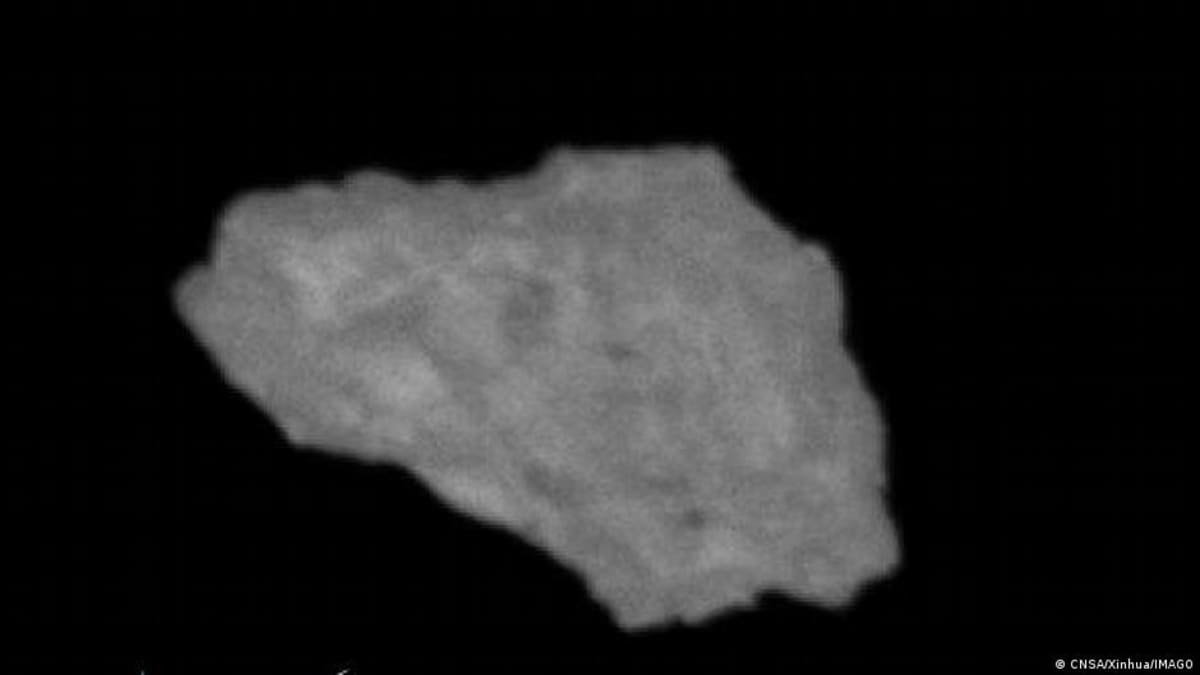
The Tianwen-2 probe arrived at the asteroid Kamo'oalewa on Monday after a 400-day journey through space. The China National Space Administration announced the spacecraft is now positioned just 12 miles from the tiny space rock, which measures only a few dozen meters across.
Scientists believe asteroids hold clues to understanding our cosmic origins. These rocky bodies have remained largely unchanged since the solar system formed billions of years ago, making them like time capsules floating in space.
Kamo'oalewa is special because it's a quasi-satellite of Earth. Discovered in Hawaii in 2016, it orbits the sun at roughly the same distance as our planet, traveling in near sync with Earth's own path around the sun.
The probe will now study the asteroid up close, gathering data about its shape, what it's made of, and its internal structure. This information will help the team plan how to safely collect samples from its surface.
Once the samples are secured, Tianwen-2 will release a module to carry them back to Earth. That precious cargo is expected to arrive home in late 2027, giving scientists their first chance to study material from this particular space rock.
But the mission won't end there. After completing its work at the asteroid, the main spacecraft plans to continue traveling toward a comet in the asteroid belt, extending its mission to about a decade total.
China launched Tianwen-2 in May 2025 as part of an ambitious space program that has received billions in funding over recent years. The country is working to catch up with the United States and Europe in deep space exploration, pushing beyond missions to the moon.
Why This Inspires
This mission represents more than a technological achievement. It's part of humanity's collective effort to understand our place in the universe. While the US and Japan have already collected samples from different asteroids, each mission teaches us something new about the materials that formed our solar system.
The collaboration of nations pushing into deep space shows how exploration can inspire progress. These missions don't just advance science; they demonstrate what becomes possible when we invest in understanding the cosmos around us.
When those samples return to Earth in 2027, scientists worldwide will have new opportunities to study ancient materials that witnessed the birth of planets. Every mission brings us closer to answering fundamental questions about where we came from and how Earth became the life-supporting planet we call home.
Based on reporting by DW News
This story was written by BrightWire based on verified news reports.
Spread the positivity!
Share this good news with someone who needs it