Cities Transform How Urban Animals Connect and Communicate
New research reveals that 92% of studies show city life significantly changes how animals interact, from mating calls to social bonds. Scientists now say urban planning must consider wildlife social needs to protect species long-term.
Cities aren't just changing where animals live. They're fundamentally reshaping how they talk, bond, and survive together.
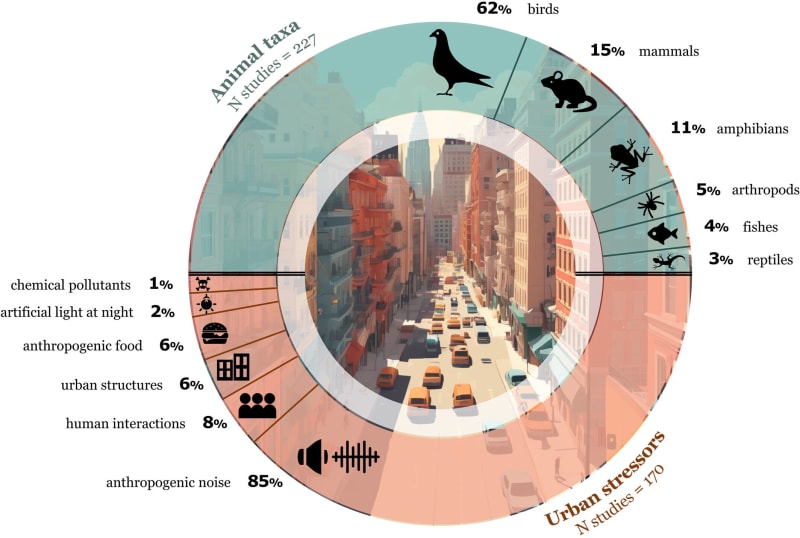
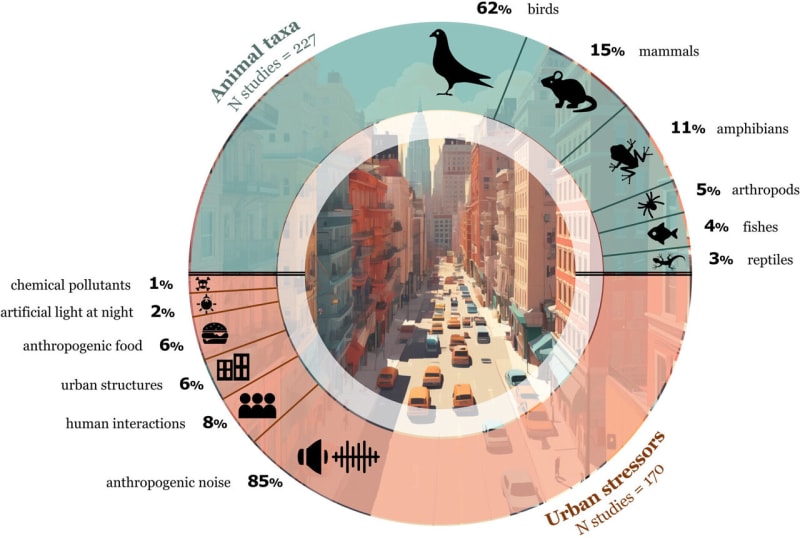
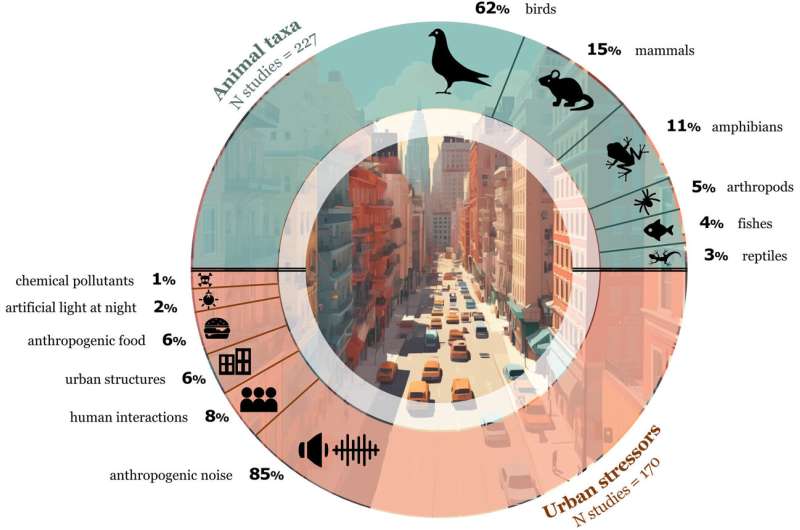
A groundbreaking review from Bielefeld University analyzed 227 studies and found something remarkable: urban environments dramatically alter the social lives of nearly every species studied. From birds adjusting their songs to be heard over traffic to mammals forming smaller, less stable groups, city animals are adapting their most basic behaviors just to cope.
"Cities interfere with animals' social relationships far more strongly than previously assumed," says researcher Avery Maune. These aren't minor tweaks. Social behavior determines whether animals find mates, locate food, or escape predators.
The research team discovered that noise pollution is one of the biggest disruptors. Traffic sounds drown out alarm calls that warn of danger and mask courtship songs used to attract mates. Artificial light at night confuses natural rhythms, while sealed surfaces and chemical pollution create barriers that fragment animal communities.
The consequences ripple outward in unexpected ways. Some species develop entirely new mating strategies to work around urban obstacles. Others see their tight-knit social groups break apart, leaving individuals more vulnerable and less likely to reproduce successfully.
The Bright Side
This research is already changing how urban planners think about city design. Dr. Isabel Damas-Moreira, who led the study, emphasizes that cities of the future must be habitats for all species, not just humans.
The findings open doors for smarter development. Quieter road surfaces could help animals communicate better. Strategic placement of green corridors might keep social groups connected. Even simple changes like reducing nighttime lighting in key areas could help preserve natural behaviors.
Scientists are now working to fill crucial knowledge gaps. While 62% of studies focused on birds, other groups like insects and reptiles remain understudied. Understanding how different species respond to urban pressures will help cities support diverse wildlife.
The research comes from the Joint Institute for Individualization in a Changing Environment, where teams study how animals and plants adapt to human-altered landscapes. As cities continue expanding globally, this work becomes more urgent.
But there's genuine hope here. We're learning that supporting urban wildlife isn't about turning back time. It's about designing cities that work for everyone who calls them home.
More Images


Based on reporting by Phys.org
This story was written by BrightWire based on verified news reports.
Spread the positivity!
Share this good news with someone who needs it