Denmark Unearths 2,000-Year-Old Temple With Egyptian Beads
Archaeologists in Denmark just discovered a spectacular Iron Age temple complex hidden beneath a quiet meadow for 2,000 years. The site reveals an ancient power center with stunning connections to Egypt and the Mediterranean world.
A peaceful grassland in central Denmark has been hiding one of the most spectacular Iron Age discoveries in decades.
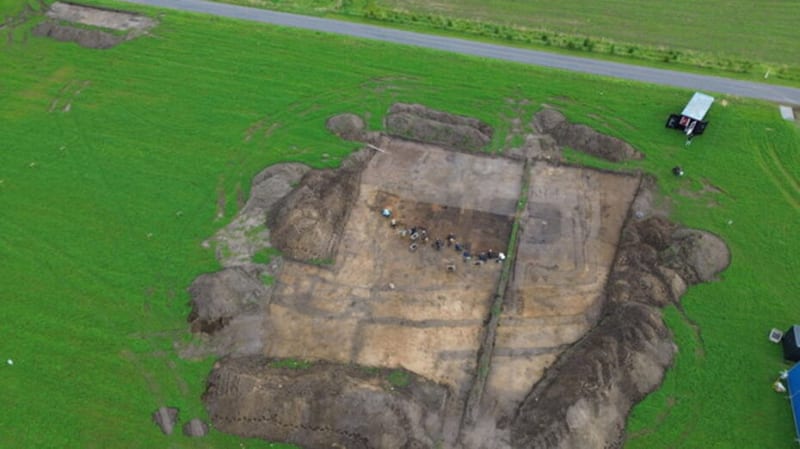
Archaeologists at Museum Midtjylland just confirmed what lay beneath a quiet meadow at Hedegård: a 2,000-year-old temple complex, fortified settlement, and elite workshops that reveal an ancient Scandinavian power center with global reach. The site dates to around the time of Christ and has survived almost untouched by modern farming, a stroke of luck researchers call extraordinary.
The journey started in 1986 when archaeologist Orla Madsen uncovered burial grounds filled with weapon graves signaling high status and power. After decades of paused research, the team resumed work in 2016, but the real breakthrough came in summer 2023 when they realized the burials were just one piece of a far larger puzzle.
At the heart of the settlement sits a nearly rectangular temple measuring about 15 by 16 meters. Strong wooden posts formed a covered colonnade around a smaller inner building with walls of split planks and clay. Inside, a raised ceremonial hearth decorated with stamped ornaments suggests this was a place of ritual power, not everyday life.
"Everything at Hedegård is bigger and wilder than usual," museum inspector Martin Winther Olesen told Danish media. "When we talk about this site, nothing is ordinary."
The timing matters deeply. Around this period, the Roman Empire was expanding northward into Germany, reaching alarmingly close to Denmark. The massive defensive structures surrounding the temple may have been a direct response to Roman military pressure, built using Roman-inspired architectural principles that show both awareness and strategic planning.
Why This Inspires
The most breathtaking discovery came from inside the burned temple remains: two rare glass beads left behind after the building was ritually destroyed by fire.
One turquoise-blue bead, about 4 centimeters long, originated in Egypt. The other delicate gold-foil bead came from the Levant in the eastern Mediterranean. Glass beads are extremely rare in early Iron Age Scandinavia, making these finds exceptional proof of long-distance connections.
"Through Hedegård, we now see direct connections from Jutland to the Mediterranean world," researchers noted. These tiny treasures traveled thousands of kilometers to reach Denmark 2,000 years ago, evidence of trade networks and cultural exchange that spanned continents.
Within the fortified walls, workshops for gold, bronze, iron, and amber craftsmanship showed this wasn't just a religious site. Combined with elite residences and weapon production, Hedegård emerges as a rare combination of political authority, ritual power, and economic strength during the Early Iron Age.
This gives modern researchers their first real picture of what religious buildings from this period actually looked like. Until now, the only examples were several hundred years younger, making the Hedegård temple a window into a previously invisible world.
The site now ranks among the most important Iron Age power centers ever found in Denmark, comparable to major settlements in Central Europe and proving that ancient Scandinavia was far more connected to the wider world than previously understood.
Based on reporting by Google: archaeological discovery
This story was written by BrightWire based on verified news reports.
Spread the positivity!
Share this good news with someone who needs it
%2Fhttps%3A%2F%2Ftf-cmsv2-smithsonianmag-media.s3.amazonaws.com%2Ffiler_public%2F4e%2F9f%2F4e9f0fe8-aa48-438a-b88f-3a29cd71107e%2Fhttps___wwwfrontiersinorg_files_articles_1758862_xml-images_fmats-13-1758862-g001.jpeg)
%2Fhttps%3A%2F%2Ftf-cmsv2-smithsonianmag-media.s3.amazonaws.com%2Ffiler_public%2F8e%2F83%2F8e837bc6-e2b3-4bb6-bb1c-4f1287b45a6f%2Fcastillo-39-rincon_de_los_signos.jpg)