Drone Captures World's First Humpback Whale Birth on Video
A commercial drone pilot in Australia filmed a humpback whale giving birth off the coast, capturing what researchers believe is the first complete drone footage of this rare event. The stunning moment celebrates one of conservation's greatest comebacks, as humpback populations have rebounded from near extinction to nearly 50,000 along Australia's coast.
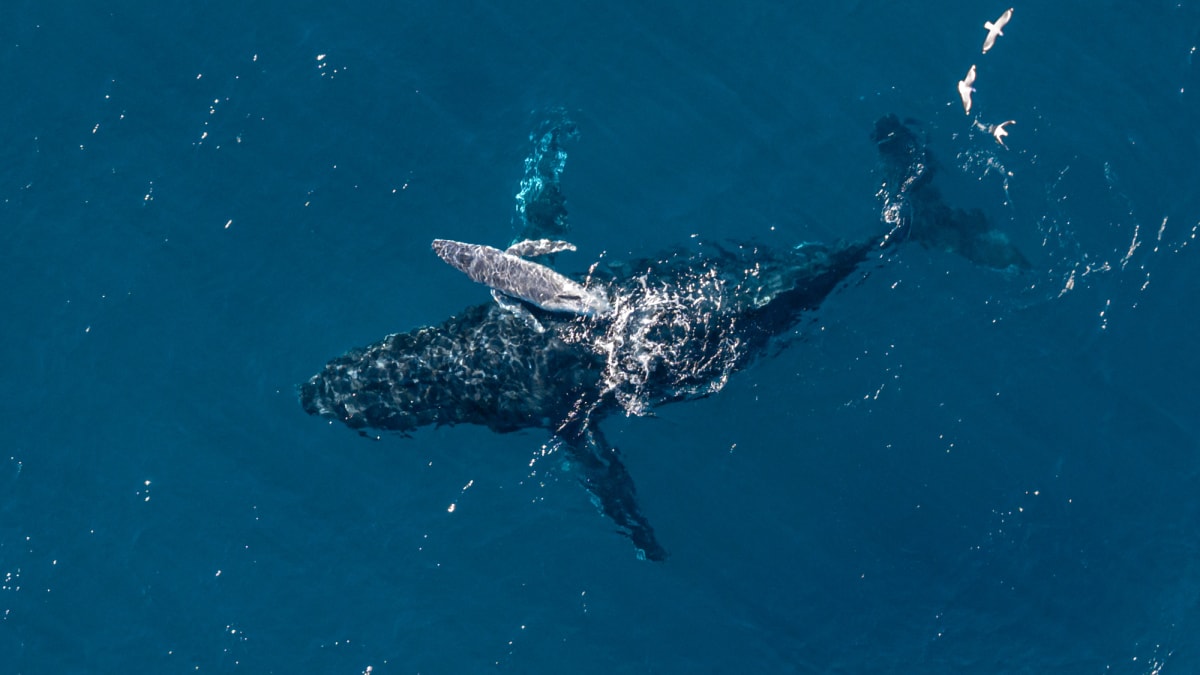
Alexander Forrest was flying his drone off the New South Wales coast when he noticed something extraordinary: a humpback whale swimming unusually slowly, trailing behind her pod.
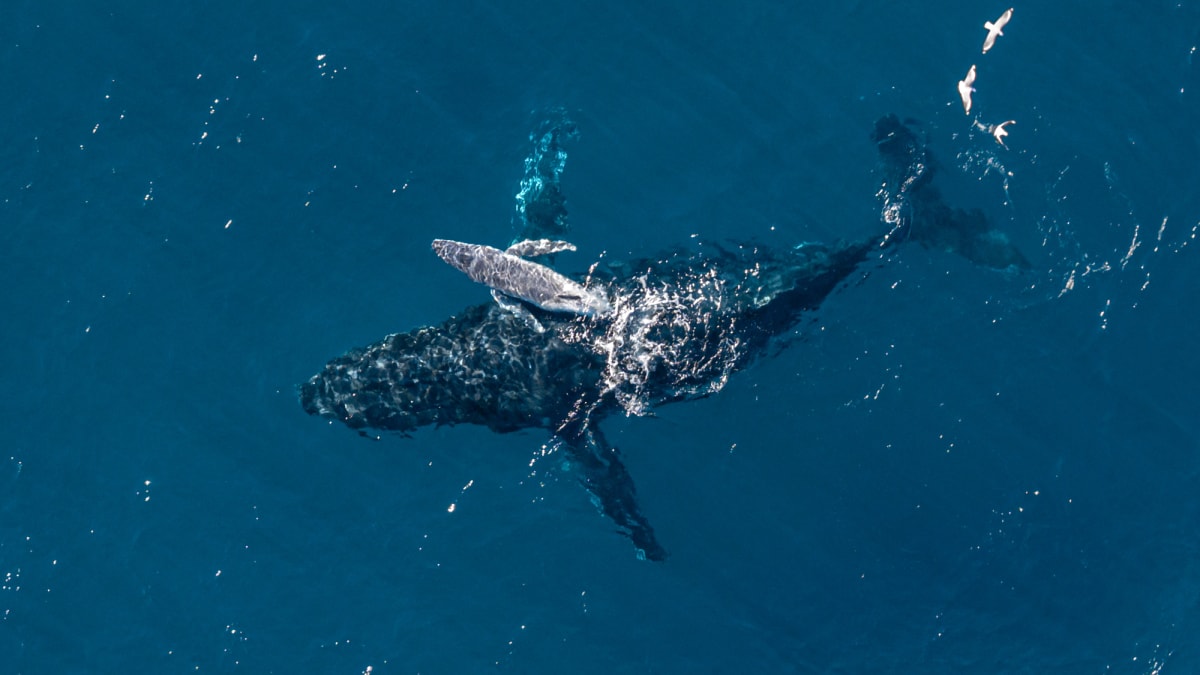
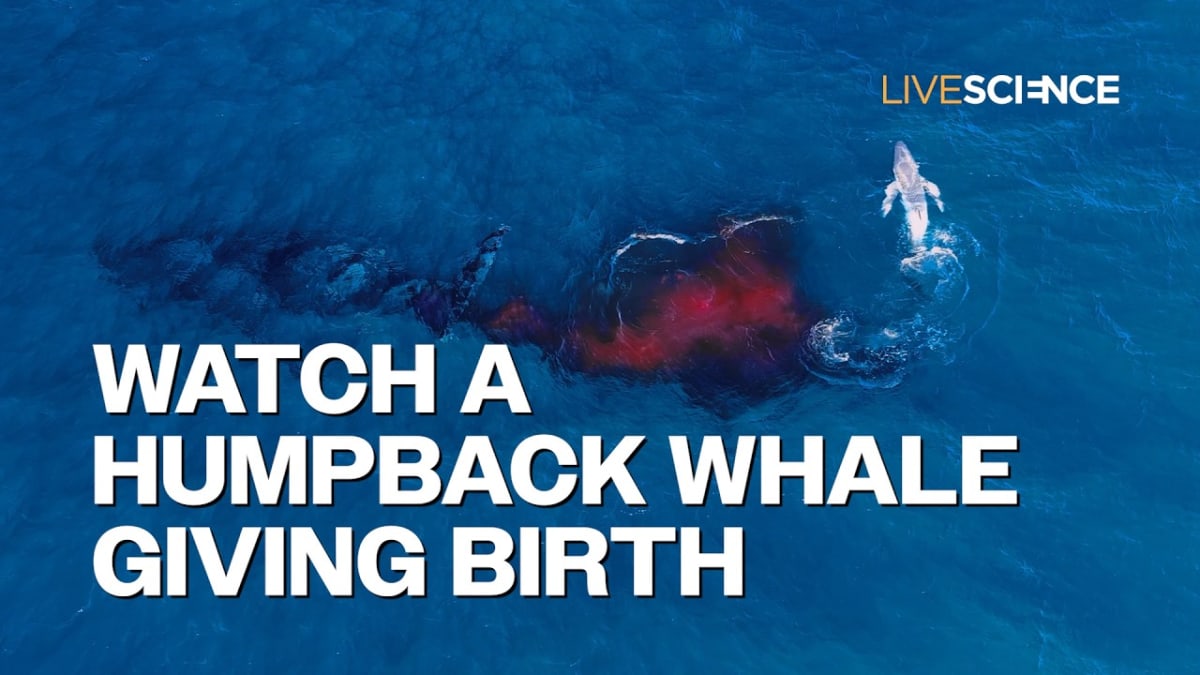
Moments later, on July 28, the commercial drone pilot watched through his camera as the whale gave birth. The footage shows the newborn calf surfacing from blood-reddened water for its first breath before the mother turns back to reunite with her baby.
"It's incredibly rare to see a moment like this in the ocean," Forrest told Live Science. This marks only the fourth time any humpback whale birth has been filmed and the first complete birth captured by drone.
Forrest works with the Organisation for the Rescue and Research of Cetaceans in Australia, a nonprofit focused on marine mammal welfare. He was conducting routine aerial observations of migrating humpbacks about 0.4 miles from shore at Kingscliff when he witnessed the birth.
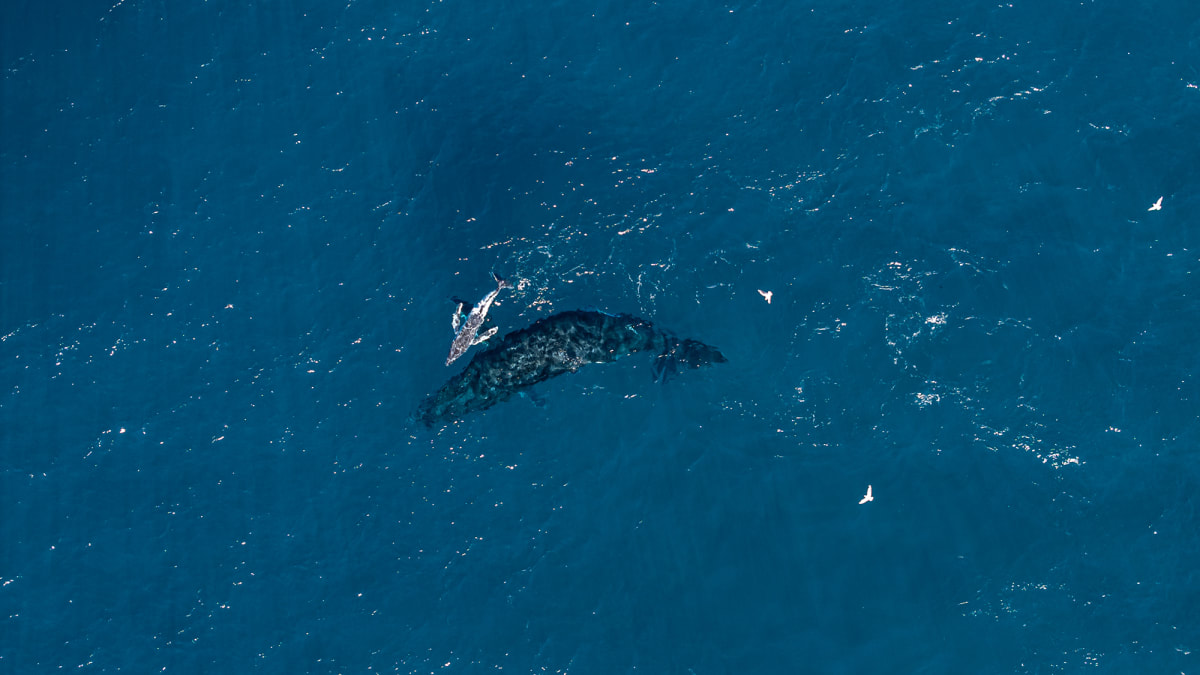
The footage reveals fascinating details about whale motherhood that scientists rarely get to observe. Unlike other documented whale births where pod members formed protective circles, this mother gave birth alone while her pod swam ahead.
Why This Inspires
This remarkable moment represents more than just rare footage. It's living proof of one of history's most successful conservation efforts.
Humpback whales were hunted to the brink of extinction, but decades of protection have allowed their populations to soar. Along the New South Wales coast alone, nearly 50,000 humpback whales now thrive where they once faced disappearance.
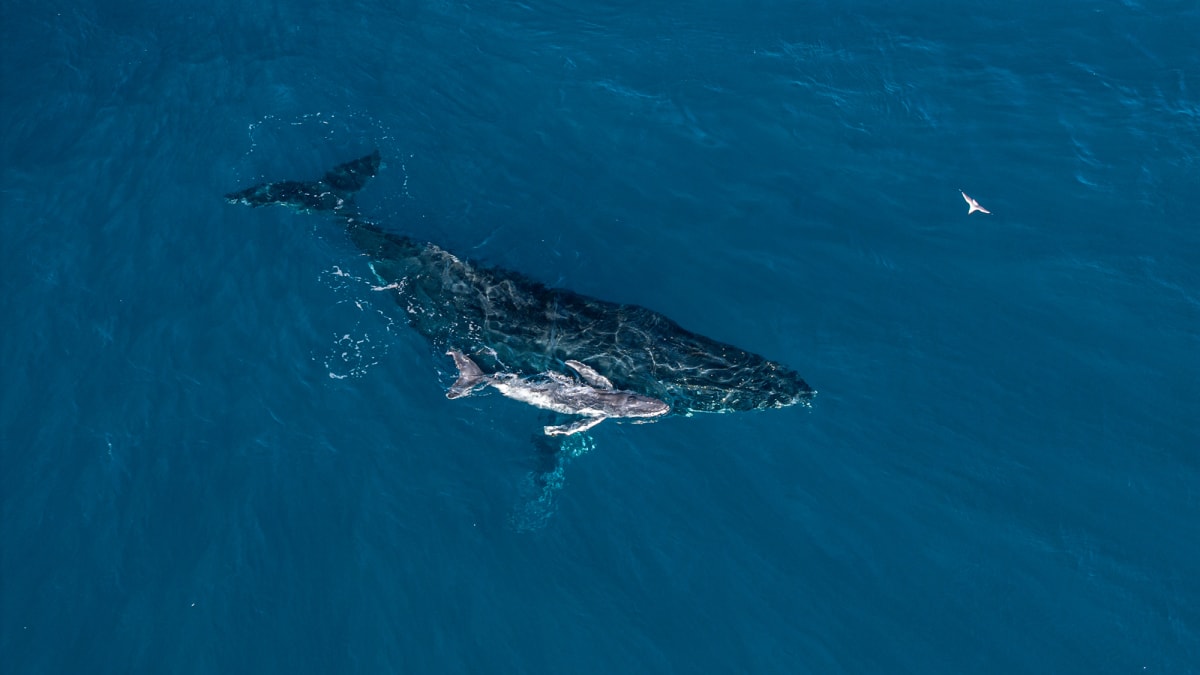
The newborn calf weighs up to 1.5 tons and measures roughly 10 to 16 feet long. Over the next 11 months, it will stay close to its mother, drinking nutrient-rich milk and gaining 100 pounds daily while learning critical survival behaviors like proper breathing at the surface.
This mother-calf bond will prepare the baby for one of nature's most impressive journeys. Humpback whales migrate up to 5,000 miles each way between polar feeding grounds and tropical breeding waters, making it one of the longest migrations of any mammal.
Scientists will now analyze the footage for peer-reviewed publication, comparing this solitary birth with other observations. The data will help researchers better understand where humpbacks give birth, what happens during delivery, and how mothers care for newborns in those critical first moments.
Every frame of this footage adds to our understanding of these magnificent creatures and reminds us that dedicated conservation efforts can bring species back from the edge.
More Images
Based on reporting by Live Science
This story was written by BrightWire based on verified news reports.
Spread the positivity!
Share this good news with someone who needs it