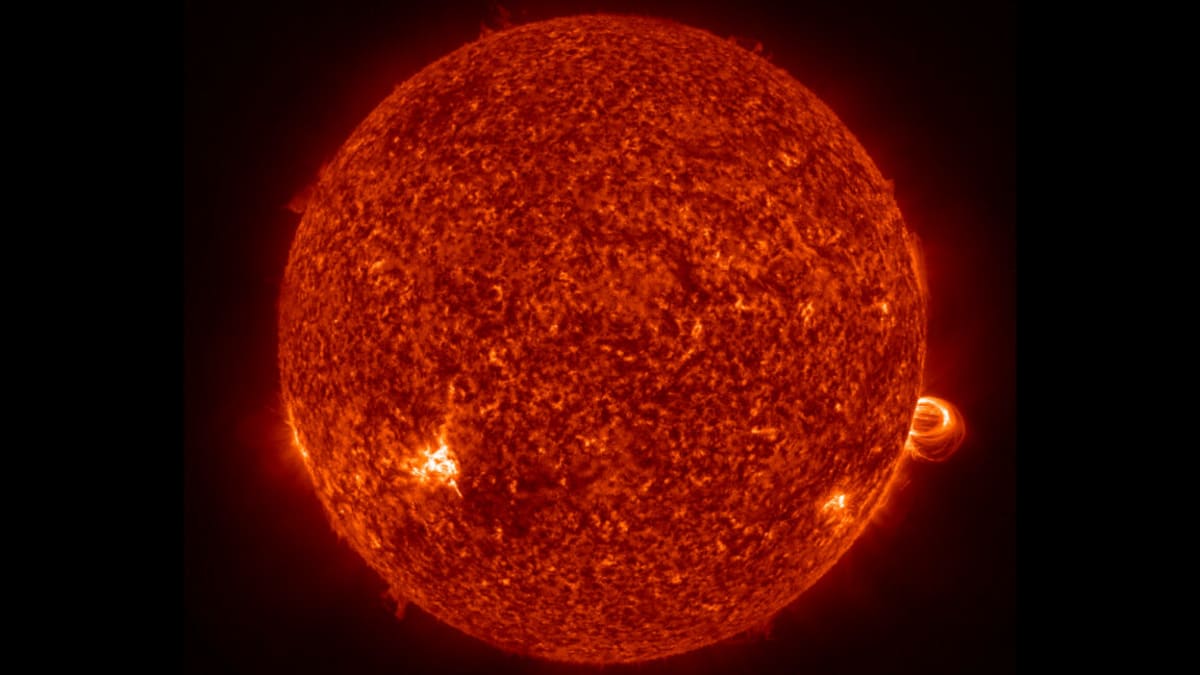
Earth Has 1.3 Billion More Years to Support Life
New climate modeling reveals that complex life on Earth will survive far longer than scientists previously thought. Researchers found that even as our Sun brightens, plants and other life forms have at least 1.3 billion years before conditions become uninhabitable.
Forget the doomsday clock. Scientists just gave Earth's life story a major extension, and the news is surprisingly comforting.
Researchers at Blue Marble Space and the University of Colorado Boulder used advanced climate modeling to answer a question that sounds terrifying but isn't: how long will life on Earth survive? Their answer pushes back previous estimates by hundreds of millions of years.
The study centers on a delicate dance between temperature and carbon dioxide. As our Sun slowly brightens over billions of years, Earth's natural systems work like a thermostat. Rainwater and warmth break down rocks, which pulls carbon dioxide from the air. This process cools the planet but also eventually starves plants of the CO2 they need for photosynthesis.
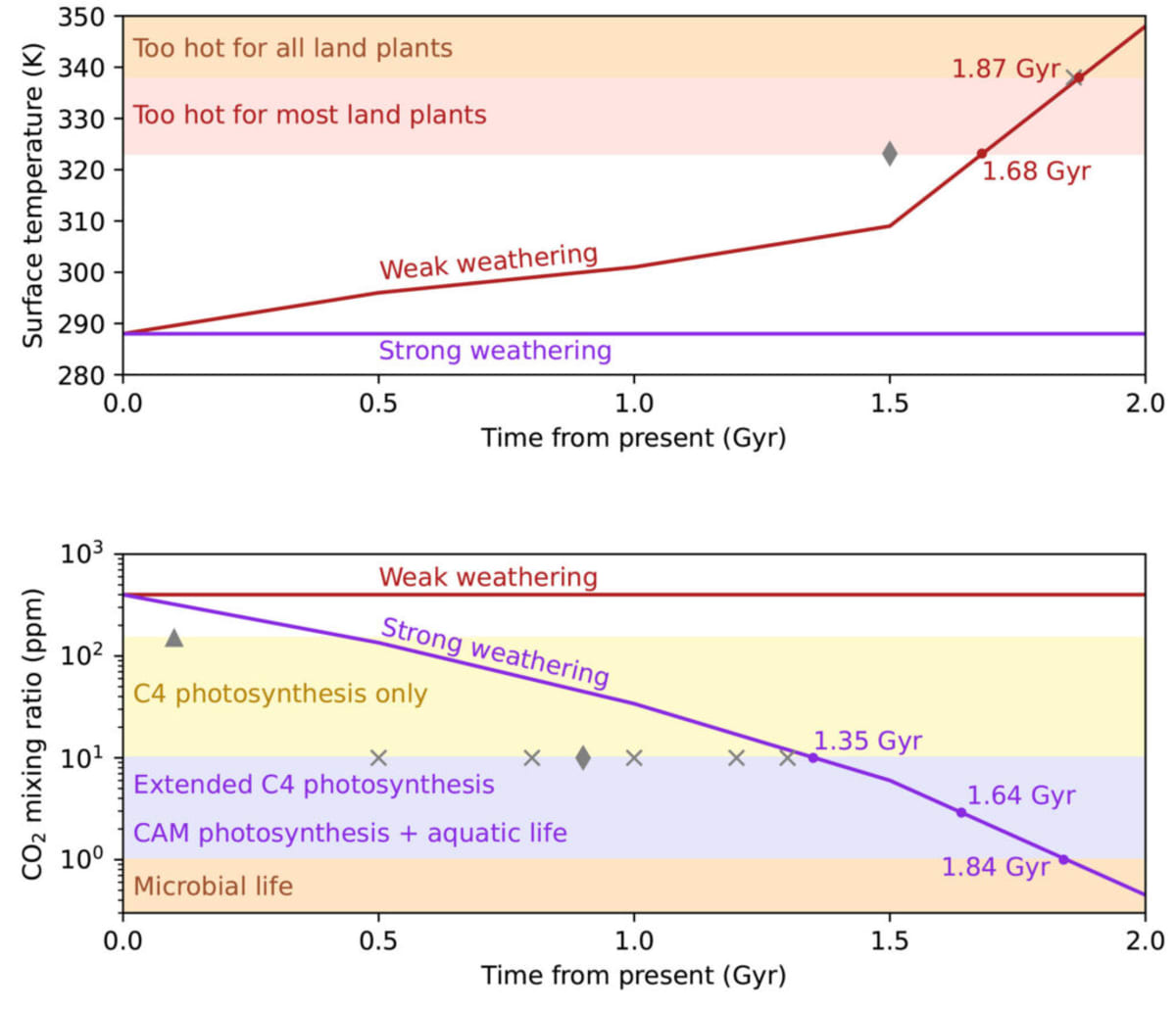
Scientists Jacob Haqq-Misra and Eric Wolf ran two extreme scenarios using the most sophisticated 3D climate model ever applied to this question. In one scenario, Earth's weathering acts as a perfect thermostat, keeping temperatures stable while CO2 gradually drops. In the other, CO2 stays constant while temperatures climb.
Even in the worst case scenario, most land plants survive until 1.68 billion years from now. Hardy plants like cacti and certain marine life can last until 1.84 billion years. That's considerably longer than many previous studies suggested, with some putting life's expiration date at less than 1 billion years.
The Bright Side
The improved timeline comes from three factors working in life's favor. The 3D model showed less warming than simpler calculations predicted. Carbon dioxide appears to decline more slowly than earlier estimates. And scientists now believe plants can survive in a wider range of CO2 levels than previously thought.
The research also hints at future possibilities that sound like science fiction but aren't ridiculous given the timescales involved. If human civilization endures, we could develop technologies to cool the planet or even adjust Earth's orbit. Evolution itself might adapt plants to survive in conditions we currently think are impossible.
These billion-year timelines also matter for understanding life beyond Earth. The same processes that extend or limit life here apply to exoplanets orbiting other stars. Understanding Earth's fate helps scientists identify which distant worlds might harbor life and for how long.
Complex life on Earth has already survived for over 500 million years, adapting through mass extinctions, ice ages, and dramatic climate shifts. This research suggests the story continues for at least another 1.3 billion years, giving life more than twice as long as it's already had.
More Images


Based on reporting by Ars Technica Science
This story was written by BrightWire based on verified news reports.
Spread the positivity!
Share this good news with someone who needs it


