Egypt's First Pterosaur Fossil Found After 95 Million Years
Scientists have confirmed Egypt's first verified pterosaur fossil, a 95-million-year-old flying reptile discovered in the Western Desert. The four-meter wingspan creature adds crucial missing pieces to North Africa's ancient ecosystem story.
A flying reptile that soared over Egypt 95 million years ago has finally been found, marking the country's first confirmed pterosaur fossil and filling a significant gap in Africa's prehistoric record.
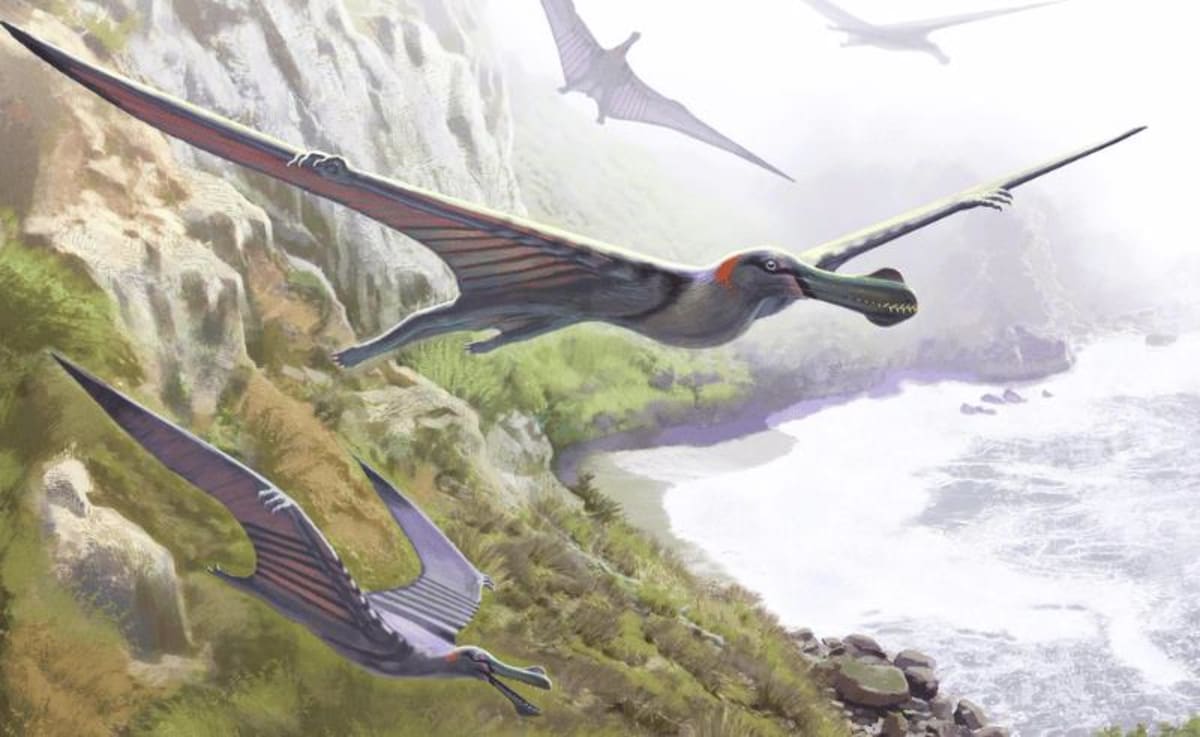
The remarkable discovery comes from the Bahariya Oasis Depression in Egypt's Western Desert, where researchers uncovered remains of a medium-sized pterosaur with an estimated wingspan of four meters. That's roughly the length of a small car stretched wingtip to wingtip.
The Egyptian-led research team, headed by Dr. Hesham Salam from Mansoura University's Vertebrate Palaeontology Centre, published their findings in the journal Acta Palaeontologica Polonica. Lead author Bilal Salem, a PhD student at Ohio University and assistant lecturer at Benha University, helped document this historic find that was originally unearthed in 2018.
Pterosaurs weren't dinosaurs or birds but an entirely separate group of reptiles with membranous wings supported by an elongated fourth finger. These ancient flyers lived alongside dinosaurs during the Cretaceous period, dominating the skies while T-Rex ancestors roamed below.
The discovery matters because North Africa's fossil record has remained frustratingly incomplete compared to other regions. Every new find helps scientists understand how prehistoric creatures evolved and spread across continents that looked very different 95 million years ago.
The research brought together Egyptian institutions with the Ministry of Environment, Denver Museum of Nature and Science, and Carnegie Museum of Natural History. This international collaboration shows how science bridges borders to unlock Earth's ancient secrets.
Why This Inspires
Egypt has emerged as a hotspot for paleontological discoveries in recent years. Just months earlier in June 2026, researchers documented a 62-million-year-old fossil site in the Eastern Desert, and in October 2025, they found a prehistoric crocodile species in the Kharga and Baris oases.
These discoveries aren't just about dusty bones. They're about Egyptian scientists leading world-class research and training the next generation of paleontologists on their own soil. The Mansoura University team has become a powerhouse in African paleontology, proving that groundbreaking science happens everywhere, not just in Western labs.
For a creature that spent 95 million years hidden beneath desert sands, this pterosaur chose the perfect moment to reveal itself to a team ready to tell its story.
Based on reporting by Google: fossil discovery
This story was written by BrightWire based on verified news reports.
Spread the positivity!
Share this good news with someone who needs it