Endangered Palm Cockatoo Raises Chick in Artificial Nest
Conservationists in northern Queensland celebrated a breakthrough when an endangered palm cockatoo successfully hatched and began raising a chick inside a handcrafted artificial tree hollow. The achievement offers new hope for a species with fewer than 2,000 individuals remaining in the wild.
A tiny palm cockatoo chick has hatched inside a man-made nest in far north Queensland, marking a conservation milestone that could help save one of Australia's rarest parrots.
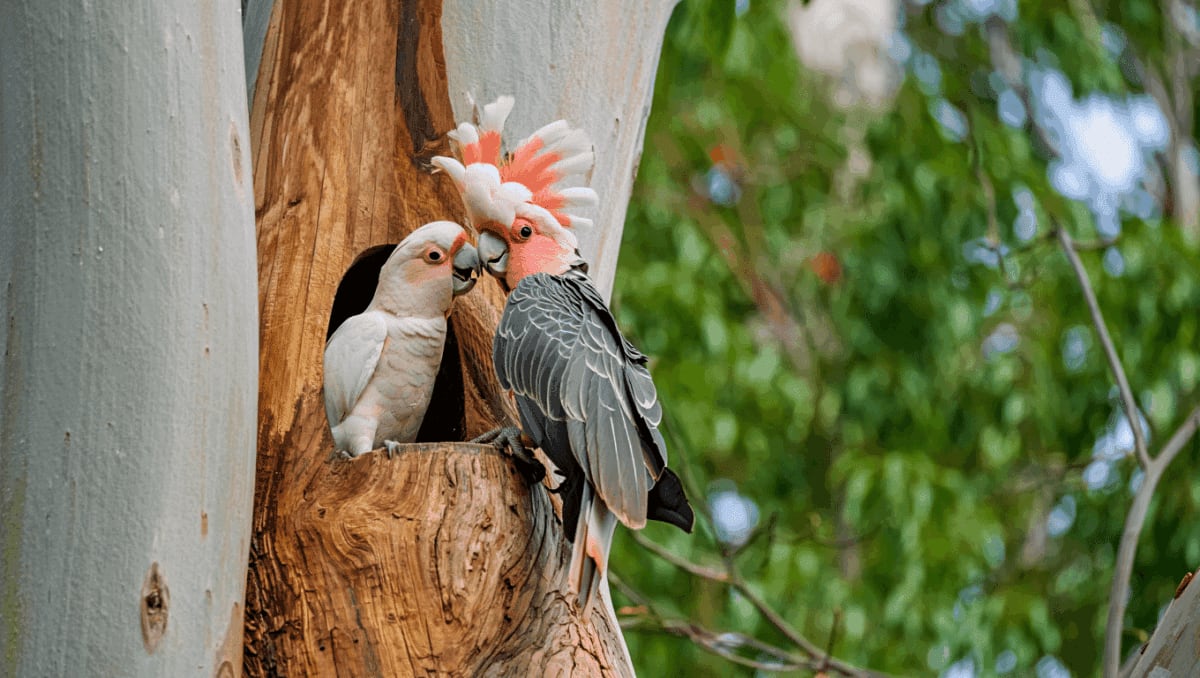
The endangered palm cockatoo, known for its striking black crest and red cheek patches, needs very specific tree hollows to breed. These cavities can take centuries to form naturally, requiring the perfect combination of termites, fungi, cyclonic winds, and decades without wildfire.
With fewer than 2,000 palm cockatoos left in the wild, conservationists knew they needed to get creative. Habitat loss and changing fire patterns have made suitable nesting sites increasingly scarce, leaving these magnificent birds with nowhere to raise their young.
People for Wildlife, a local conservation group, partnered with an experienced woodcarver to create the solution. They designed the "Palm Cockatube," a hollowed segment of aged trunk that mimics the exact geometry and texture of natural tree hollows that palm cockatoos prefer.
The team installed 29 custom hollows throughout known cockatoo habitat, using three different internal designs. They worked closely with the Apudthama Traditional Owners, who provided crucial local knowledge about the landscape and its wildlife.
For months, researchers monitored the artificial nests, watching as curious birds inspected the new options. Then came the breakthrough: field biologists Christina Zdenek and Benjamin Muller discovered an egg inside one of the cockatubes, followed by a healthy chick.
The Ripple Effect
This success reaches far beyond one bird family. Tree hollows are keystone features across Australian forests, providing homes for gliders, parrots, owls, bats, and dozens of other species.
By protecting palm cockatoos, conservationists are safeguarding entire ecosystems. When an umbrella species like this thrives, the many creatures sharing its habitat benefit too.
The artificial hollows also carry deep cultural significance for Indigenous communities connected to the land. Traditional Owners celebrated the hatching as both an ecological and cultural victory.
Conservationists are now planning to scale up the program, installing more artificial hollows and monitoring their use. The team will track which designs work best and gather data to refine future placements.
The success proves that thoughtful human intervention can help nature heal, one carefully crafted nest at a time.
More Images




Based on reporting by Google News - Conservation Success
This story was written by BrightWire based on verified news reports.
Spread the positivity!
Share this good news with someone who needs it