India Releases 4 Rhinos Into the Wild After 40 Years
Four greater one-horned rhinos stepped into freedom at India's Dudhwa Tiger Reserve in March, bringing the total number of free-roaming rhinos to eight in a landscape where they vanished decades ago. It's a carefully managed return that could reshape an entire ecosystem.
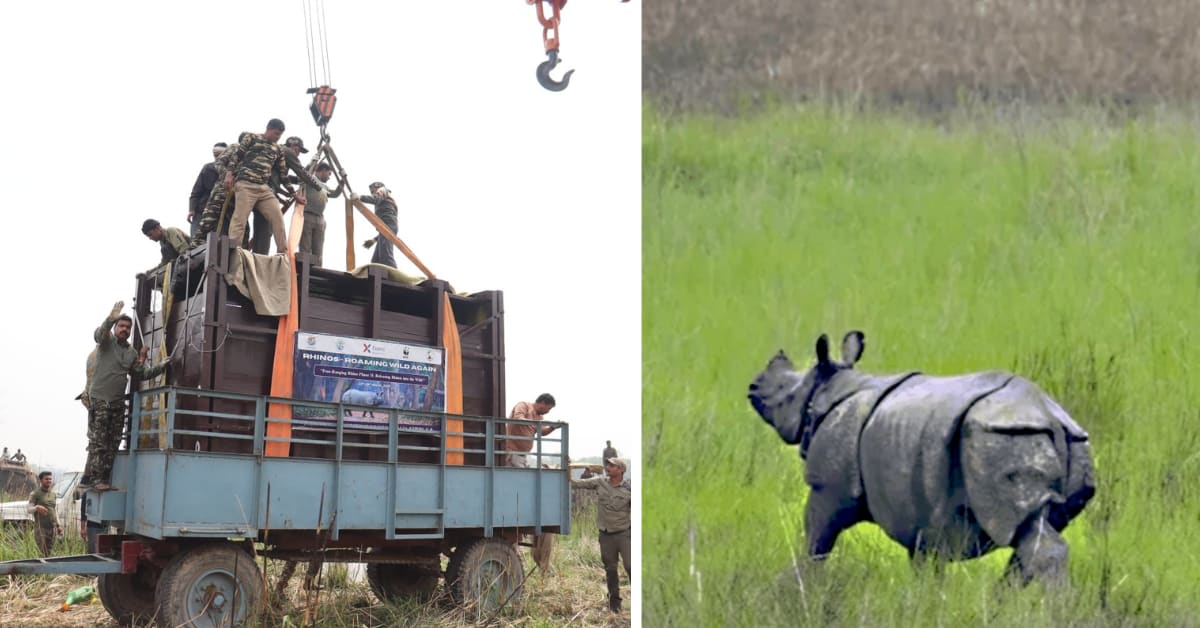
One male and three female rhinos emerged from their fenced rehabilitation zone on March 23 and 24, crossing into the wild grasslands of Uttar Pradesh's Dudhwa Tiger Reserve. For the first time in decades, the Terai landscape is welcoming back the giant herbivores that once roamed freely across northern India.
The greater one-horned rhinoceros used to move widely through the Gangetic plains and Terai grasslands. Hunting and habitat loss reduced their populations to isolated pockets in Assam, North Bengal, and Nepal.
Dudhwa's journey began in 1984 when seven rhinos arrived from Assam and Nepal. The population grew to 17 over the years, but they remained inside fenced areas where conservationists could monitor their health and behavior.
The four rhinos released this spring, aged between 15 and 25 years, were chosen after years of observation in a 27 square kilometer rehabilitation zone. Wildlife veterinarian Dr. KK Sharma and his team safely tranquilized each animal, conducted health checks, and fitted them with radio collars before release.
"After decades of hard work, the efforts to bring back rhinos to India's Terai landscape have finally begun to bear fruit," says Dr. H Rajamohan, Field Director of the reserve. This marks the third such release since November 2024.
A joint team from the Uttar Pradesh Forest Department and WWF-India now tracks each rhino through satellite signals. Inside the reserve, a dedicated control room monitors their movements in real time, ready to respond if any animal shows distress.
The Ripple Effect
Rhinos are ecological engineers. Their continuous grazing prevents tall, unpalatable grasses from taking over, which maintains the balance of grassland ecosystems that countless other species depend on.
"They are one of the best indicators of grassland ecosystems," said Dr. Dipankar Ghose, Senior Director of Biodiversity Conservation at WWF-India. When rhinos reshape the land through their feeding patterns, they improve everything from soil health to water retention.
The Terai Arc along the Himalayan foothills is among South Asia's most productive ecosystems. Its wetlands and grasslands at places like Bhadi Tal and Churela Tal offer exactly what rhinos need: space for feeding and wallowing.
The goal is to build a stable, breeding population that can sustain itself without human intervention. If these eight rhinos settle successfully and begin reproducing, Dudhwa could become a blueprint for rewilding efforts across India.
Every movement these animals make tells conservationists whether the decades of planning are working, whether the land remembers how to hold them.
More Images
%2Fenglish-betterindia%2Fmedia%2Fmedia_files%2F2026%2F04%2F02%2Fsriroopa-featured-image-template-2026-04-02-19-40-29.png)
%2Fenglish-betterindia%2Fmedia%2Fmedia_files%2F2025%2F11%2F20%2Fwild-at-heart-banner-image-microsite-banner-2025-11-20-16-17-04.jpg)

%2Ffilters%3Aformat(webp)%2Fenglish-betterindia%2Fmedia%2Fmedia_files%2F2026%2F04%2F01%2Frhino-relocation-dudhwa-2026-04-01-09-03-33.png)
Based on reporting by The Better India
This story was written by BrightWire based on verified news reports.
Spread the positivity!
Share this good news with someone who needs it