European Bison Return to Romania After 100 Years Gone
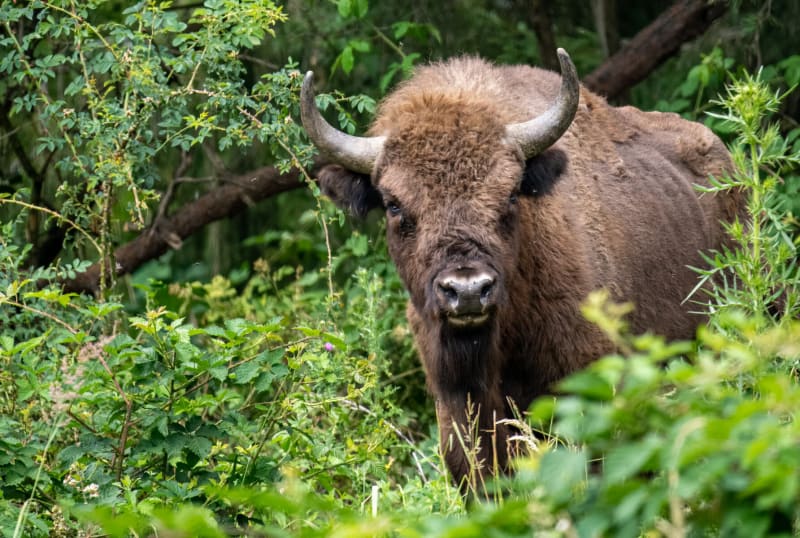
Wild European bison are roaming Romania's Carpathian Mountains for the first time in a century, healing the land with every step they take. The gentle giants are bringing back meadows, enriching soil, and proving nature can recover when given the chance.
Mihai Miculescu still remembers the moment the first truck arrived in his mountain village carrying cargo that hadn't walked these lands in 100 years: wild European bison.
The bakery owner from Armeniș, Romania, had heard childhood legends about great shaggy beasts that once roamed the Carpathians. But those stories seemed like ancient history after the last wild European bison was shot in 1927, leaving fewer than 60 alive in captivity worldwide.
Then in 2012, conservation groups approached his community with an ambitious plan. They wanted to bring the bison back home.
Miculescu was curious but cautious. Would tourists follow? What if someone met a bison face to face? Despite his questions, he and his son volunteered to help build the enclosure for the relocated animals.
Today, over 100 wild bison roam 150,000 hectares across the Southern Carpathians. These massive animals, weighing 1,000 kg and standing nearly 2 meters tall, are doing far more than just surviving.
They're healing the mountains. As the bison graze on young trees, meadows develop where forests once grew too thick. Their heavy bodies clear natural fire corridors simply by walking through the woods. When they wallow in the soil, they increase its capacity to hold carbon.
Their dung disperses over 200 species of plant seeds across their territory, boosting biodiversity and supporting pollinators. Birds use their winter fur for nests, while magpies follow the herds to pick off ticks and parasites.
The Ripple Effect
The bison's return is transforming more than just the landscape. Sebastian Ursuta runs a "bison hotline" for community members who encounter the animals. His job is reassuring locals that these gentle giants, while intimidating in size, are safe neighbors.
Rewilding Romania now relocates entire herds instead of individual animals, helping them maintain their social structure and adapt to the wild more successfully. The strategy is working. A 2025 study from Yellowstone National Park showed how similar bison migrations restore grasslands from the ground up, improving soil microbes and nitrogen content.
The project started through a partnership between Rewilding Europe, WWF Romania, and local municipalities, with support from the EU's LIFE Programme. The Țarcu Mountains provided the perfect home, with protected national parks and a mosaic of habitats ideal for bison.
"It is no longer enough to protect what is left of nature," says Marina Druga, Executive Director of Rewilding Romania. "It is also necessary to help nature regain the power to heal."
For Miculescu, watching the herds thrive has been worth every question he had a decade ago. The mountains he watched degrade over his lifetime are coming back to life, one hoofprint at a time.
Based on reporting by Reasons to be Cheerful
This story was written by BrightWire based on verified news reports.
Spread the positivity!
Share this good news with someone who needs it