Farmers and Solar Panels Can Now Share Fields Successfully
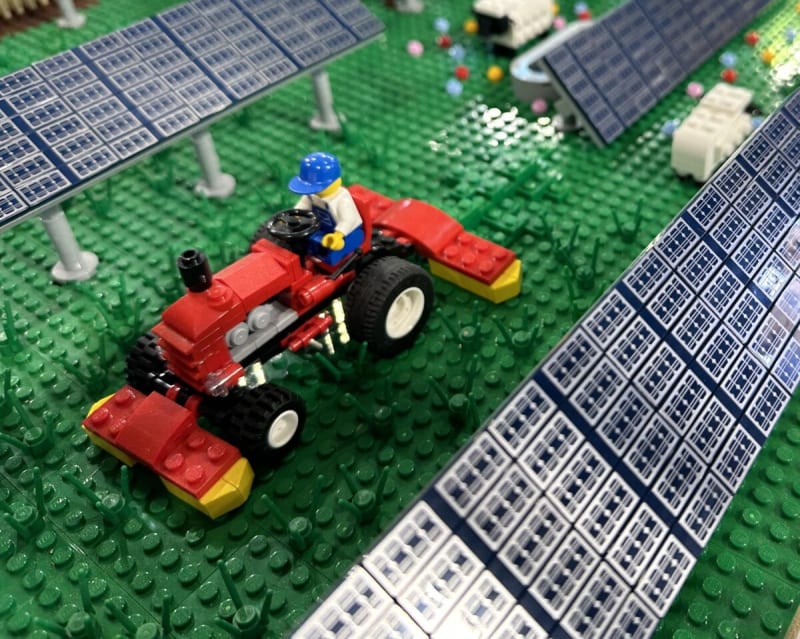
Scientists have cracked the code for combining solar panels with farming equipment, solving a puzzle that's been wasting up to 30% of valuable cropland. The secret is planning tractor routes before installing the panels.
Imagine losing a third of your farmland just because your tractor can't fit between solar panels. That's been the hidden problem threatening agrivoltaics, the practice of growing crops under solar arrays, but researchers just found the fix.
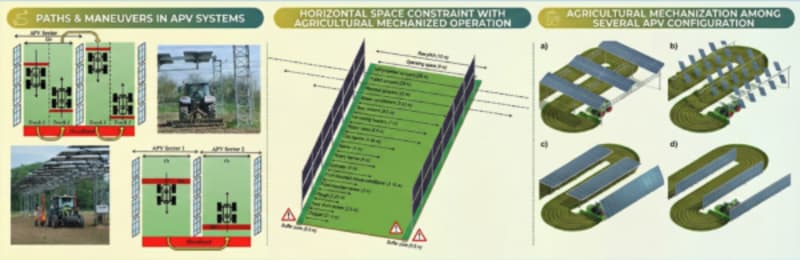
An international team led by Yuri Bellone discovered that poor planning causes machinery nightmares on solar farms. Tractors designed for wide open fields suddenly can't navigate narrow pathways between panel rows. The result is wasted land, ruined crops, and farmers losing money on what should be a win for both food and clean energy.
The solution sounds simple but changes everything. Farmers and solar designers need to sit down together before breaking ground. They map out every tractor, every crop rotation, and every turn radius first. Then they design the solar layout around the machinery, not the other way around.
The research revealed shocking inefficiencies when this doesn't happen. Buffer zones alone waste 30% of land. Machinery efficiency drops to just 45% because tractors move slower, turn more often, and can't align properly with available space. Fuel costs spike from all the extra maneuvering.
But there's good news beyond the main finding. Equipment designed for vineyards and orchards works beautifully in tight spaces. That means denser solar patterns might be possible without sacrificing crop yields. Precision agriculture tools like GPS guidance systems could make operations even smoother.
The researchers tested their approach across different farm sizes, crop types, and equipment fleets. Every situation needed custom solutions. A small organic vegetable farm requires different spacing than a large wheat operation. Third party contractors add another layer of complexity since they bring their own equipment.
The Ripple Effect
This research comes at a perfect time. Countries worldwide are racing to install solar power while protecting farmland from development. Agrivoltaics seemed like the perfect compromise, generating electricity overhead while crops grow below. But early projects stumbled when tractors couldn't do their jobs.
Now farmers don't have to choose between panels and productivity. The study provides a roadmap for designing systems where both thrive. That means more clean energy without losing food production, and rural communities gaining new income streams without abandoning agriculture.
The team from Sweden, Italy, and the Council for Agricultural Research and Economics plans to keep improving the approach. They're focusing on cutting fuel consumption and boosting efficiency even further. Smarter software for route planning could automate the optimization process entirely.
This breakthrough proves that agriculture and renewable energy make better partners than competitors when we design with both in mind from day one.
More Images
Based on reporting by PV Magazine
This story was written by BrightWire based on verified news reports.
Spread the positivity!
Share this good news with someone who needs it