First T. Rex Trackway Found Shows Dinosaur's Final Steps
A high school teacher volunteering on a fossil dig discovered the first-ever connected footprints from an adult Tyrannosaurus rex, revealing how the massive predator moved 66 million years ago. The four footprints in North Dakota capture a moment frozen in time just before dinosaurs went extinct.
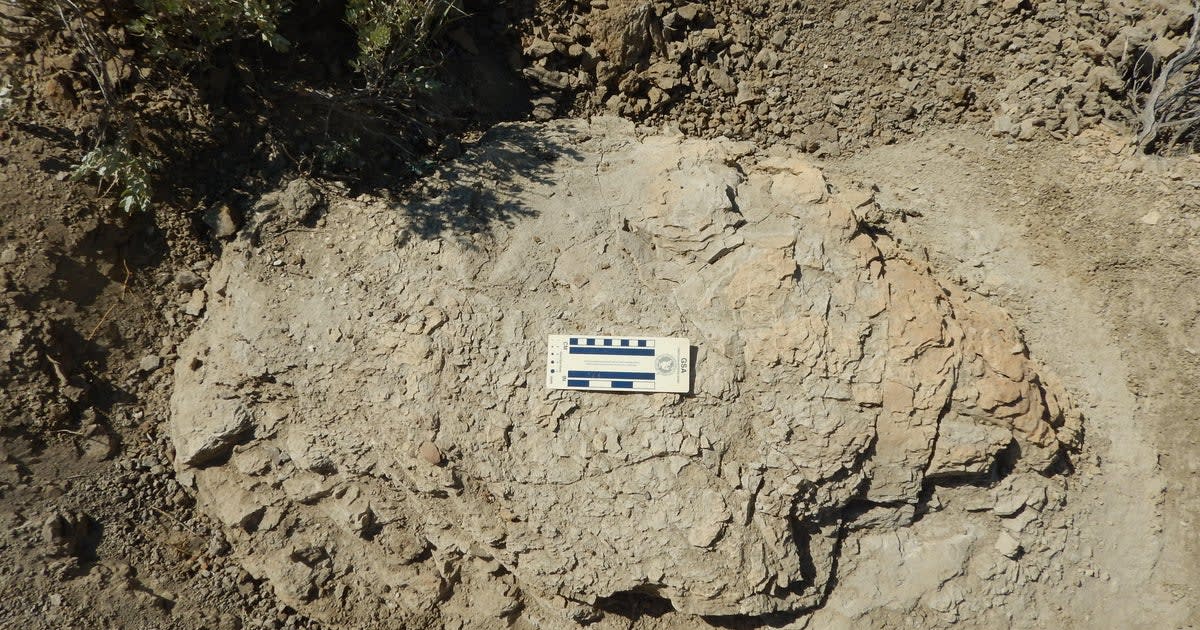
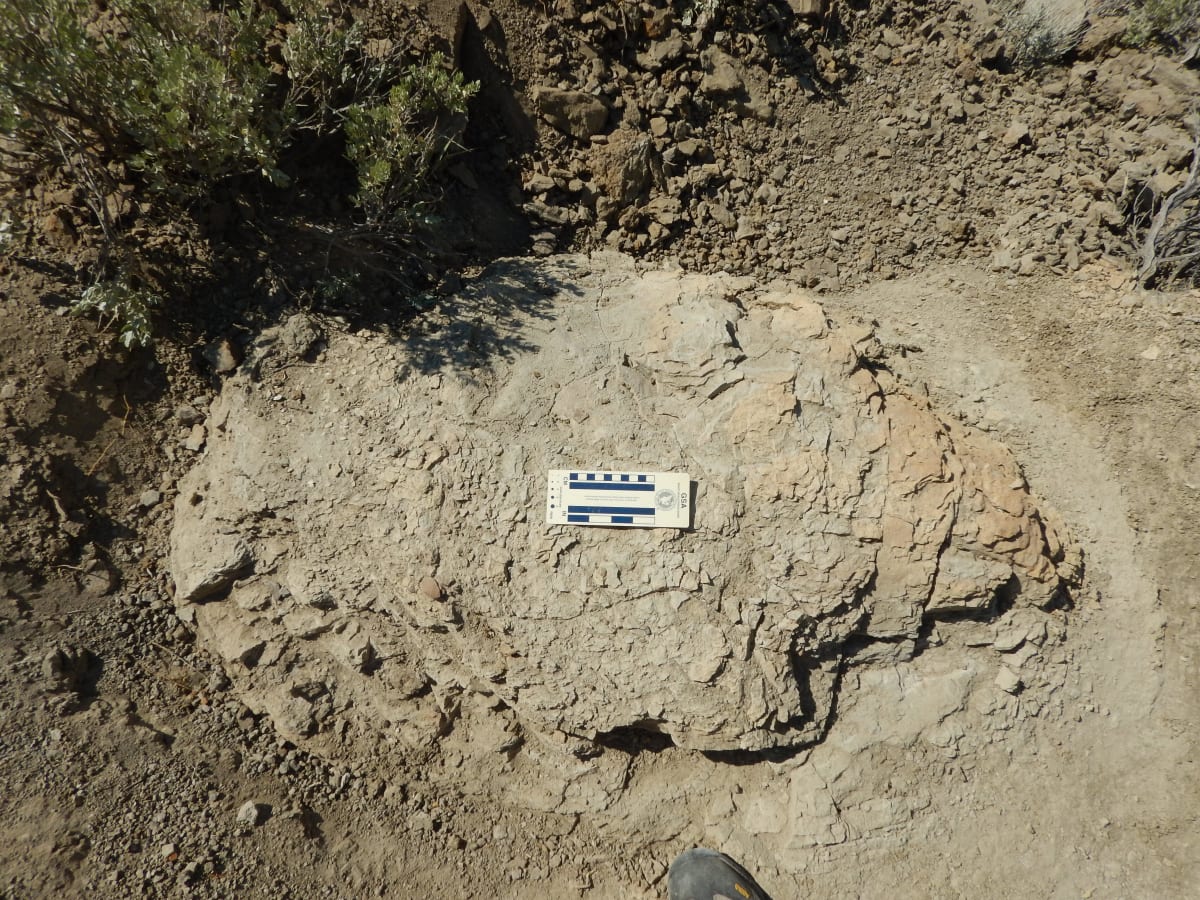
A volunteer fossil hunter just made the discovery of a lifetime in the North Dakota badlands. Kent Hups, a high school teacher, found the first known trackway of an adult Tyrannosaurus rex, four connected footprints that show exactly how the massive dinosaur walked across an ancient landscape.
The discovery changes everything paleontologists thought they knew about observing T. rex behavior. Before this find, only two isolated adult T. rex footprints had ever been confirmed anywhere in the world, one in New Mexico and one in Montana, neither showing how the animal actually moved.
Hups made the find in 2025 near Marmarth, North Dakota, while volunteering on a dig led by Dr. Tyler Lyson of the Denver Museum of Nature & Science. The trackway stretches about 23 feet long, with each three-toed footprint measuring roughly three feet in length.
The spacing between prints tells an amazing story. Researchers calculated the seven-ton dinosaur was walking at a leisurely pace of 3.5 to 4.5 mph, just strolling across what was once a lush river valley.
Scientists feel confident attributing the tracks to T. rex based on their massive size, distinctive shape, and location. The surrounding rock formation has produced an unusually high number of tyrannosaur bones, including a juvenile specimen nicknamed "Teen Rex" that three boys discovered during a family hike in 2022.
Dr. Lyson's team used 3D scanning technology to capture every detail of the site. Lead author Peter Falkingham from Liverpool John Moores University in England analyzed the digital data and wrote the scientific paper without ever setting foot in North Dakota, showing how modern technology enables global collaboration.
Why This Inspires
This discovery proves that curiosity and careful observation can lead to groundbreaking science. Hups told his students that science starts with those exact qualities, never imagining he would demonstrate that lesson so dramatically.
His find also reminds us that there are still incredible discoveries waiting to be made. Even after 150 years of dinosaur research, a volunteer on a weekend dig can change our understanding of the most famous predator that ever lived.
The tracks date to about 66.5 million years ago, near the very end of the Cretaceous period. This T. rex took one of the last walks any of its kind would ever take before an asteroid impact changed Earth forever.
Three of the four footprints will be airlifted by helicopter this fall to the Denver Museum of Nature & Science, where visitors can see them up close. The discovery shows us that even in ancient stone, moments of life are preserved, waiting for someone with sharp eyes and passion to bring them back into the light.
More Images
Based on reporting by Google News - Science
This story was written by BrightWire based on verified news reports.
Spread the positivity!
Share this good news with someone who needs it