First T. Rex Walking Track Shows 7-Ton Predator Strolling
Scientists just discovered something they've never had in 66 million years of T. rex fossils: proof of how the dinosaur actually walked. Four giant footprints in North Dakota reveal the predator was taking a leisurely stroll at human walking speed.
For all the T. rex skeletons in museums worldwide, paleontologists had never seen one thing until this week: the dinosaur's actual footsteps.
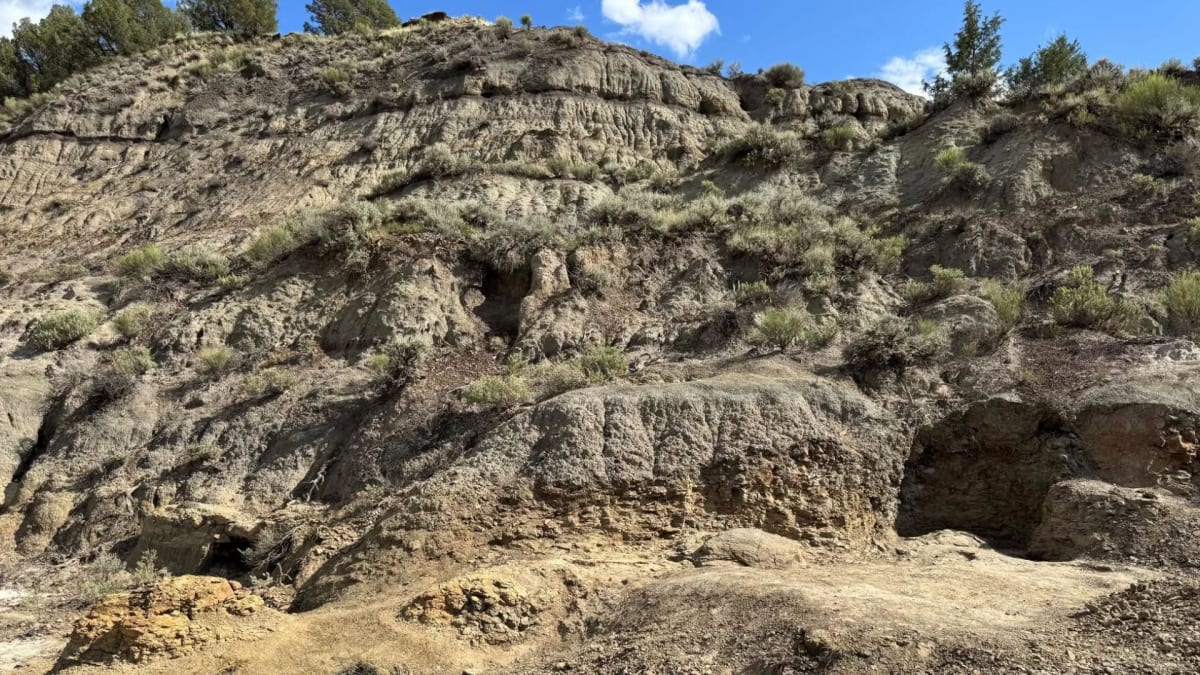
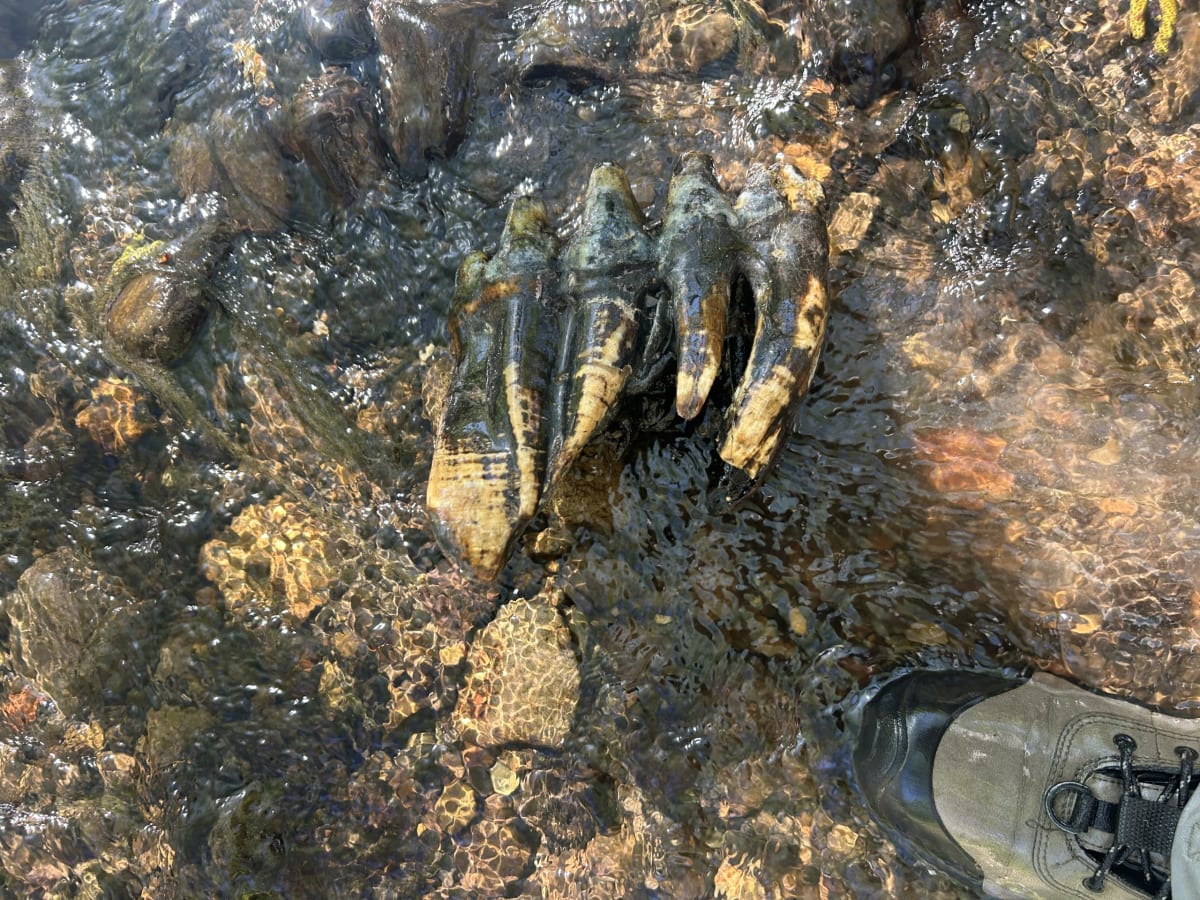
Researchers from the Denver Museum of Nature & Science just published the first walking trackway ever found from an adult Tyrannosaurus rex. Four massive three-toed prints stretch across 23 feet of ancient mudstone near Marmarth, North Dakota, each footprint roughly three feet long.
The discovery happened in 2025 when a high school teacher working with the museum's field program spotted the prints on U.S. Forest Service land. The tracks sat pressed into what was muddy ground 66.5 million years ago, just before the asteroid ended the dinosaurs' reign.
Here's the charming part: the fearsome predator was out for a stroll. The seven-ton apex predator was moving at about 3.5 to 4.5 miles per hour, roughly the pace of a person walking briskly to lunch.
Scientists measured a 13-foot stride between prints of the same foot and fed the numbers into standard locomotion equations. The result matches what biomechanical models predicted but could never prove: T. rex preferred an unhurried, energy-efficient gait rather than constant sprinting.
Lead author Peter Falkingham analyzed the entire trackway without ever seeing it in person. The field team used high-resolution 3D scanning to capture every detail, then sent the digital models from North Dakota to his lab in Liverpool.
Why This Inspires
The sheer size of the prints eliminated other possibilities. The narrow toe angles and abundance of adult T. rex bones in the surrounding rock made the identification clear: these belonged to a full-grown rex, the first walking sequence ever found.
Previous tyrannosaur tracks came from juveniles or smaller related species. Isolated single prints had been credited to adults before, but never a complete walking sequence that reveals speed and movement.
Scientists have debated T. rex locomotion for decades, from the jeep-chasing movie monster to biomechanical models showing the animal couldn't physically run without impossible leg muscle. These prints settle the argument with firsthand evidence.
Bones tell us anatomy, but trackways capture behavior. This is twenty-three feet of a real moment: a Tuesday afternoon 66 million years ago when a T. rex crossed a mudflat on unknown business, and the mud preserved the receipt.
Three of the four prints will be airlifted by helicopter this fall and displayed at the Denver Museum of Nature & Science. The fourth remains protected on Forest Service land.
Every skeleton is a death, but this trackway is life in motion.
Based on reporting by Google News - Science
This story was written by BrightWire based on verified news reports.
Spread the positivity!
Share this good news with someone who needs it