Fly-Inspired Robot Eye Sees and Smells Danger at Once
Scientists created a tiny artificial eye inspired by fruit flies that gives robots 180-degree vision and the ability to detect hazardous gases. The breakthrough could help search-and-rescue drones navigate disaster zones and find survivors in collapsed buildings.
Robots just got a major upgrade, thanks to one of nature's smallest engineers: the fruit fly.
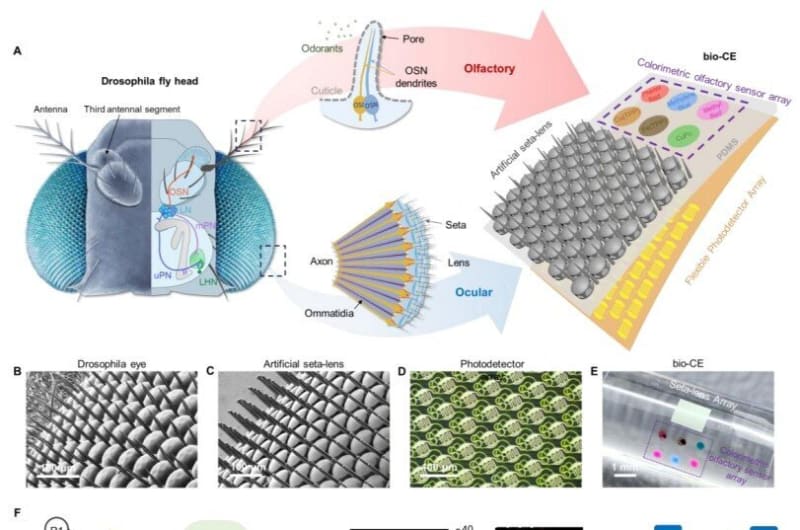
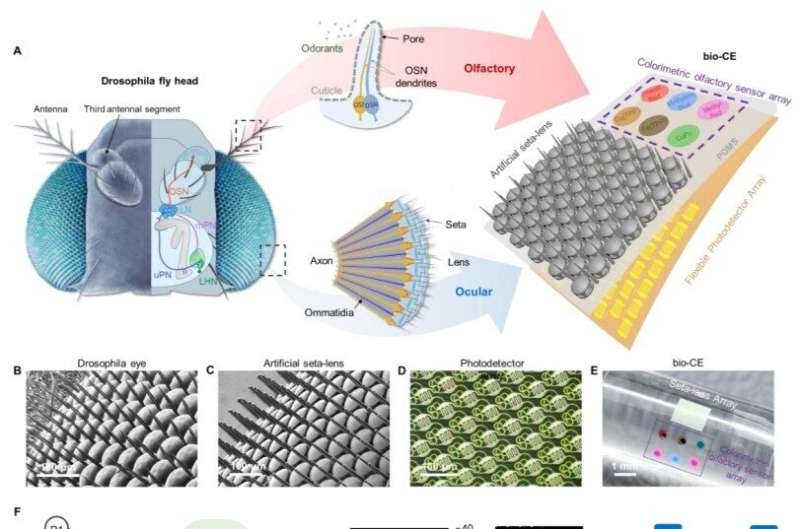
Researchers at the Chinese Academy of Sciences have built an insect-inspired bionic eye that doesn't just see. It smells danger too, giving robots superpowers that could save lives in disaster zones.
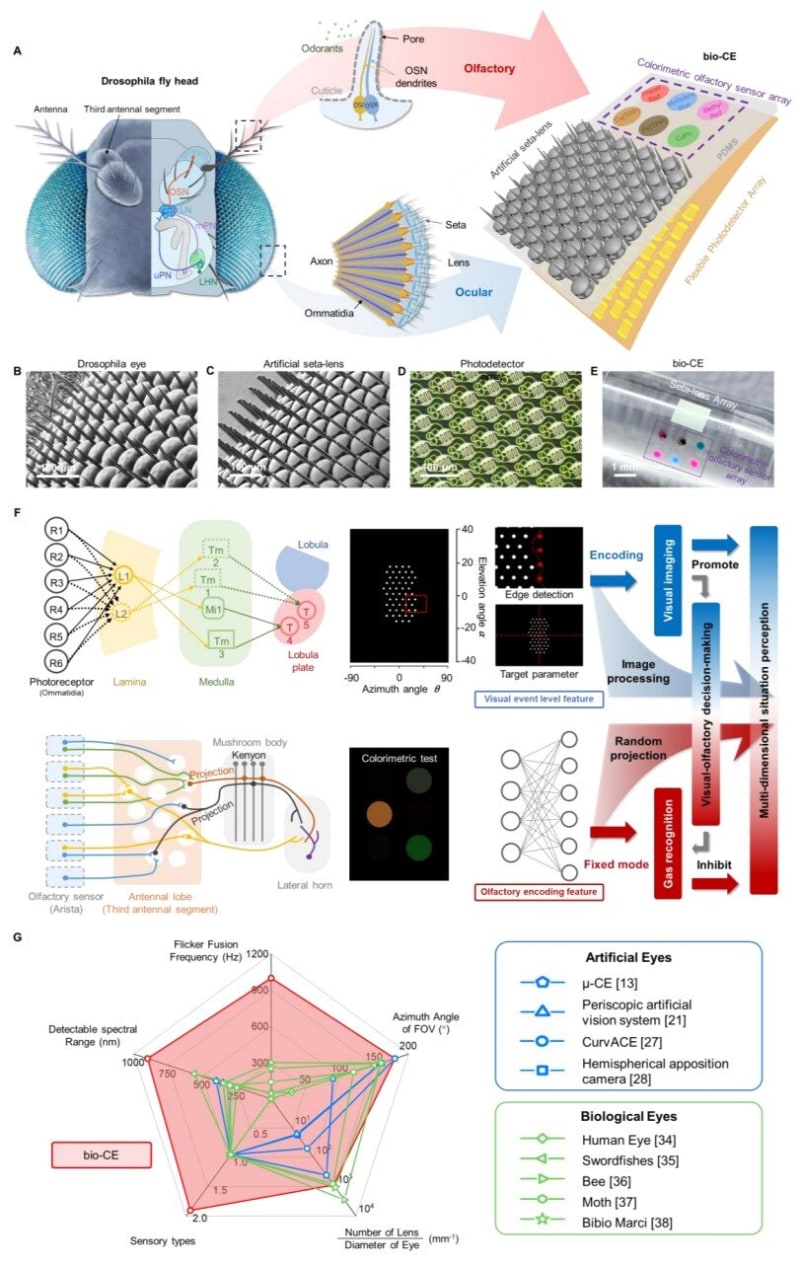
The artificial eye mimics the compound eyes of fruit flies, which process visual information several times faster than humans and see in nearly all directions at once. Traditional robot cameras struggle with tunnel vision, only capturing what's directly ahead. They're also bulky and drain battery power quickly.
The new bio-CE system packs 1,027 tiny visual units onto a surface smaller than your pinky fingernail. Using an advanced laser printing technique, scientists created microscopic lenses on flexible sensors, each working together like pixels in nature's camera.
Between the lenses, they added tiny artificial hairs that keep the view clear in humid conditions, just like real fruit fly eyes. Then they printed a chemical sensor array that changes color when it detects hazardous gases, creating a bionic nose that works alongside the eye.
The team tested their creation by mounting it on a miniature four-wheeled robot. The results were impressive. The bot spotted moving objects on both sides without turning its head, navigating obstacles with its full 180-degree field of view while simultaneously sniffing out dangerous chemicals in the air.
Why This Inspires
This breakthrough shows how paying attention to nature's smallest creatures can solve our biggest challenges. The same design that helps a fruit fly navigate your kitchen could soon guide rescue drones through smoke-filled buildings to find trapped survivors.
The technology could detect chemical leaks in industrial accidents, explore hazardous environments too dangerous for humans, or help autonomous vehicles spot pedestrians and obstacles from all angles at once. Unlike clunky traditional sensors, this system is lightweight and energy-efficient enough for tiny drones.
The design isn't perfect yet. Images appear slightly stretched due to the curved lenses, and the resolution won't win any photography awards. The chemical sensors also react a bit slower than the visual components.
But the research team is already working to refine these issues. Once they do, this fruit fly-inspired innovation could become standard equipment for search-and-rescue operations, environmental monitoring, and autonomous navigation systems worldwide.
Sometimes the smallest eyes see the biggest possibilities.
More Images
Based on reporting by Phys.org - Technology
This story was written by BrightWire based on verified news reports.
Spread the positivity!
Share this good news with someone who needs it