Galileo Solved Why Giants Can't Exist 388 Years Ago
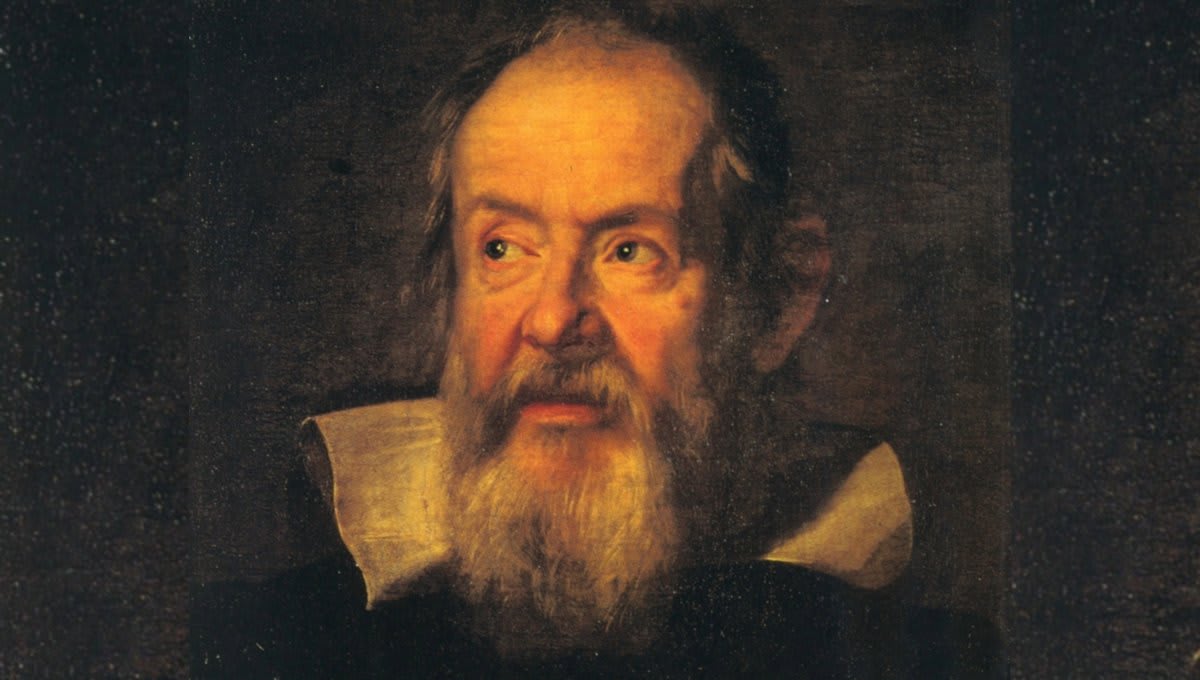
Nearly four centuries ago, Galileo Galilei used simple physics to explain why the giants of folklore could never actually exist. His brilliant insight also explains why elephants look so different from cats.
In 1638, Galileo Galilei looked at legends of giants and saw a fascinating physics puzzle that would change how we understand the natural world.
The Italian scientist asked a deceptively simple question: if giants existed, could they actually survive? His answer revealed a beautiful truth about how size works in nature.
Galileo started with an everyday example: a wooden beam supporting a heavy load. When you make that beam 10 times bigger in every direction, it gets 100 times stronger because strength depends on the cross-sectional area, which scales with the square of size.
But here's the catch. That same beam becomes 1,000 times heavier because weight depends on volume, which scales with the cube of size. A 10-times-larger beam is only 100 times stronger but 1,000 times heavier.
The math doesn't add up. At some point, any beam becomes too heavy to support its own weight.
The same principle applies to living creatures. A giant scaled up from a regular human would have bones that couldn't support the massive weight of their own body. They would literally collapse under their own mass.
Galileo concluded that any truly massive humanoid giant would "fall and be crushed under his own weight." Those folkloric giants climbing beanstalks and wielding massive swords? Physically impossible with human proportions.
Why This Inspires
Galileo's insight does more than debunk fairy tales. It beautifully explains the actual diversity we see in nature today.
Elephants have much thicker, sturdier legs compared to their body size than cats or dogs do. Rhinoceroses and hippopotamuses are stocky and robust. Even the largest dinosaurs had proportionally massive bones to support their weight.
Nature found the solution that folklore missed. Animals don't just scale up like photocopies. They adapt their proportions to match the physics of their size.
The same principle shows up everywhere once you notice it. Tiny insects can fall from great heights without injury because their strength scales better than their weight. Mice can squeeze through impossibly small spaces while elephants need reinforced structures to support them.
Galileo figured this out 388 years ago using nothing but careful observation and logical thinking. He looked at the world around him and uncovered a fundamental law that explains why rhinoceroses look different from rabbits and why the giants of legend stayed safely in stories.
His discovery reminds us that understanding the world doesn't always require fancy equipment, just curiosity and the courage to question what everyone assumes is true.
More Images
Based on reporting by Scientific American
This story was written by BrightWire based on verified news reports.
Spread the positivity!
Share this good news with someone who needs it