Scientists Crack How Sperm Swim Through Impossible Fluids
Sperm cells shouldn't be able to swim at all, but scientists just discovered how they bend the rules of physics to move. The breakthrough could revolutionize how we build tiny medical robots.
Find uplifting stories about heroes, innovations, and solutions
227 results for "physics"

Sperm cells shouldn't be able to swim at all, but scientists just discovered how they bend the rules of physics to move. The breakthrough could revolutionize how we build tiny medical robots.

A theoretical physicist credits his jazz improvisation practice with making him a better scientist. Stephon Alexander says playing music taught him mental flexibility that helps him solve complex physics problems.

The universe's most mysterious events are now being detected weekly as gravitational wave detectors reach record sensitivity. In less than a year, scientists spotted 161 black hole collisions, nearly doubling all previous discoveries and opening a new era of cosmic understanding.

Victor "Wembanyama" is the NBA's tallest player, yet he's draining three-pointers like a guard. Scientists reveal how his height, flexibility, and near-perfect mechanics make him unstoppable.

Scientists detected the most powerful neutrino ever recorded after it traveled billions of light years from a black hole-powered blazar to Earth. The discovery helps us understand the universe's most extreme particle accelerators.

Lee Soo-hyung just became one of Korea's brightest scientific stars, winning the prestigious Breakthrough Prize for groundbreaking work in particle physics. The Korea University researcher will receive $3 million for helping unlock mysteries of the universe through precision experiments with subatomic particles.

A Chinese space telescope just detected a mysterious pattern hidden in cosmic rays from across the galaxy, solving a puzzle physicists have been chasing since 1912. The discovery could finally reveal how the universe's most energetic particles get their incredible power.

After centuries of wonder, researchers finally understand why lightning moves in dramatic zigzag steps toward Earth. This breakthrough could save lives and better protect buildings and aircraft from strikes.

A NASA experiment just spent 23 days floating above Antarctica, using an ice sheet the size of a continent to catch signals from the most energetic particles in the universe. The mission could reveal secrets about black holes, neutron stars, and physics beyond anything we can create on Earth.

Researchers at CERN's Large Hadron Collider discovered particle behavior that defies our fundamental understanding of physics, potentially opening doors to unknown forces and particles. The findings could explain mysteries like dark matter that make up 25% of our universe.

A breakthrough supercomputer simulation has revealed how cosmic chaos creates the universe's vast, organized magnetic fields. The discovery could transform our understanding of everything from black holes to solar storms.

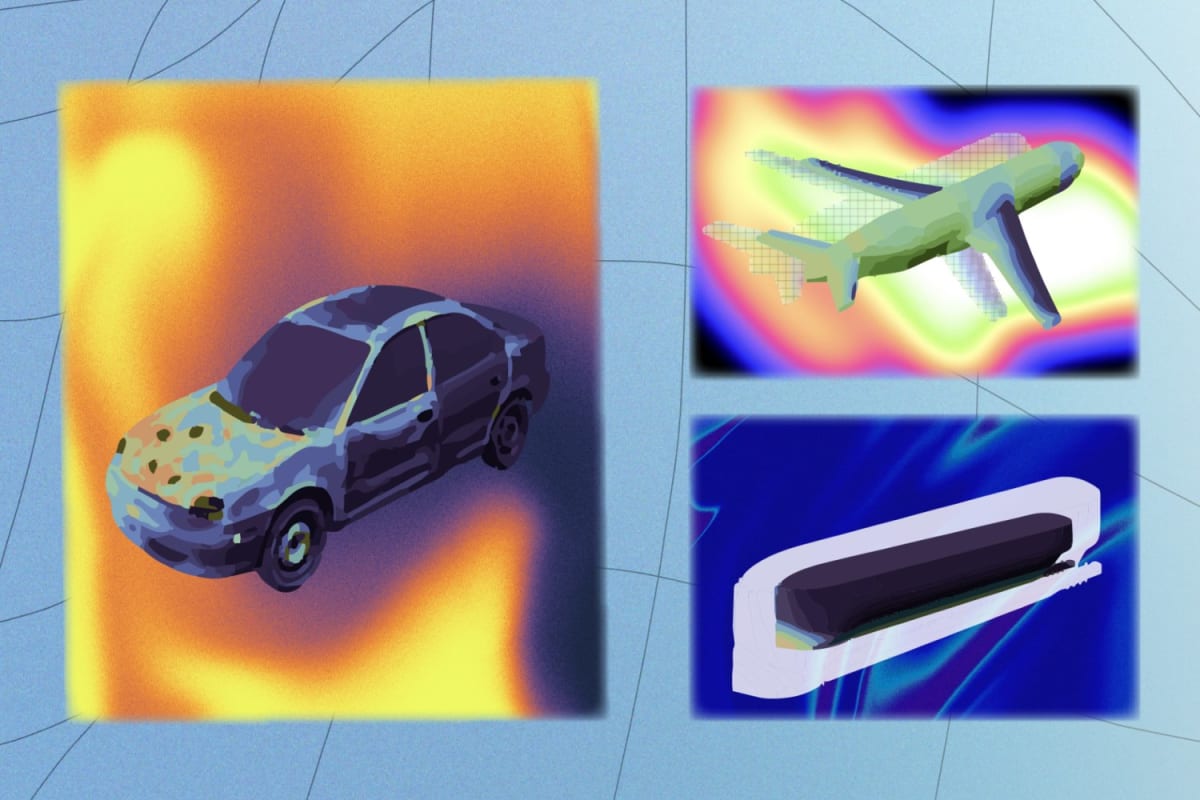
Engineers are using physics-based AI to design flying cars in hours instead of weeks, bringing urban air taxis closer to reality. This breakthrough could make electric aircraft both safer and lighter than ever before.

For decades, people watching TV snow were actually seeing ancient light from the universe's birth mixed into the static. Scientists discovered this cosmic afterglow in 1965, but it took over a year of careful work to separate it from ordinary noise.

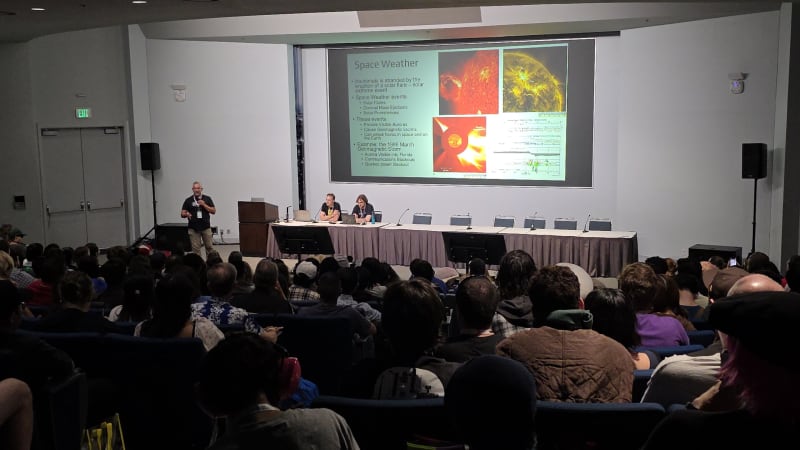
A team of MIT graduate students traveled to Fairbanks, Alaska, where they braved temperatures as low as -25°F to study the aurora borealis as a living laboratory for understanding plasma physics. They witnessed the strongest solar storm in 20 years while deploying cutting-edge instruments across 100 miles of frozen terrain.

Scientists just discovered how the Great Pyramid has survived earthquakes for over 4,600 years, and it's not what the world thought. Ancient Egyptians were engineering geniuses who understood earthquake physics millennia before modern science.

Scientists just discovered why Egypt's Great Pyramid has withstood earthquakes for nearly 5,000 years. The secret lies in hidden chambers and smart engineering that ancient builders created without modern physics knowledge.

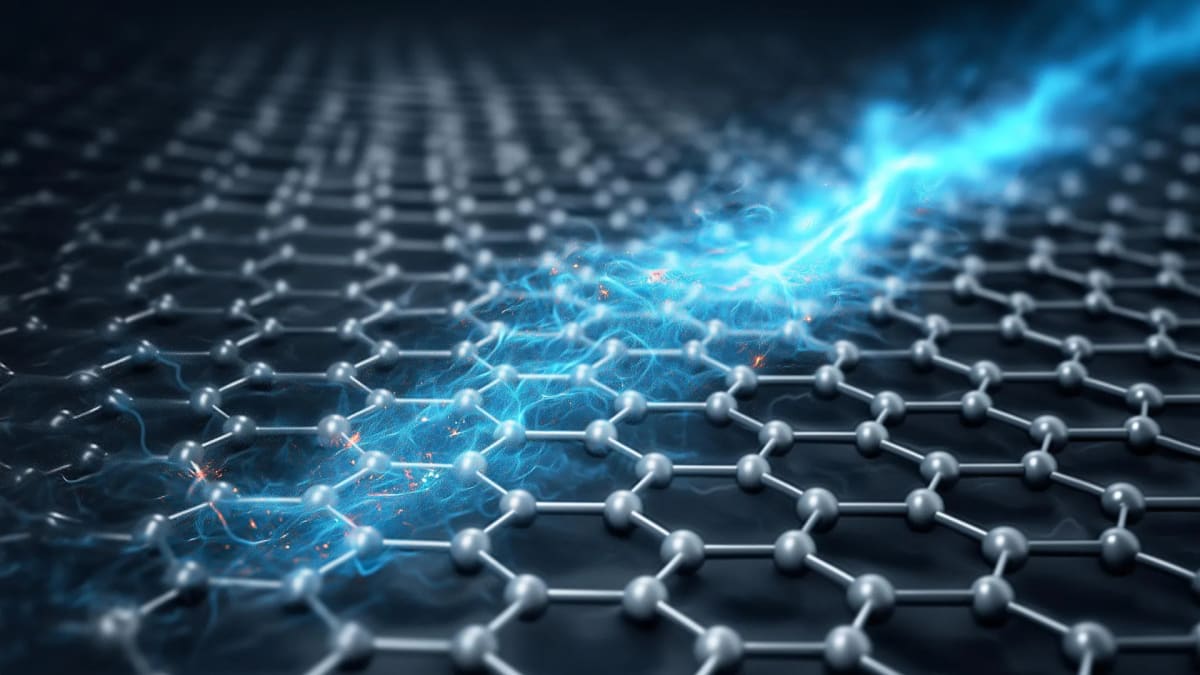
Scientists are using artificial intelligence to create hip replacements that could last decades instead of wearing out after 10 years. The breakthrough involves materials that actually get thicker when stretched, defying normal physics.

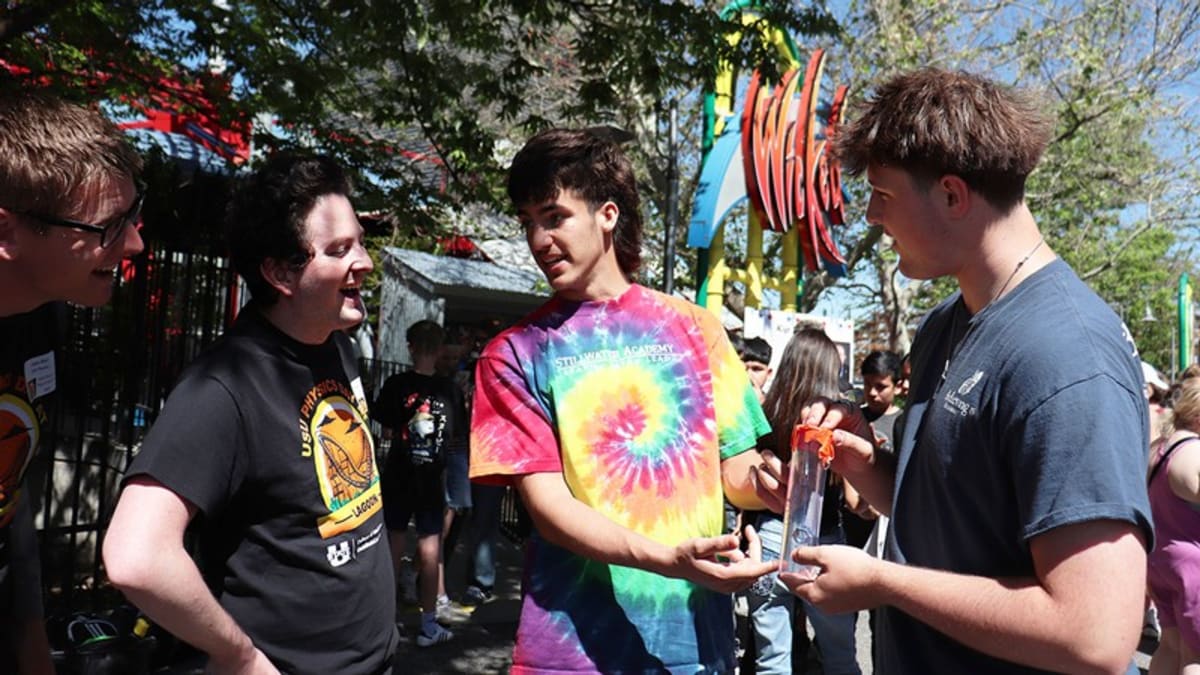
Over a hundred volunteers returned to help 8,000 students from across the Intermountain West turn amusement park rides into hands-on science labs. The 38th annual Physics Day at Lagoon proved that learning science can be as thrilling as a vertical launch roller coaster.

Utah State University transformed an amusement park into a hands-on physics classroom where 8,000 teenagers measured G-forces, designed future rides, and competed for $18,000 in scholarships. Over 100 volunteers made the magic happen, many returning year after year to inspire the next generation of scientists.

The James Webb Space Telescope keeps finding massive, bright galaxies that shouldn't exist yet according to our current understanding of the universe's age. One physicist's peer-reviewed theory suggests a radical explanation: the universe might be twice as old as we thought.
Showing 20 of 227