German Solar Plants Cut 75% Metal Use With New Tech
Scientists in Germany are building the world's first medium-voltage solar plants that slash copper and aluminum use by 75%. The breakthrough could make clean energy cheaper and easier to install worldwide.
Scientists have cracked a major problem holding back solar energy: the massive amounts of expensive metal needed to build large solar farms.
Researchers at Germany's Fraunhofer ISE are constructing the world's first medium-voltage solar plants, a breakthrough that cuts copper and aluminum consumption by 75%. The innovation could dramatically reduce costs and speed up the shift to renewable energy.
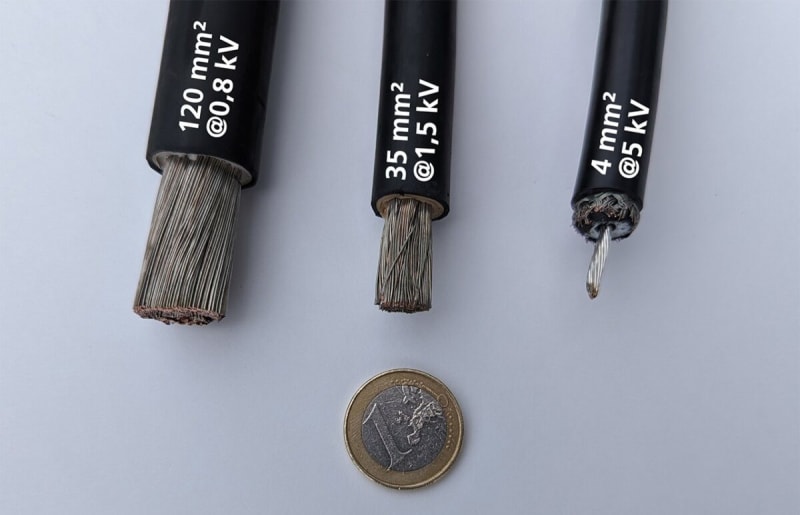
The secret lies in doubling the voltage used in solar systems. By moving from traditional low-voltage to medium-voltage systems, the plants need much thinner cables to carry the same amount of power. Thinner cables mean less metal, lower costs, and faster installation.
"The move to medium voltage is a key lever for reducing the demand for copper and aluminum in large-scale photovoltaic power plants," said Felix Kulenkampff, a researcher on the project. The team estimates they can also cut the number of transformers and substations in half without losing any power capacity.
Two pilot plants are already under construction in Baden-Württemberg and Rhineland-Palatinate. Each 135 kW facility will test different configurations, including prototype modules designed specifically for higher voltages. The plants will operate at 3,000 volts on the DC side and 1,200 volts on the AC side.
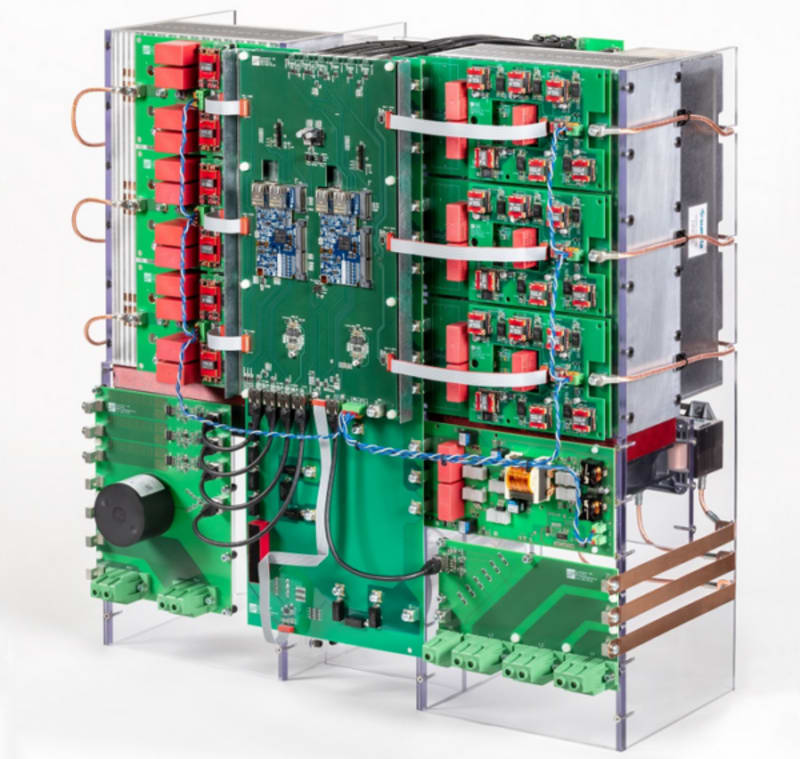
The technology relies on cutting-edge silicon carbide semiconductors that can handle higher voltages safely. Fraunhofer ISE developed the medium-voltage inverter in an earlier project and is now adapting it for real-world use.
Thirteen companies are partnering on the project, from cable manufacturers to solar panel makers. The German Federal Ministry for Economic Affairs and Energy is funding the research as part of its Energy Research Program focused on innovations for the energy transition.
The Ripple Effect
This breakthrough arrives at a perfect time. As countries race to build more solar capacity, the demand for copper and aluminum has strained global supply chains and driven up costs. Medium-voltage systems could ease that pressure while making solar power more accessible to regions without expensive high-voltage infrastructure.
The technology is especially promising for distributed solar projects and areas that lack ready access to transmission networks. Unlike massive high-voltage plants that require extensive planning, specialized personnel, and complex safety systems, medium-voltage plants offer flexibility and simplicity.
If the pilot plants prove successful, the approach could become standard practice worldwide. Easier installation, lower material costs, and reduced complexity mean solar farms could pop up faster in more places, accelerating the world's transition away from fossil fuels.
Germany's investment in this research shows how targeted innovation can solve practical barriers to clean energy adoption. Sometimes the biggest breakthroughs come not from generating more power, but from making existing technology smarter and more efficient.
More Images
Based on reporting by PV Magazine
This story was written by BrightWire based on verified news reports.
Spread the positivity!
Share this good news with someone who needs it