Giant "Forbidden Planet" Rewrites Formation Theories
Astronomers using the James Webb Space Telescope discovered a Jupiter-sized planet orbiting a tiny star that shouldn't exist, with an atmosphere that challenges everything we thought we knew about how planets form.
Scientists just found a planet that breaks all the rules, and it's revealing secrets about how worlds are born across the universe.
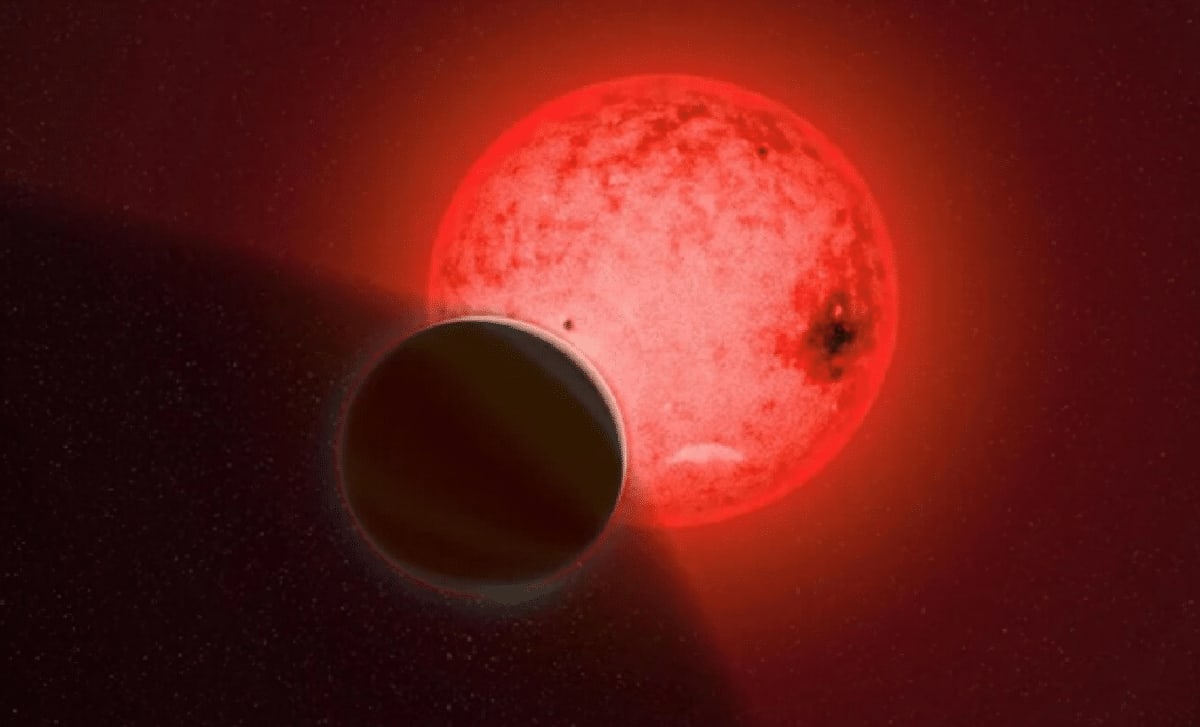
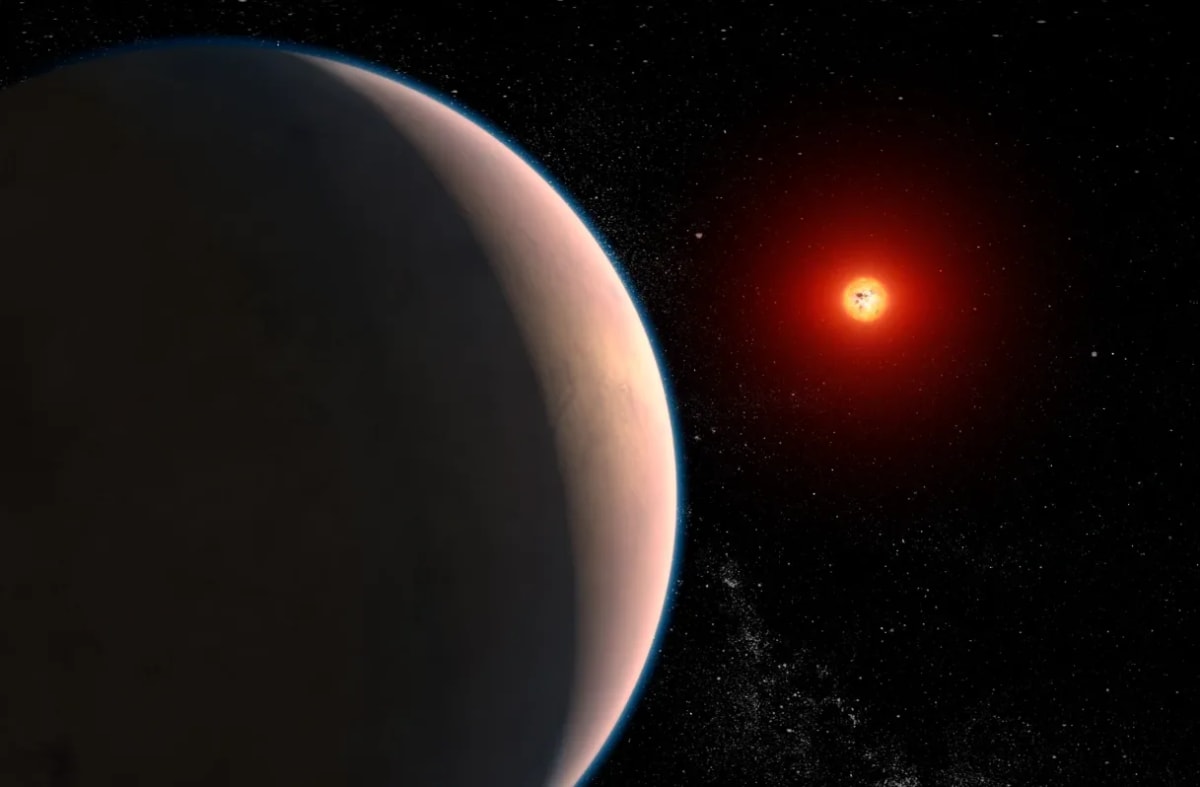
TOI-5205 b is a giant planet roughly the size of Jupiter, but it orbits a red dwarf star that's only 40% the mass of our Sun. According to every established model of planet formation, this combination should be impossible, earning it the nickname "forbidden planet."
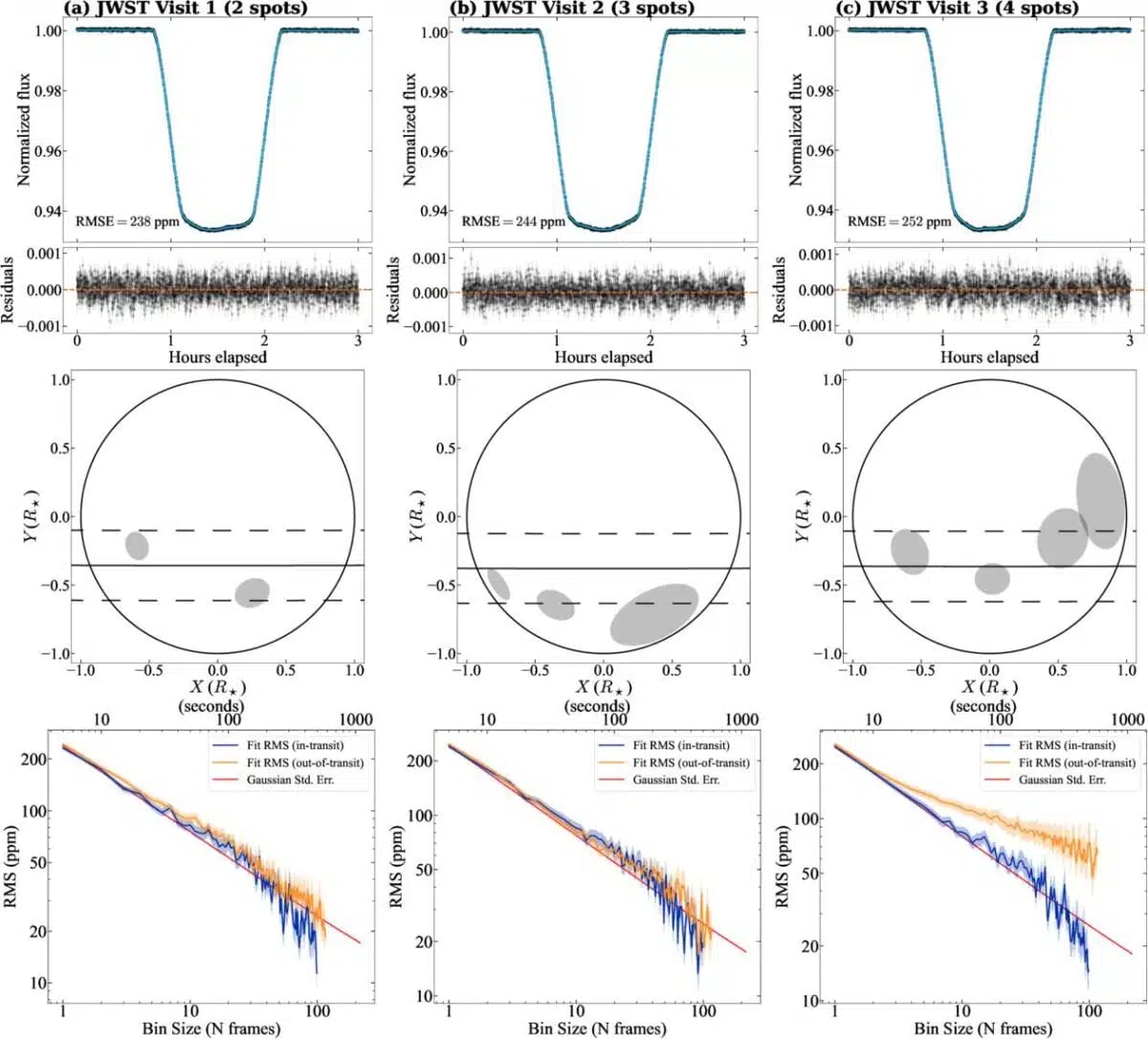
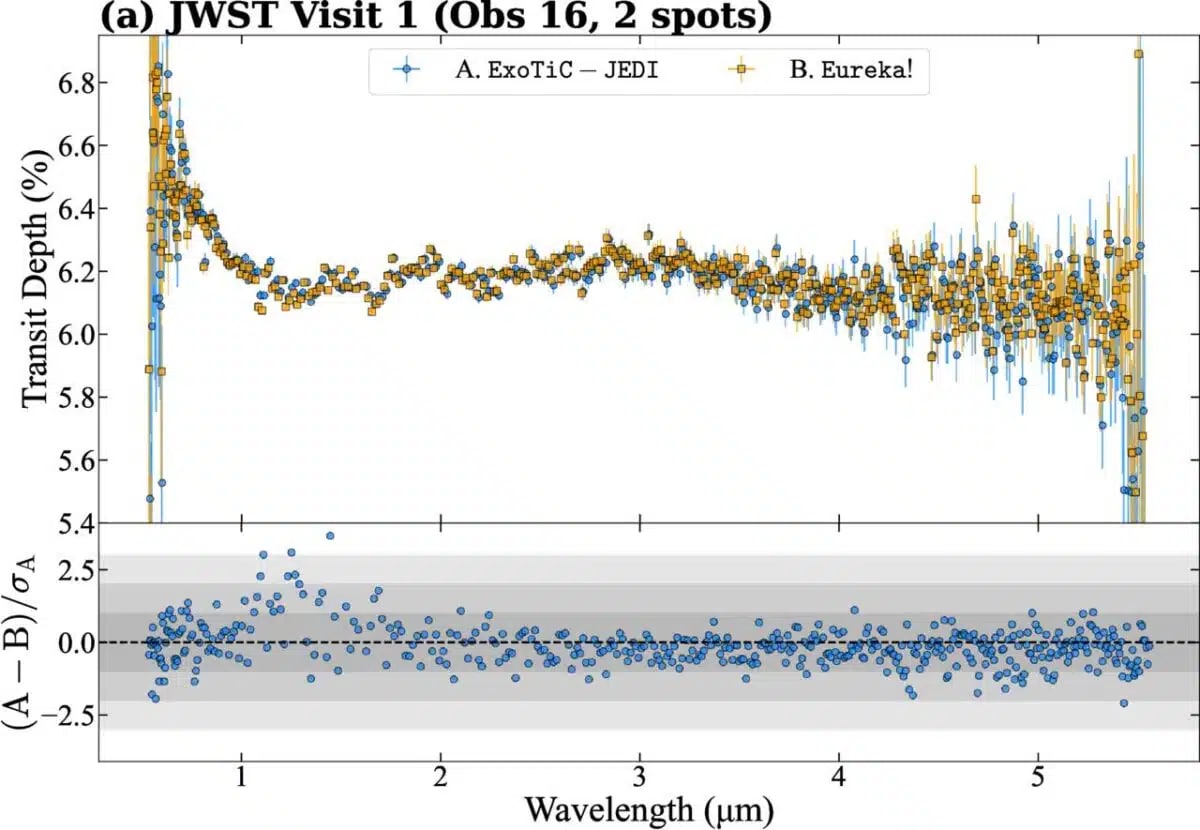
When the planet passes in front of its tiny star, it blocks nearly 6% of the light, creating a dramatic signal that allowed the James Webb Space Telescope to study its atmosphere in unprecedented detail. What researchers found has them rethinking decades of planetary science.
The atmosphere contains methane and hydrogen sulfide, but it's missing something crucial. The planet has far fewer heavy elements than scientists expected, making it actually less metal-rich than the star it orbits.
Dr. Anjali Piette from the University of Birmingham called this discovery groundbreaking. "The planet having a lower metallicity than its own host star makes it stand out among all the giant planets that have been studied to date," she explained.
Most gas giants, including Jupiter, show the opposite pattern, with atmospheres enriched in heavier elements compared to their stars. TOI-5205 b completely flips that expectation.
Advanced modeling suggests the planet could be hiding up to 100 times more heavy elements deep in its interior than what appears in its atmosphere. During formation, these heavier materials apparently sank inward and became trapped in the core, never mixing back up to the surface.
Dr. Shubham Kanodia from Carnegie Science noted this separation between interior and atmosphere hints at something fascinating. Once the planet formed, its internal structure locked into place, preventing heavier elements from resurfacing.
Why This Inspires
This discovery shows how much we still have to learn about our universe. Every time we point our most advanced telescopes at the sky, we find something that challenges our assumptions and expands our understanding.
The "forbidden planet" proves that nature is more creative than our theories. If similar hidden compositions exist in other giant planets, astronomers may need to completely rethink how they interpret atmospheric observations across the galaxy.
The research team's findings remind us that some of the most exciting scientific breakthroughs come from finding things that shouldn't exist. Each impossible discovery opens new doors to understanding how planetary systems form and evolve throughout the cosmos.
This world that defies the rules is teaching us to write better ones.
More Images

Based on reporting by Google News - Science
This story was written by BrightWire based on verified news reports.
Spread the positivity!
Share this good news with someone who needs it
%2Fhttps%3A%2F%2Ftf-cmsv2-smithsonianmag-media.s3.amazonaws.com%2Ffiler_public%2F3f%2F55%2F3f5579c8-c4a7-43a5-bb54-6498478792fd%2Fhelix1940__fitmaxwzk3mcw2ntbd.jpg)