%2Fhttps%3A%2F%2Ftf-cmsv2-smithsonianmag-media.s3.amazonaws.com%2Ffiler_public%2Fae%2Fd1%2Faed1da34-cf3a-49be-8324-4d06f215c356%2Fningaloo_coast_and_lake_macleod_western_australia_modis_2021-10-01.jpg)
Giant Squid Detected Off Australia Using DNA in Water
Scientists found traces of a rare giant squid and 226 other species in underwater canyons off Western Australia without ever seeing them. They used environmental DNA technology that reads genetic clues left behind in ocean water.
Imagine discovering a creature the size of a school bus without ever laying eyes on it. That's exactly what scientists accomplished in deep ocean canyons off Western Australia's coast using a revolutionary technique that reads the ocean's invisible genetic fingerprints.
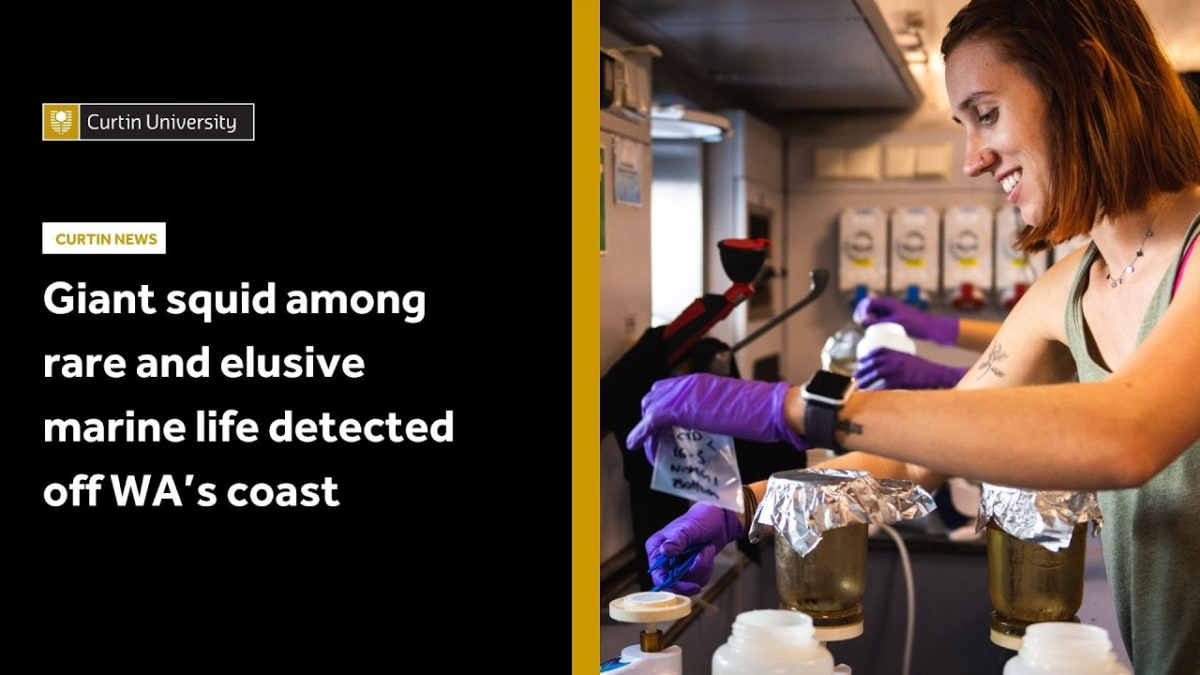
In 2020, researchers collected nearly 200 water samples from underwater canyons about 750 miles north of Perth, diving as deep as 2.8 miles below the surface. Inside those samples, they found something extraordinary: traces of a giant squid, one of the ocean's most elusive creatures.
Giant squid can grow up to 43 feet long and weigh between 330 and 600 pounds. This marks only the third time scientists have ever detected one in Western Australian waters, with the last evidence dating back more than 25 years.
The team used environmental DNA, or eDNA, which comes from the mucus, skin, feces, and other tissue that animals naturally shed as they swim. These genetic fragments survive in the water for hours to days, meaning any detected creature was recently nearby.
"We can take these fragments, match them to a database, and then see what species were living there without actually having to see them on cameras," explains lead author Georgia Nester, a molecular ecologist at the University of Western Australia. One water sample can reveal hundreds of species at once.
The Ripple Effect
The giant squid discovery represents just one piece of a much larger success story. The research team documented 226 different species across 11 major animal groups, including many never before found in Western Australian waters.
Among the discoveries were faceless cusk eels, sleeper sharks, pygmy sperm whales, and Cuvier's beaked whales. Each canyon and depth zone revealed its own unique collection of life, painting a picture of biodiversity far richer than anyone expected.
This technology works especially well for animals that traditional methods miss: fragile creatures that can't survive capture, rare species that avoid cameras, and fast swimmers that zip past before anyone notices. While eDNA won't replace traditional observation methods, it adds a powerful new tool to the scientist's toolkit.
The findings create something invaluable: a biological baseline that future conservation efforts can build upon. Understanding what lives in these deep canyons is the first step toward protecting them, ensuring that giant squid and countless other species continue thriving in waters we're only beginning to explore.
More Images
%2Fhttps%3A%2F%2Ftf-cmsv2-smithsonianmag-media.s3.amazonaws.com%2Ffiler_public%2Fae%2Fd1%2Faed1da34-cf3a-49be-8324-4d06f215c356%2Fningaloo_coast_and_lake_macleod_western_australia_modis_2021-10-01.jpg)
%3Afocal(942x727%3A943x728)%2Fhttps%3A%2F%2Ftf-cmsv2-smithsonianmag-media.s3.amazonaws.com%2Ffiler_public%2Fae%2Fd1%2Faed1da34-cf3a-49be-8324-4d06f215c356%2Fningaloo_coast_and_lake_macleod_western_australia_modis_2021-10-01.jpg)
%2Fhttps%3A%2F%2Ftf-cmsv2-smithsonianmag-media.s3.amazonaws.com%2Ffiler_public%2F40%2Fbe%2F40be6fa0-5711-43fa-8d2c-305e05734ddb%2Fedn370261-fig-0004-m.jpg)
Based on reporting by Smithsonian
This story was written by BrightWire based on verified news reports.
Spread the positivity!
Share this good news with someone who needs it