Hawaii Telescope Captures Dying Star's Beautiful Final Act
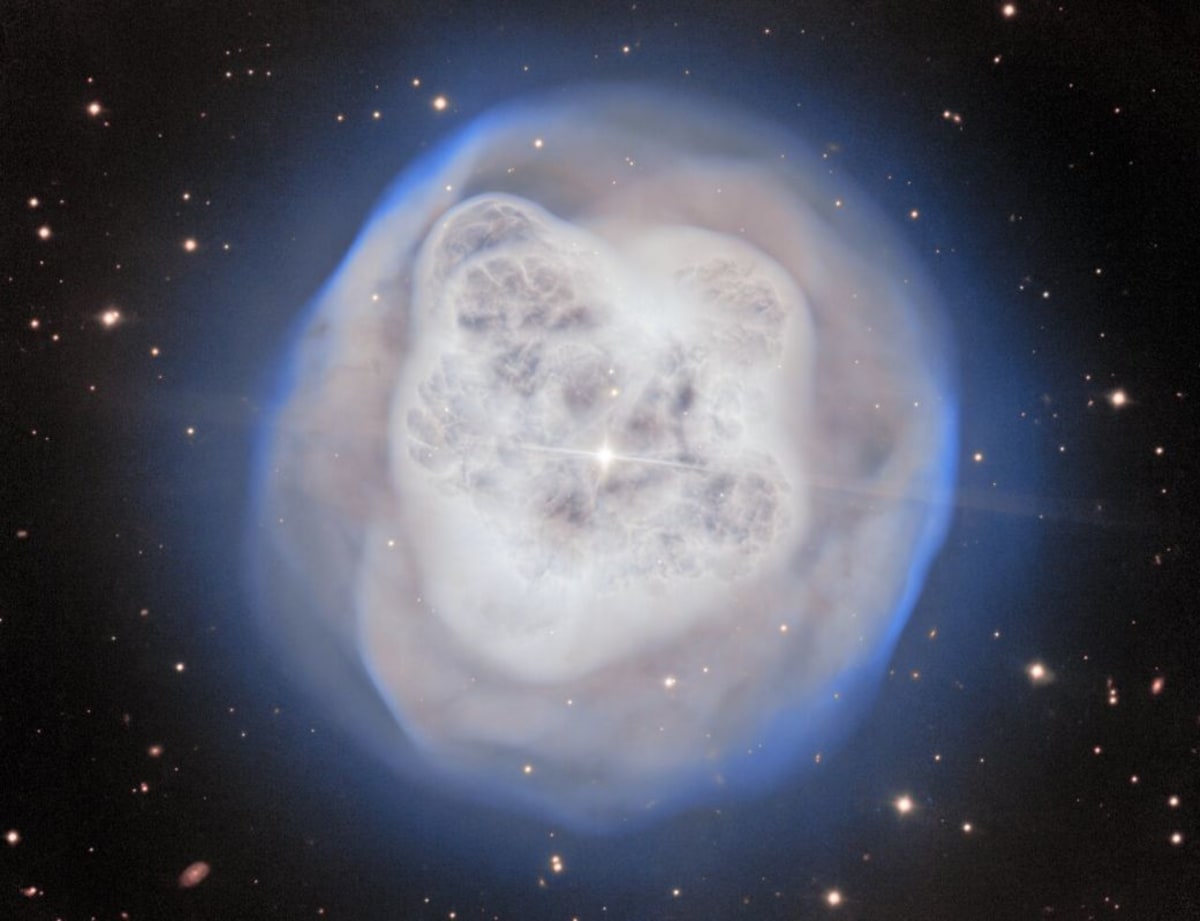
A new image from Hawaii reveals a stunning celestial display as a dying star creates a crystal ball of glowing gas 1,500 light-years away. Scientists are learning how binary star systems create spectacular shapes in their final chapters.
Scientists just shared a breathtaking image that turns our understanding of stellar death into something beautiful.
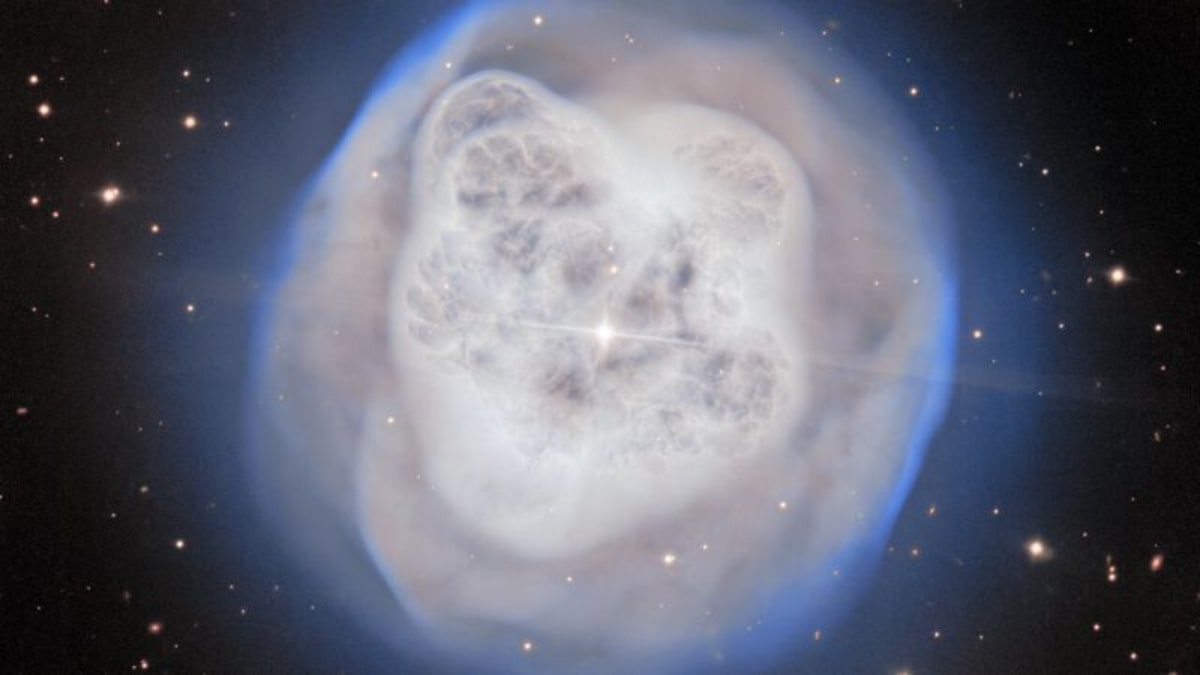
The Gemini North telescope on Hawaii's Maunakea volcano captured the Crystal Ball Nebula in stunning detail. Located 1,500 light-years away in the Taurus constellation, this glowing sphere shows what happens when a star reaches its final act while its companion star orbits nearby.
The scene plays out like a cosmic ballet. One star sheds its outer layers as it dies, while its partner circles around it every nine years. That orbital motion churns the expanding gas into cloudlike swirls, similar to how cotton candy spins into fluffy shapes.
"It's a way to share with people just how amazing our universe is," said astronomer Travis Rector from the University of Alaska Anchorage. His team at NOIRLab set aside evening observation time specifically to capture something awe-inspiring to share with the public.
The vibrant colors tell their own story. Reddish hues reveal hot hydrogen gas, while brilliant blue shows hot oxygen. Special filters on the telescope allowed these specific wavelengths to shine through, painting a portrait of the nebula's chemical makeup.
This isn't just a pretty picture. More than half the stars in our Milky Way galaxy are part of multi-star systems like this one. Understanding how they interact during death helps scientists learn how stars lose mass and enrich space with the building blocks for future solar systems.
Why This Inspires
Even though astronomer William Herschel first spotted this nebula in 1790, technology keeps revealing new details. Modern telescopes capture higher quality images with each passing decade, letting scientists watch these cosmic events unfold in real time.
Planetary nebulae only stay visible for about 10,000 years, a blink in cosmic terms. That brief window means researchers can actually see changes over human timescales. In just 10 to 20 years, they can measure temperature shifts, track expanding gas, and calculate how quickly the star loses mass.
Professor Jan Cami from Western University compares planetary nebulae to butterflies because of their diverse colors and shapes. Different telescopes reveal completely different features of the same object, like looking at a gem from various angles.
The team chose this target not for research data but simply because it looks amazing. Sometimes the best science communication comes from sharing wonder, reminding us that even in death, stars create beauty that outlasts civilizations.
More Images
Based on reporting by Google News - Science
This story was written by BrightWire based on verified news reports.
Spread the positivity!
Share this good news with someone who needs it