Himalayan Water Mills Grind Flour With Zero Electricity
For centuries, traditional Gharats in the Himalayas have used rushing mountain streams to grind flour without a single watt of electricity. These sustainable mills still serve remote villages today, proving ancient technology can meet modern needs.
In remote Himalayan villages, rushing streams power entire flour mills without electricity, fuel, or pollution.
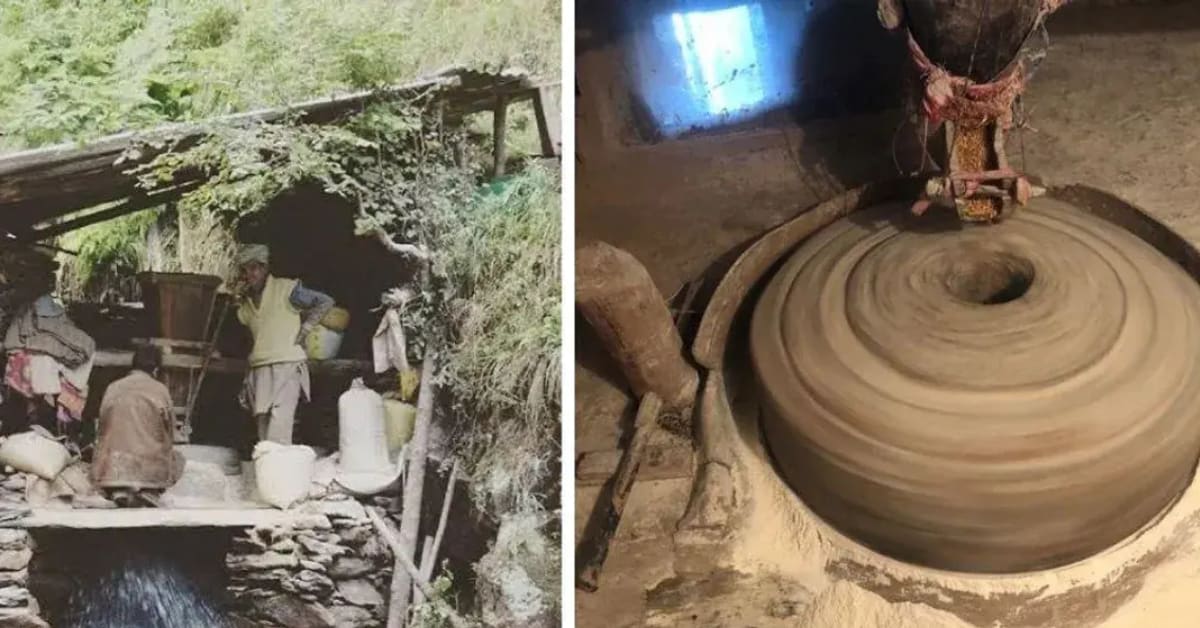
Known as Gharats, these traditional water-powered mills have served mountain communities for centuries. They were grinding grain long before power lines reached the region, and many continue operating today.
The design is beautifully simple. Fast-flowing water strikes a wooden turbine connected to large stone grinders. As the water spins the turbine, the millstones slowly rotate, grinding wheat and maize into fresh flour.
For generations, Gharats formed the backbone of village life and local economies. "Earlier, there was no system of money. People paid in flour, based on how much they got ground. That was enough to survive," recalls Madhavanan Pandey from Chorgaliya village.
The flour itself tells part of the story. Because the stones rotate slowly, the grain grinds at lower temperatures than electric mills produce. This gentle process preserves natural flavors, aromas, and nutrients that high-speed machines often destroy.
Many villagers still prefer Gharat flour over factory-ground alternatives. The difference in taste and quality keeps these ancient mills relevant even as modern technology reaches the mountains.
The Ripple Effect
What makes Gharats remarkable isn't just their longevity but their complete sustainability. They require no electricity, produce zero emissions, and run entirely on renewable water power. They've met a basic daily need for centuries while working in perfect harmony with the landscape.
These mills represent something larger than flour production. They show how communities developed ingenious solutions by understanding and respecting their natural environment. The same mountain streams that nourished crops also powered the tools to process them.
Today, as climate concerns push the world toward renewable energy, these humble mills stand as working proof that sustainable technology isn't new. Mountain communities perfected it generations ago, creating systems that could run indefinitely without depleting resources or harming the environment.
Even as electricity reaches the remotest Himalayan corners, Gharats continue their quiet work. They grind grain as they always have, powered by nothing more than flowing water and centuries of accumulated wisdom about living sustainably.
More Images
%2Fenglish-betterindia%2Fmedia%2Fmedia_files%2F2026%2F06%2F03%2Fwater-powered-flour-mills-2026-06-03-14-02-10.png)

%2Fenglish-betterindia%2Fmedia%2Fmedia_files%2F2026%2F06%2F02%2Fanant-bhikaji-tayade-8-naturals-2026-06-02-18-45-49.png)
Based on reporting by The Better India
This story was written by BrightWire based on verified news reports.
Spread the positivity!
Share this good news with someone who needs it