Hubble and Webb Find Missing Black Hole After 20-Year Hunt
After decades of mystery, NASA's telescopes have finally spotted the first of 10,000 missing black holes hiding in a massive star cluster. The discovery could rewrite what we know about how black holes form and merge across the universe. #
Scientists just solved a cosmic mystery that's been bugging them for decades, and it took two of NASA's most powerful telescopes working together to crack it.
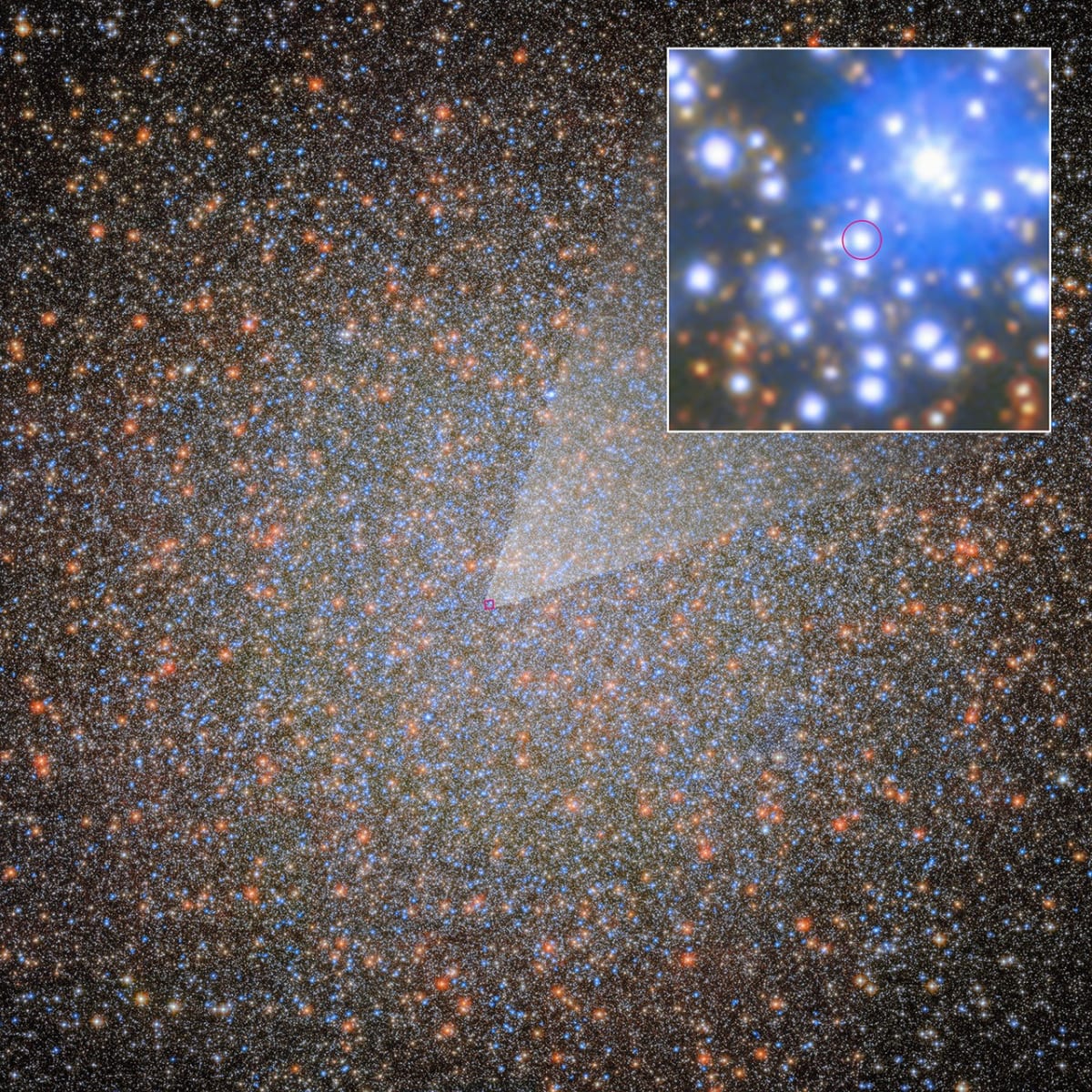
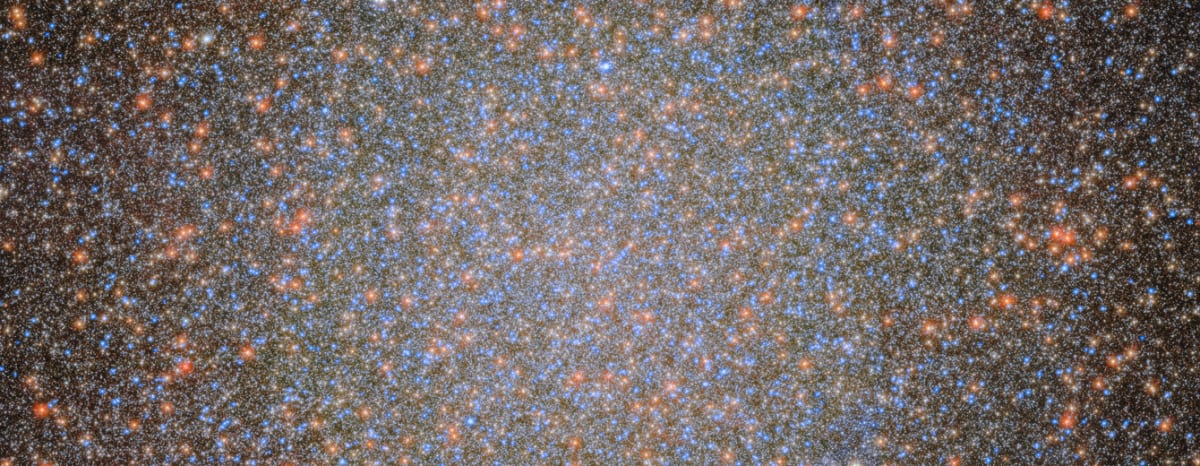
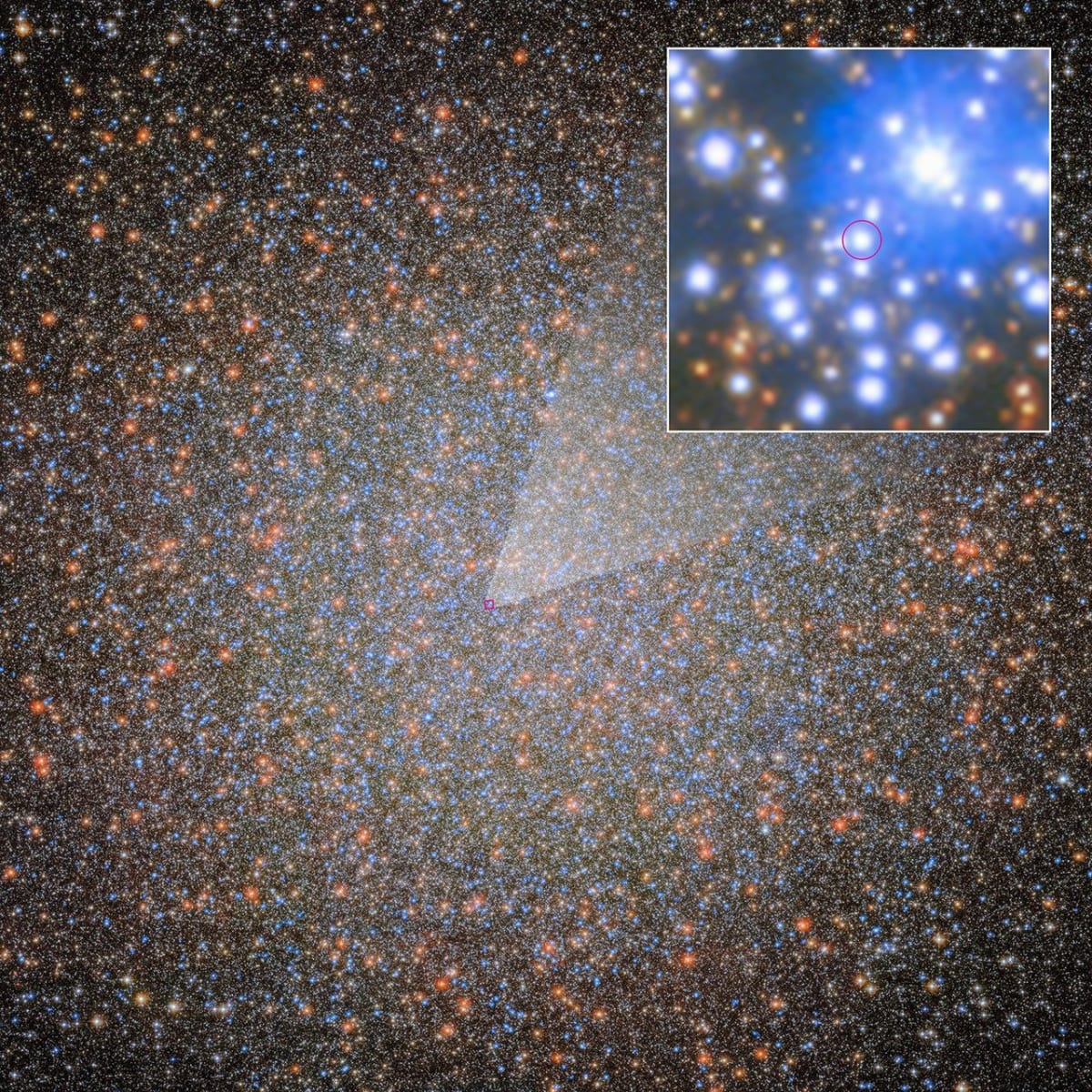
The massive star cluster Omega Centauri holds 10 million stars bound together by gravity. Scientists knew it should contain about 10,000 black holes left behind by exploding stars, but they could never find them. Until now.
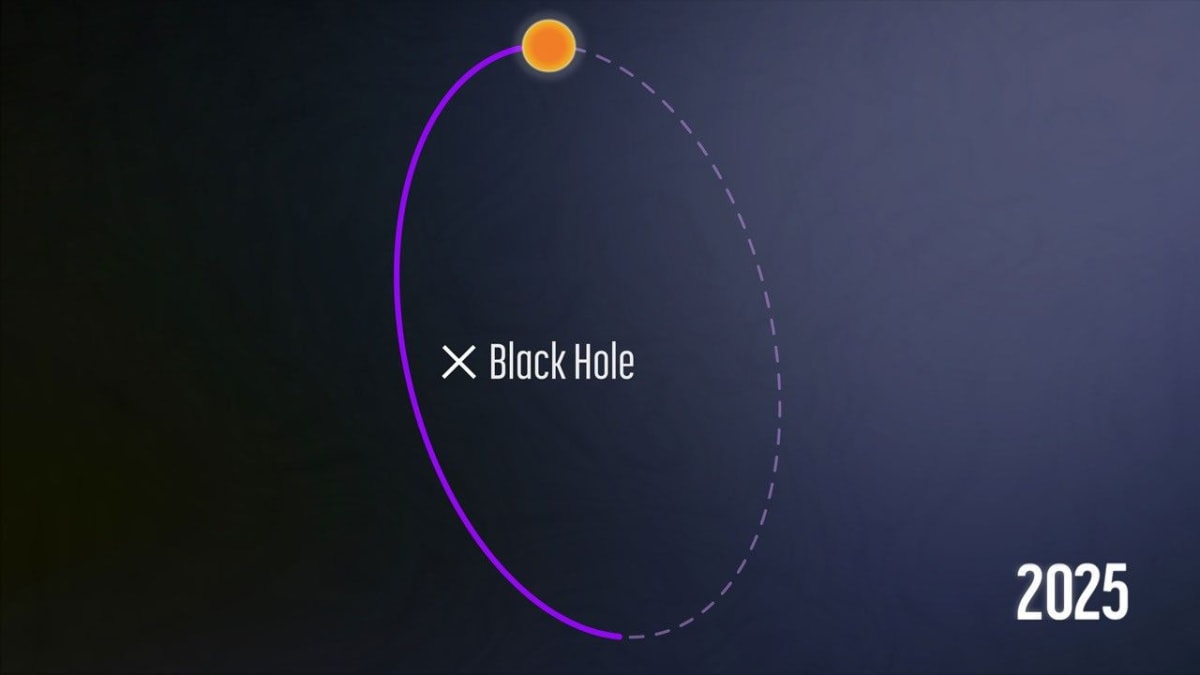
A team led by Matthew Whitaker at the University of Utah combed through more than 20 years of Hubble Space Telescope data and combined it with recent observations from the James Webb Space Telescope. They finally spotted what they were looking for: a star wobbling in a telltale pattern as it orbited an invisible companion so massive it had to be a black hole.
The newly discovered black hole, named oMEGACat BH-2, sits about 18,000 light years from Earth. It weighs in at 4.46 times the mass of our sun, much lighter than expected for this type of environment. Its companion star completes one orbit every 94 years, making it the longest orbital period of any known black hole binary system.
The precision required to spot this cosmic dance is staggering. The team measured movements down to a fraction of a pixel on the telescope detectors. "It would not have been possible to find this black hole without these two space telescopes," said Whitaker.
The discovery also settled an earlier debate. Another team had suggested this binary system might contain a neutron star instead. By expanding the dataset and improving their measurements, the Utah team definitively proved the invisible companion was too heavy to be anything but a black hole.
The Ripple Effect
This first detection opens the door to finding thousands more hiding in Omega Centauri and other star clusters throughout our galaxy. Each discovery helps scientists understand how black holes form in different environments and how they pair up with companion stars.
The research has implications far beyond one star cluster. Understanding how black hole binaries form in crowded stellar environments like Omega Centauri helps scientists interpret gravitational waves, the ripples in spacetime created when black holes merge. These environments are the primary places where scientists think such cosmic collisions happen.
Coauthor Anil Seth notes the black hole's surprisingly low mass challenges current models. "We now know that a metal-poor star is able to form a black hole like this, and we need to figure out how that happens," he said.
The team isn't stopping here. They plan to continue searching Omega Centauri for similar systems and expand their hunt to other star clusters. When NASA's Nancy Grace Roman Space Telescope launches, it will image crowded regions of our galaxy with even greater coverage, potentially revealing many more of these elusive objects.
After 20 years of patient observation and cutting-edge analysis, astronomers have proof that Omega Centauri's missing black holes aren't missing after all.
#
More Images
Based on reporting by Google: James Webb telescope
This story was written by BrightWire based on verified news reports.
Spread the positivity!
Share this good news with someone who needs it