Webb Telescope Reveals 11 Million Stars in Nearby Galaxy
The James Webb Space Telescope just gave us the clearest view ever of galaxy Centaurus A, peering through cosmic dust to reveal millions of individual stars hiding in its core. Scientists are calling it a time machine for understanding how galaxies and black holes grow together.
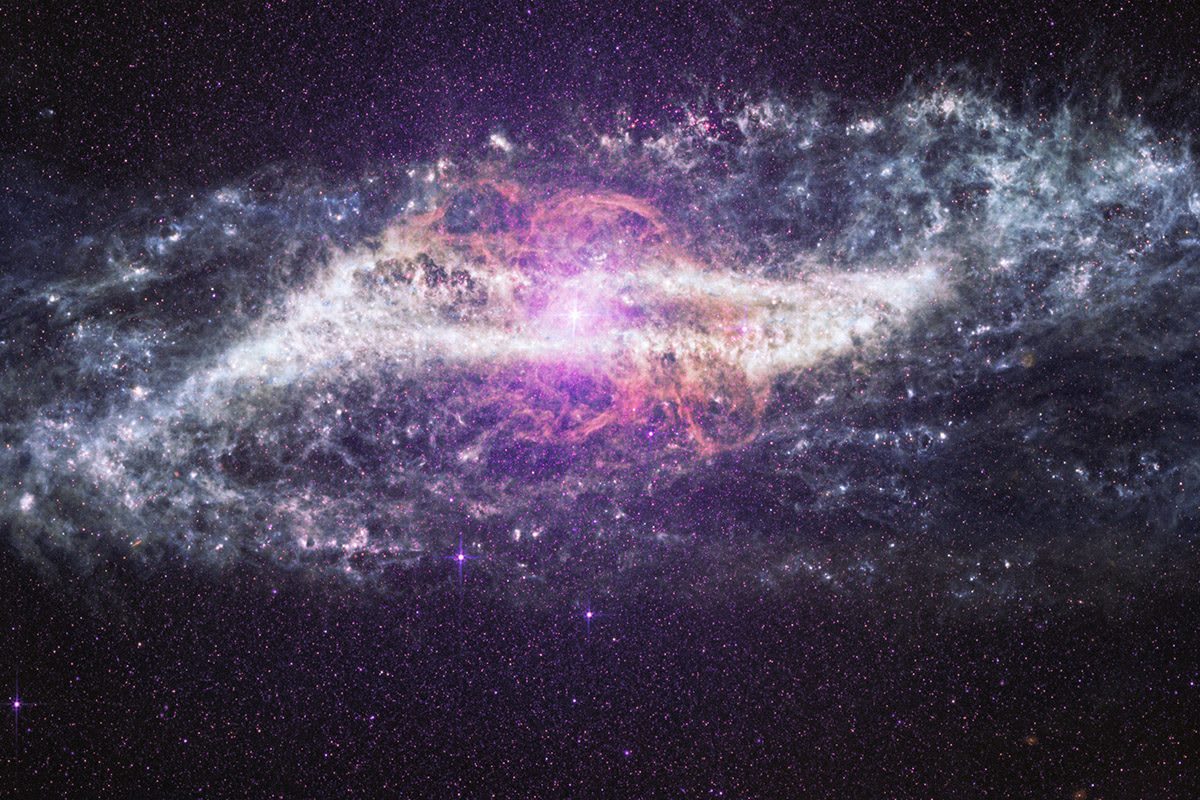
Four years into its mission, the James Webb Space Telescope keeps delivering jaw-dropping discoveries. Its latest achievement captures the galaxy Centaurus A in stunning detail, located just 11 million light-years away.
What makes this image revolutionary isn't just its beauty. Webb's infrared vision cuts straight through thick cosmic dust that normally blocks our view, revealing individual stars scientists could never see before.
The galaxy itself tells an incredible story of cosmic resilience. About two billion years ago, Centaurus A collided with another galaxy in a dramatic merger that should have torn it apart. Instead, that ancient collision sparked new life, creating stellar nurseries where baby stars are forming right now from the recycled material of older stars.
At the heart of this cosmic drama sits a supermassive black hole, constantly feeding on surrounding material and launching powerful jets of energy. Webb captured how this black hole shapes everything around it, pushing gas outward while other material swirls in a warped rotating disk nearby.
Scientists discovered something unexpected too: a mysterious S-shaped structure cutting through the galaxy's center that no one can fully explain yet. These kinds of surprises are exactly what makes Webb so valuable for discovery.
The telescope resolved millions of individual stars in areas that looked like fuzzy blobs to previous observatories. Each star acts like a fossil record, helping astronomers piece together when different generations of stars formed and how the galaxy evolved over billions of years.
The red glowing points scattered throughout are stellar nurseries and aging stars shedding their outer layers. This cosmic recycling program creates the raw ingredients for future planets and star systems, showing how nothing in space goes to waste.
The Ripple Effect
This breakthrough demonstrates how each generation of telescopes builds on the last, expanding what humanity can see and understand. Webb didn't replace earlier space telescopes. It opened an entirely new window into wavelengths and details that were simply impossible to access before.
The anniversary release celebrates four years of performance that exceeded every expectation. Scientists now have a tool that turns familiar galaxies into rich, complex laboratories for understanding how the universe works.
Every new image from Webb rewrites textbooks and raises new questions. The strange structures in Centaurus A will keep astronomers busy for years, unraveling mysteries about galaxy evolution, black hole behavior, and star formation that were hidden in plain sight all along.
This peek into our cosmic neighborhood proves we're living in a golden age of space discovery.
More Images


Based on reporting by Google: James Webb telescope
This story was written by BrightWire based on verified news reports.
Spread the positivity!
Share this good news with someone who needs it