Hubble Captures Baby Stars Being Born 160,000 Light-Years Away
The Hubble Space Telescope has captured a stunning view of newborn stars reshaping their cosmic nursery in a neighboring galaxy. The images show us how stars are born and how they transform the clouds that created them.
Watching stars being born just became a lot more real thanks to a breathtaking new image from the Hubble Space Telescope.
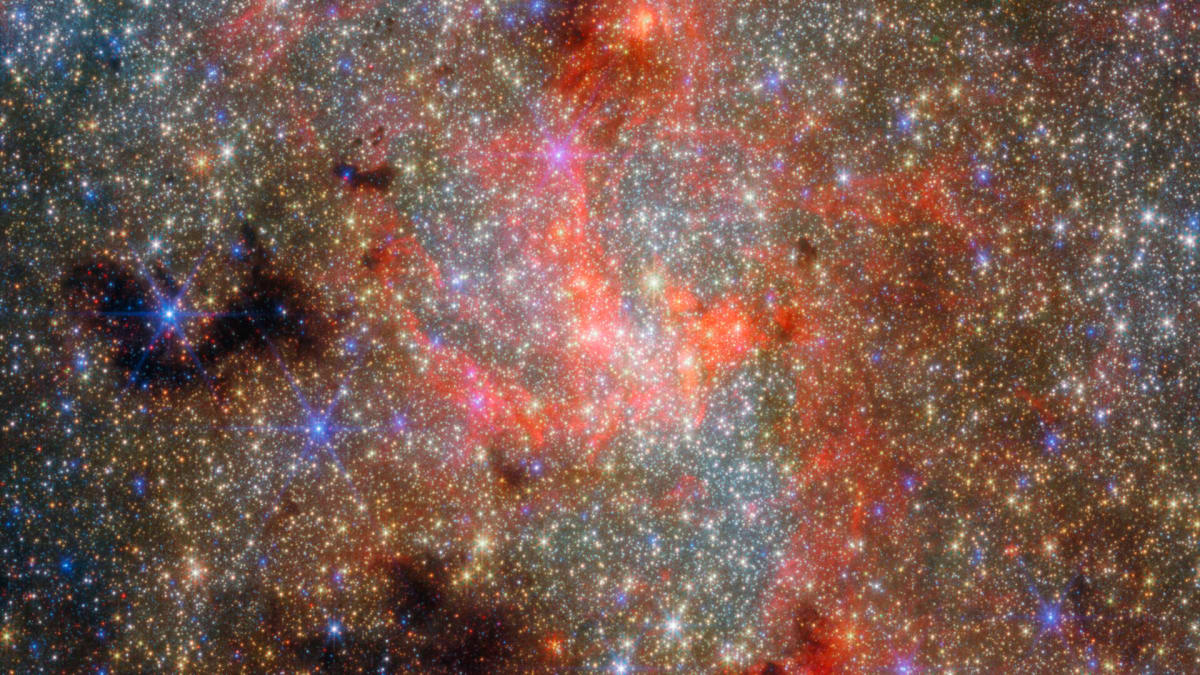
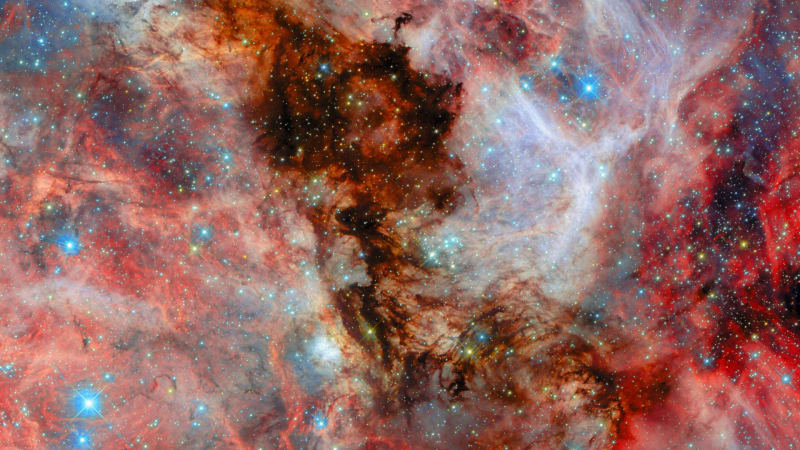
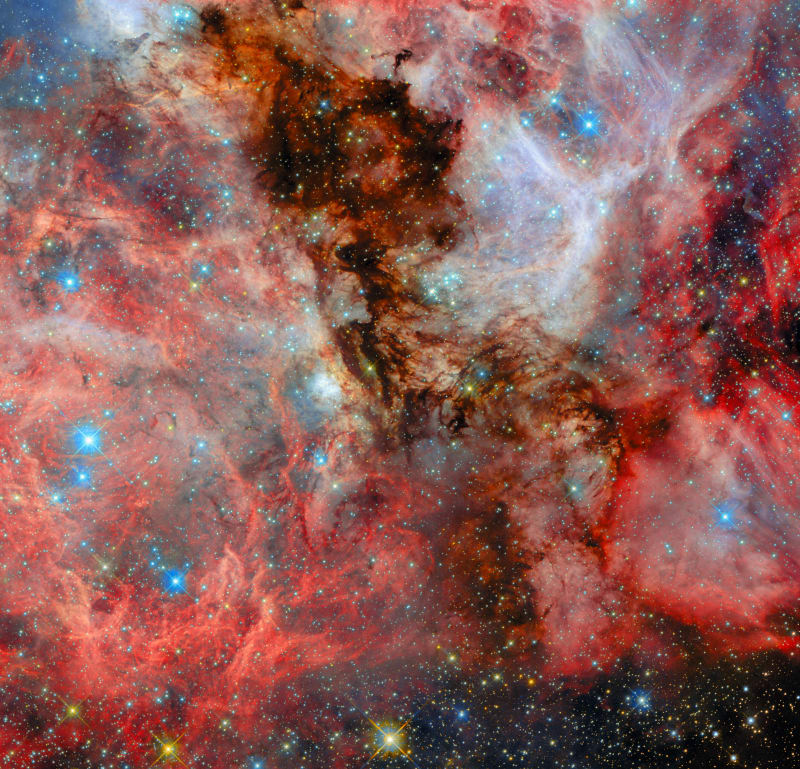
The photo captures the N159 star-forming complex inside the Large Magellanic Cloud, one of our Milky Way's closest galactic neighbors. At 160,000 light-years away, it's near enough for scientists to study the messy, beautiful process of how stars come to life.
The image reveals thick clouds of cold hydrogen gas swirling into ridges and delicate filaments. Deep red glows mark where newly formed stars have energized the surrounding gas with their intense radiation. Where the glow burns brightest, hot young stars have recently roared to life.
These massive newborn stars don't arrive quietly. Their powerful radiation and stellar winds push outward like cosmic bulldozers, carving out bubble-like structures and hollowing cavities in the gas clouds around them. You can see the evidence of this stellar feedback throughout the image.
The Bright Side
What makes this process so fascinating is that it's both creative and destructive at the same time. When young stars blast away material in one area, they can compress gas somewhere else, triggering the birth of even more stars. It's a chain reaction of creation that has been happening since the universe's earliest days.
Scientists captured this view as a parallel image to another recently released photo of the same region. Together, these snapshots help astronomers piece together what's happening across an entire star factory rather than just one isolated hotspot. The Large Magellanic Cloud stretches roughly 150 light-years across, giving researchers a vast laboratory for understanding stellar birth.
Because this galactic neighbor has a slightly different composition than our own Milky Way, watching star formation there helps scientists understand how the process works in varied cosmic environments. Each image adds crucial details to our knowledge of how the first stars in the early universe might have formed.
The Hubble Space Telescope continues to deliver windows into processes happening thousands of centuries ago, showing us that creation is always unfolding somewhere in the cosmos.
More Images

Based on reporting by Space.com
This story was written by BrightWire based on verified news reports.
Spread the positivity!
Share this good news with someone who needs it