Hubble Captures Sharpest Image Yet of Rare Galaxy Type
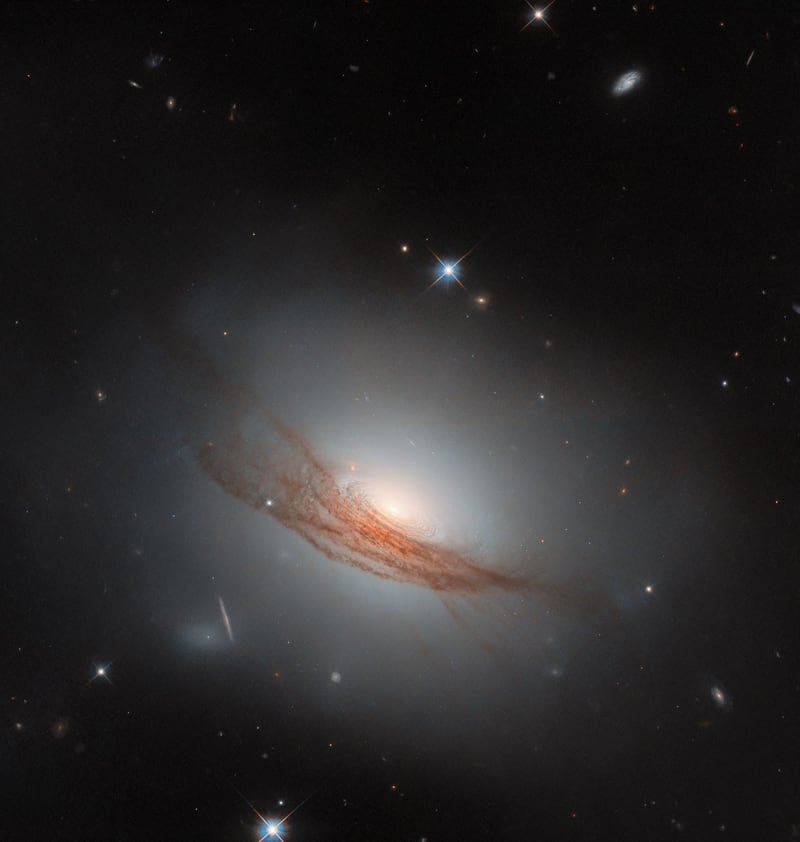
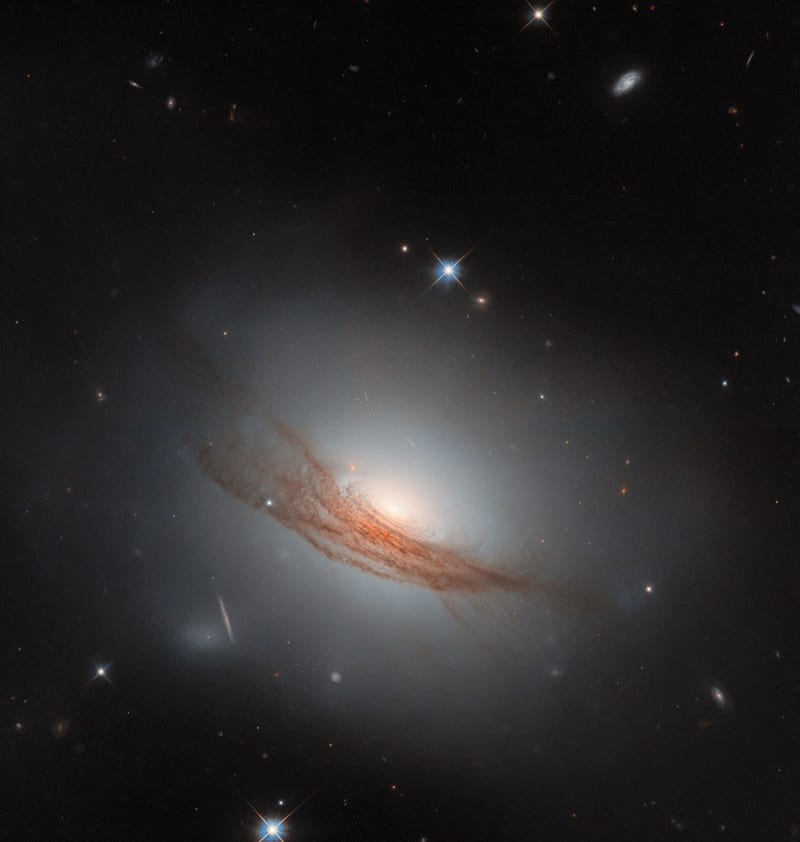
NASA's Hubble Space Telescope has delivered the clearest view ever of NGC 7722, a rare lens-shaped galaxy 187 million light-years away. The stunning image reveals swirling rings of dust and gas around a brilliant core, offering scientists a better look at one of the universe's less common galaxy types.
The universe just got a little clearer, thanks to a stunning new image from the Hubble Space Telescope that captures a rare type of galaxy in unprecedented detail.
Released on January 30, 2026, the photograph shows NGC 7722, a lenticular galaxy sitting 187 million light-years away in the constellation Pegasus. The image reveals concentric rings of dust and gas spiraling around the galaxy's bright nucleus with breathtaking clarity.
Lenticular galaxies are the universe's middle children, caught between the familiar spiral galaxies like our Milky Way and smooth elliptical galaxies. The name comes from their lens-like shape when viewed edge-on.
These galaxies are less common than their spiral and elliptical cousins, partly because they're tricky to classify. Their ambiguous appearance makes it hard for astronomers to determine whether they're looking at a spiral, an elliptical, or something in between.
This new image is the sharpest ever taken of NGC 7722. The improved resolution helps scientists better understand how these transitional galaxies form and evolve over billions of years.
The photograph represents a collaboration between NASA, the European Space Agency, and astronomers at UC Santa Cruz. The clarity achieved in this image demonstrates how Hubble continues to push the boundaries of space observation, even after decades in orbit.
Why This Inspires
Even after more than three decades in space, Hubble keeps surprising us with sharper views of the cosmos. Each new image reminds us that there's always more to discover, even when looking at galaxies we've photographed before.
This image shows how persistence in scientific exploration pays off. Better technology and techniques mean we can revisit old subjects and find new details that help answer fundamental questions about how the universe works.
The photograph proves that wonder exists at every scale, from our backyard to objects 187 million light-years away, reminding us we're part of something magnificently vast and endlessly fascinating.
More Images
Based on reporting by NASA
This story was written by BrightWire based on verified news reports.
Spread the positivity!
Share this good news with someone who needs it