Hubble Reveals 500,000 Stars in Ancient Cluster
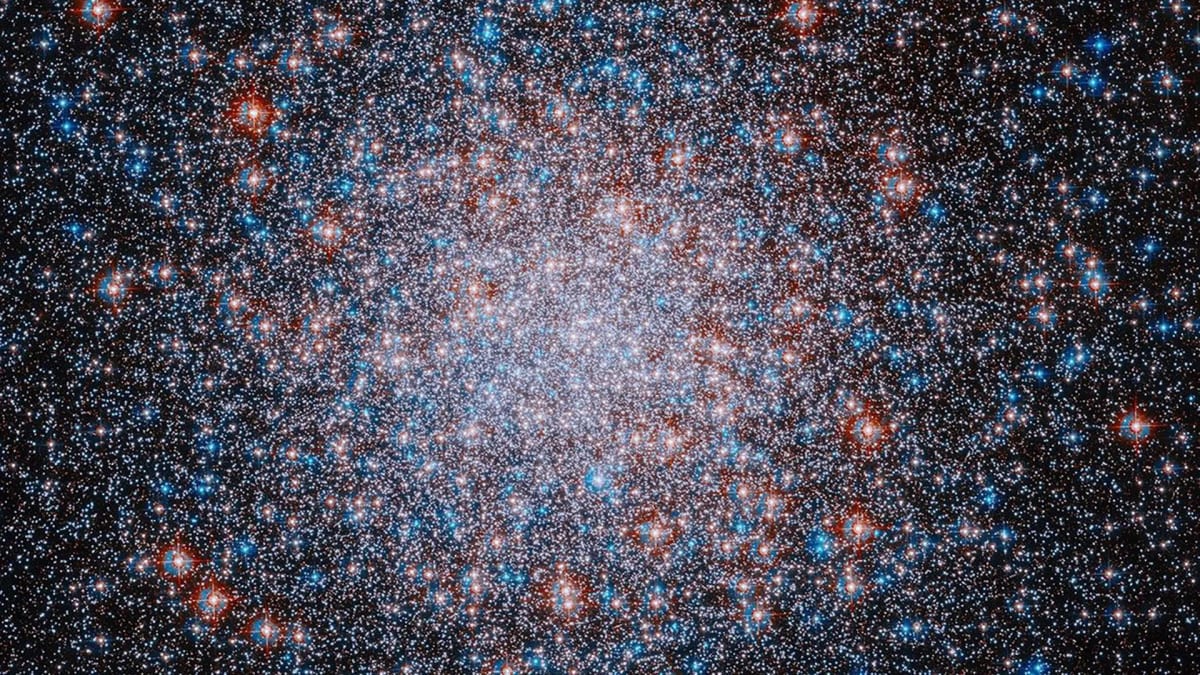
NASA just released a stunning new image of more than half a million stars packed into one ancient cluster, and it's helping scientists piece together how our galaxy was born. The dazzling portrait of Messier 3 reveals cosmic secrets hidden for billions of years.
More than 500,000 stars are glowing together in a new portrait from NASA's Hubble Space Telescope, creating one of the most stunning cosmic images ever captured. The breathtaking view shows Messier 3, a massive globular cluster that's been hiding clues about the Milky Way's birth for billions of years.
Globular clusters are dense, spherical collections of stars bound together by gravity. What makes them special is that all their stars formed at roughly the same time from the same cloud of gas, preserving an ancient snapshot of our galaxy's earliest days.
Messier 3 stands out among the 150 known globular clusters orbiting our galaxy. It contains more than 240 RR Lyrae variable stars, more than any other cluster we've found, and these pulsating ancient stars act like cosmic measuring sticks for astronomers.
These special stars brighten and dim in predictable patterns, allowing scientists to calculate their exact distance from Earth. It works just like estimating how far away car headlights are at night when you know how bright they should be.
The cluster also holds around 70 "blue straggler" stars that puzzle astronomers with their youthful appearance. These stars shine bright blue even though they're just as old as their redder neighbors, likely because they pulled extra material from nearby companion stars and got a second lease on life.
Why This Inspires
What makes Messier 3 truly fascinating is what it reveals about cosmic history. The cluster contains two distinct populations of stars, suggesting it formed when two separate globular clusters crashed together billions of years ago.
Scientists believe those original clusters belonged to a smaller dwarf galaxy that the Milky Way eventually absorbed. Messier 3 survived as a relic of that ancient collision, a time capsule preserving the story of how our galaxy grew by consuming its smaller neighbors.
The colors in Hubble's image aren't just beautiful, they're informative. Blue represents hotter stars, while red shows cooler ones, letting astronomers read the cluster's temperature map at a glance.
This image is part of a larger Hubble project surveying about half of all known globular clusters in the Milky Way. By comparing these ancient star systems, researchers are building a detailed timeline of our galaxy's evolution spanning billions of years.
After more than 30 years in space, Hubble continues revealing cosmic secrets alongside newer telescopes like James Webb. Together, these observatories are helping us understand where we came from, one stunning image at a time.
Based on reporting by Google News - Science
This story was written by BrightWire based on verified news reports.
Spread the positivity!
Share this good news with someone who needs it