Hubble Spots 'Cosmic Bullets' Racing 20 Million MPH
NASA's Hubble telescope just revealed a stellar explosion firing mysterious clumps of gas through space at mind-bending speeds. After 25 years of mystery, scientists finally understand what powers this rare cosmic phenomenon.
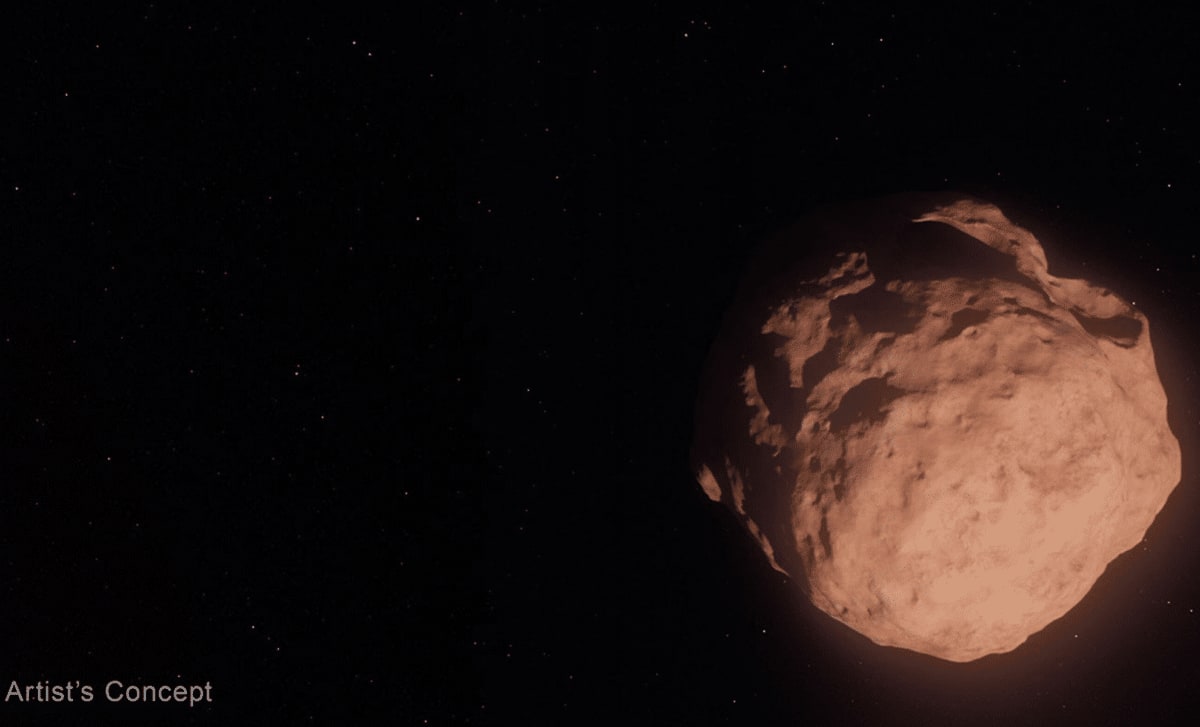
Scientists watching a unique stellar explosion have discovered something never seen before: cosmic "bullets" of gas racing through the Milky Way at 20 million miles per hour.
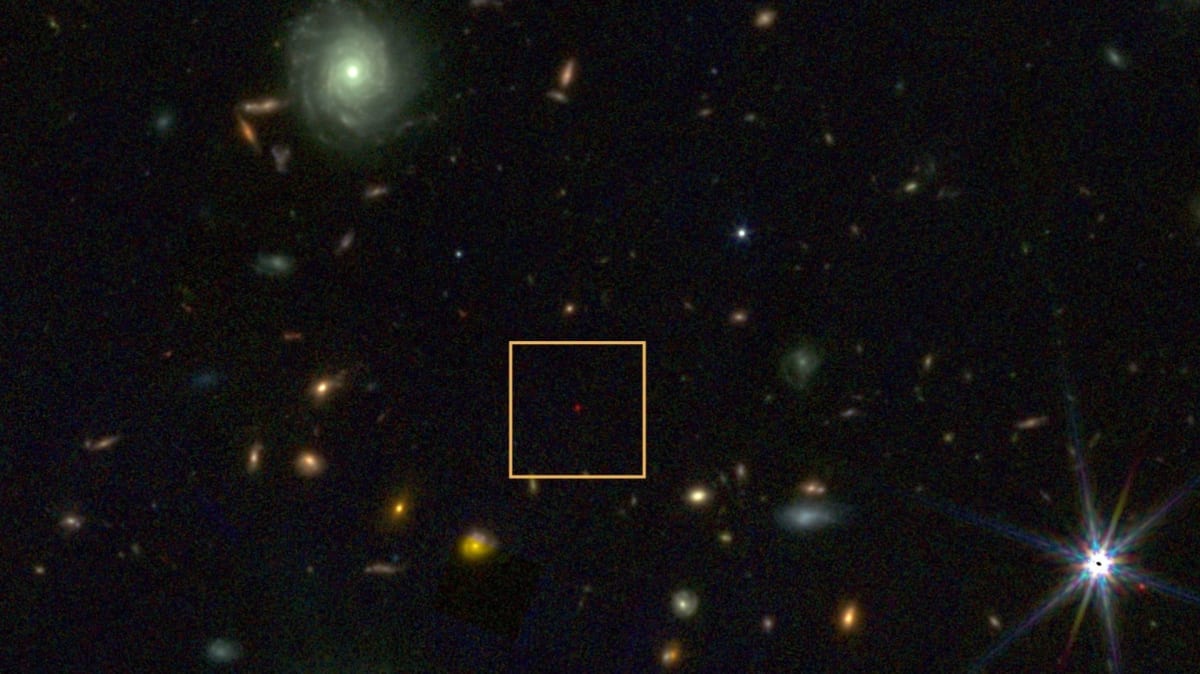
The explosion, called V445 Puppis, first erupted in 2000 and is the only known "helium nova" in our entire galaxy. For over two decades, astronomers couldn't study it properly because a thick cloud of dusty debris blocked their view.
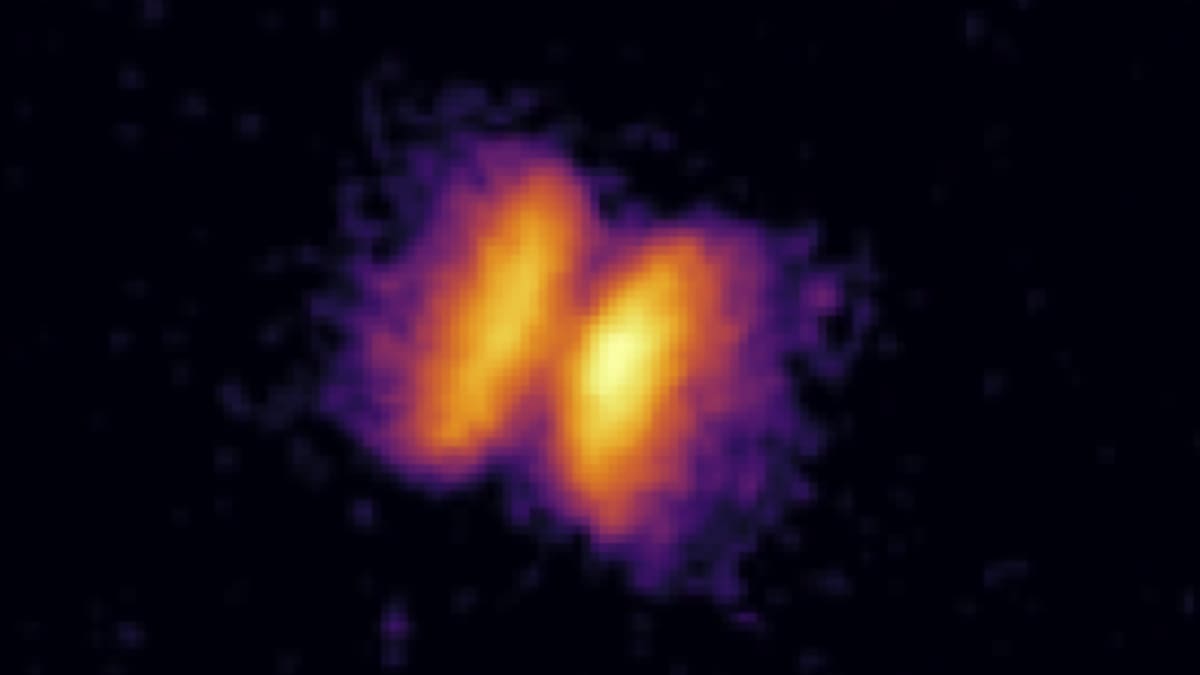
When the debris finally cleared, NASA's Hubble Space Telescope revealed the spectacular scene. The explosion created twin plumes of material stretching over a trillion miles, resembling butterfly wings spreading across space.
But the real discovery came when researchers spotted mysterious clumps of potentially oxygen-rich gas shooting outward at incomprehensible speeds. "The origin of these 'bullets' is a mystery," said John Mills, a researcher at the University of Warwick in the UK. "Bullets of this kind have not been observed in any other nova."
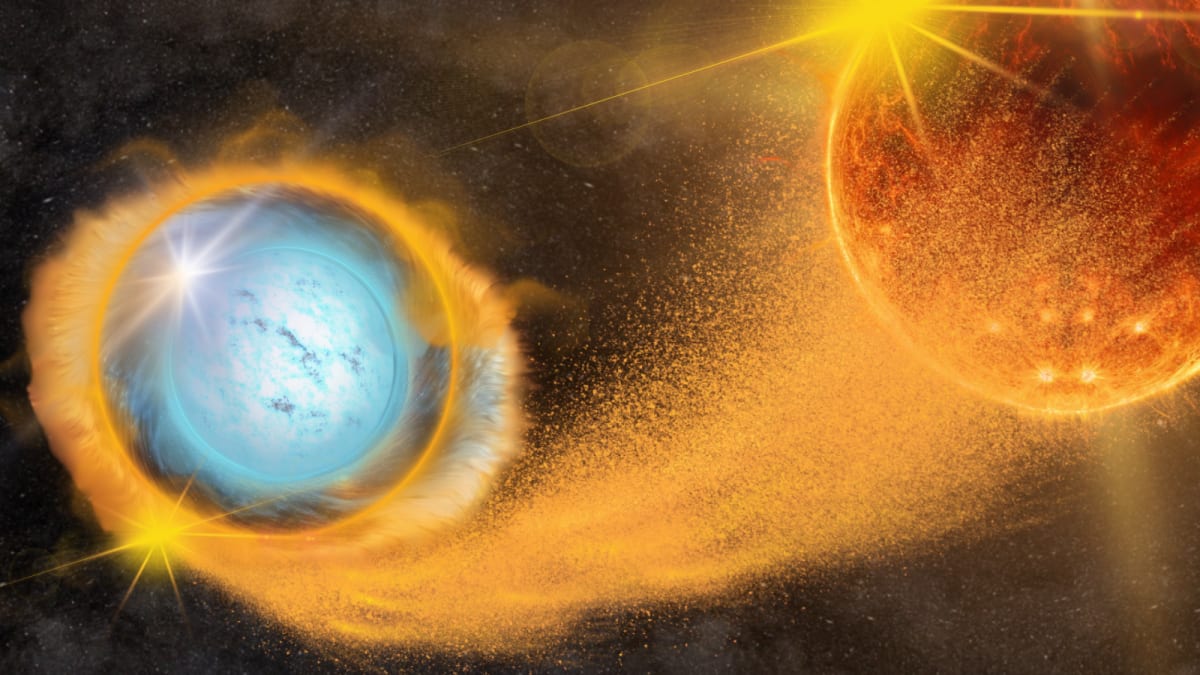
The team also solved a 25-year puzzle about what caused this rare explosion. V445 Puppis contains a dead star called a white dwarf that's feeding on an extremely rare companion called a helium star. Only a few thousand helium stars have been discovered among the billions populating our galaxy.
Here's how it works: the white dwarf strips helium-rich material from its companion star. As this material piles up on the white dwarf's surface, pressure and temperature build until a thermonuclear explosion occurs.
Most novas involve hydrogen-rich material, making helium novas exceptionally rare. Mills called the confirmation "very exciting" after decades of uncertainty about what powered this galactic eruption.
The discovery gets even more intriguing. Mills found that the white dwarf has already started feeding again on its companion star, meaning another helium nova could occur soon.
If the white dwarf keeps overfeeding, it might trigger an entirely different type of explosion called a Type Ia supernova. These massive blasts completely destroy the white dwarf and shine so regularly that astronomers use them as cosmic measuring sticks to calculate distances across the universe and gauge how fast space itself is expanding.
Why This Inspires
This discovery shows how patience and persistence in science pay off in spectacular ways. What started as a mysterious flash in 2000 became a 25-year journey that revealed one of nature's rarest cosmic laboratories.
The V445 Puppis system now offers scientists an unprecedented opportunity to study how rare stellar explosions work and potentially witness the buildup to a supernova. Understanding these explosions helps us measure the universe itself and unravel mysteries like dark energy, the invisible force driving our cosmos to expand faster and faster.
Sometimes the most beautiful discoveries come from simply waiting for the dust to clear.
More Images

Based on reporting by Space.com
This story was written by BrightWire based on verified news reports.
Spread the positivity!
Share this good news with someone who needs it