IceCube Observatory Upgrade Unlocks Universe's Hidden Secrets
Scientists at Antarctica's South Pole just supercharged the world's largest neutrino detector, making it sensitive enough to see the invisible particles that hold secrets about exploding stars and the cosmos. The upgrade could help us witness a supernova in real time.
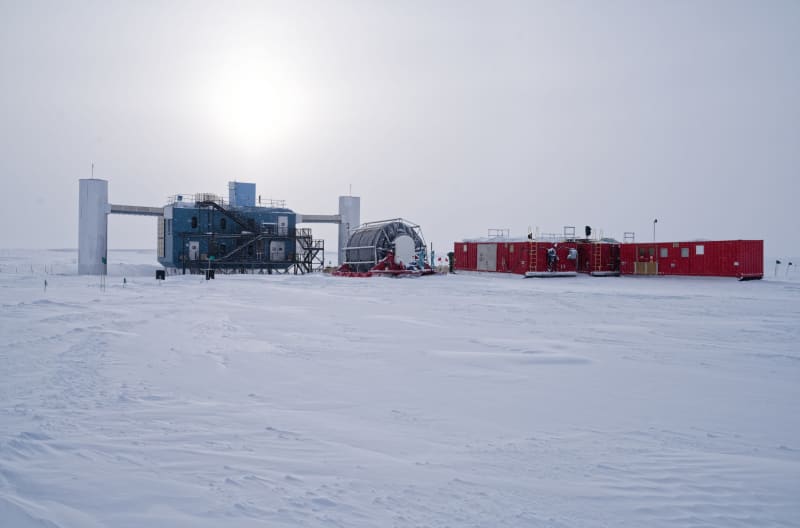
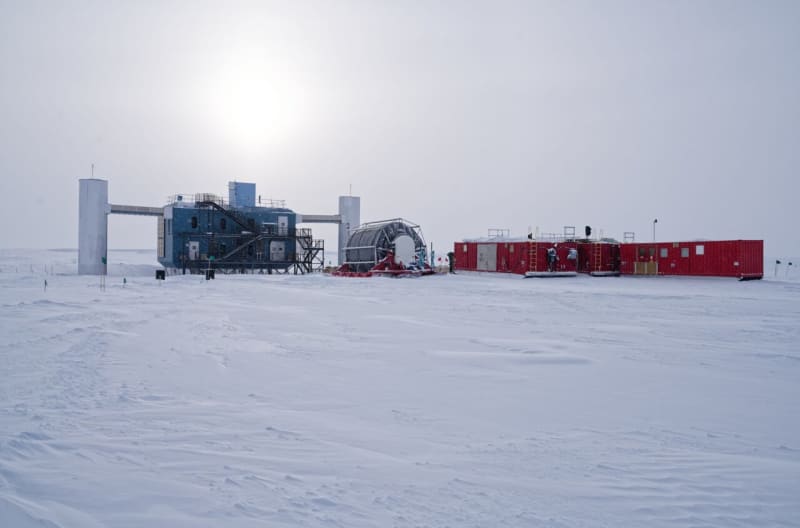
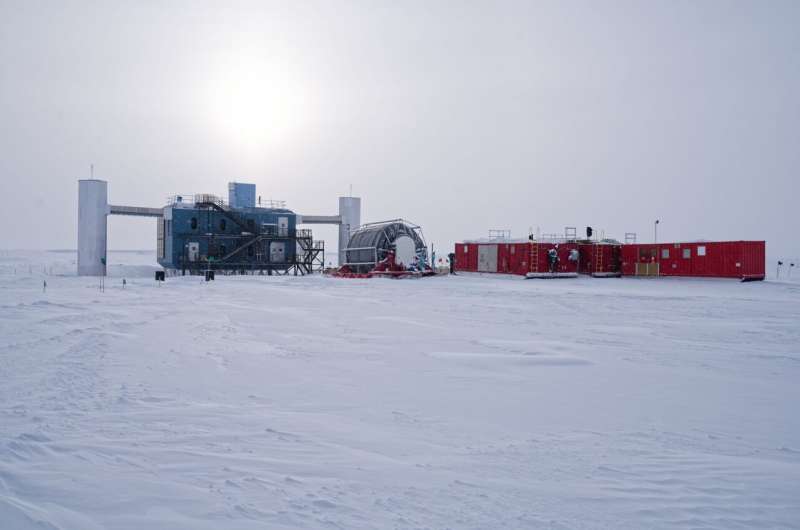
Deep beneath Antarctica's ice, scientists just finished upgrading a detector the size of a small city that catches invisible particles from the edge of the universe.
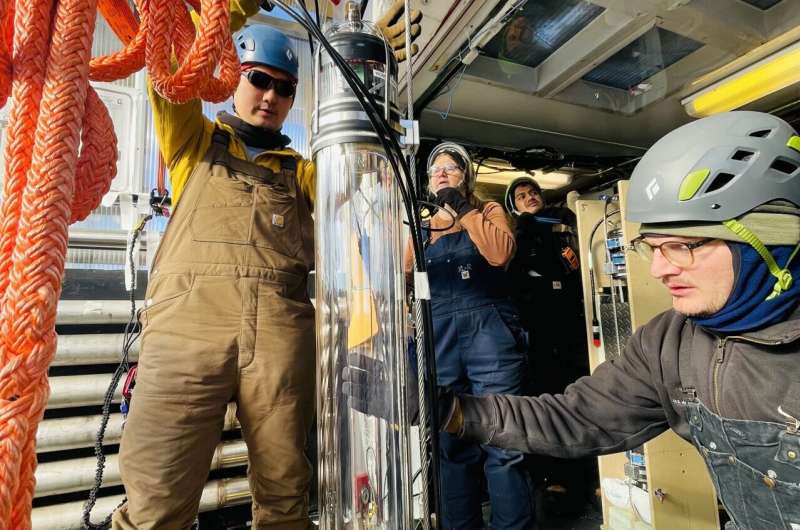
The IceCube Neutrino Observatory, buried under the South Pole, uses 5,000 ultra-sensitive light sensors frozen in a cubic kilometer of crystal-clear ice. Between December 2025 and January 2026, researchers added six new sensor strings packed with 650 cutting-edge detectors, making the observatory sharper than ever.
Neutrinos are ghostly particles so elusive they pass through entire planets without touching anything. When one rare neutrino finally does interact with ice, it creates a flash of blue light that IceCube's sensors can catch. By measuring this light, scientists reconstruct where the neutrino came from and what cosmic event created it.
Since 2010, IceCube has been tracking high-energy neutrinos from space, already giving us our first peek inside an active galaxy. The new upgrade pushes the detector's vision even further, letting it see lower-energy neutrinos that were previously invisible.
Scientists at Johannes Gutenberg University Mainz developed nine special modules called WOMs (wavelength-shifting optical modules) that can detect ultraviolet light the original sensors missed. PhD student Lea Schlickmann led the team that built these innovative detectors, which capture light that would otherwise vanish in the ice.
Why This Inspires
This upgrade transforms IceCube from a good telescope into an extraordinary one. The higher resolution can even be applied to ten years of stored data, instantly improving every measurement they've ever made.
The WOMs could help us witness something astronomers have dreamed about for decades: detecting neutrinos from a supernova explosion as it happens. When massive stars die, they blast neutrinos through space eight hours before their light reaches us, giving humanity an early warning to point every telescope at the cosmic fireworks.
Professor Sebastian Böser's team focuses on the hardest neutrinos to detect, including those from atmospheric interactions and stellar explosions. These tricky particles reveal fundamental properties about how the universe works at its smallest scales.
The collaboration between German, Swedish, and American research teams shows what's possible when scientists work together on ambitious goals. What started in Mainz in 1999 has grown into a global effort to understand the universe's most mysterious messengers.
IceCube now stands ready to catch neutrinos from exploding stars, colliding galaxies, and cosmic events we haven't even imagined yet, bringing us closer to understanding the forces that shape our universe.
More Images

Based on reporting by Google News - Science
This story was written by BrightWire based on verified news reports.
Spread the positivity!
Share this good news with someone who needs it