Indian Firm's Flow Batteries Store Solar Power for Decades
A battery that lasts 20 years without wearing out just won its biggest contract yet in India's massive solar energy park. The technology could finally solve the puzzle of storing sunshine for nighttime use.
Solar panels generate power when the sun shines, but people need electricity after dark. That timing mismatch has become the biggest obstacle to India's renewable energy buildout, and a company in Gurugram thinks it has the answer.
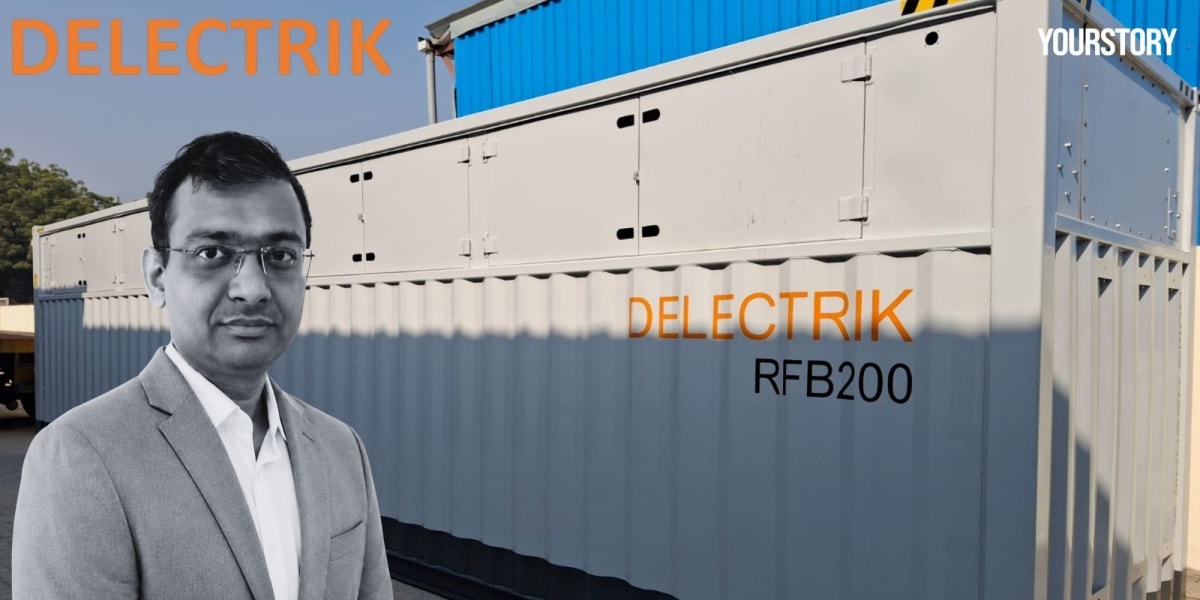
Delectrik Systems builds flow batteries, a different kind of energy storage that trades compact size for longevity. Unlike the lithium batteries in your phone that degrade with every charge, flow batteries pump liquid electrolyte past a membrane to generate power. Because the liquid isn't consumed in the reaction, these systems can run for two decades with minimal wear.
The company just secured its breakthrough project: a 100 megawatt-hour installation at Khavda, a renewable energy park in Gujarat being built to reach 30 gigawatts of generation by 2029. That makes it one of the largest solar sites on Earth, and storage is what turns midday sunshine into evening electricity.
Delectrik's founder Vishal Mittal chose vanadium redox chemistry for good reasons beyond durability. The electrolyte is water-based and doesn't burn, eliminating the fire risk that has plagued large lithium installations. The batteries can also sit fully discharged without damage, something lithium systems can't tolerate.
The company isn't just building batteries. It created two subsidiaries to control more of the supply chain: Delectrik Resources to produce vanadium oxide, and Delectrik Esaas to sell storage as a service to commercial customers and data centers.
That vertical integration matters because vanadium supply is concentrated globally, and the electrolyte represents a major cost. Controlling the material from source to installation gives Delectrik an edge over competitors buying on the open market.
The Ripple Effect
The company proved its technology with a smaller 3 megawatt-hour system at NTPC's Greater Noida facility in 2025. That reference project opened the door to Khavda, which NTPC Renewable Energy Limited awarded through its utility subsidiary with deployment scheduled for 2027.
Delectrik now aims for a gigawatt-hour order book within twelve months, targeting projects across India, Australia, Southeast Asia and Africa. For countries racing to add solar capacity, batteries that last decades without replacement suddenly make economic sense where space is available.
The shift from lithium to flow batteries for grid storage mirrors a broader pattern in energy technology: different jobs need different tools. Your phone still needs lithium's compact punch, but a solar farm can trade footprint for a system that outlasts the panels themselves.
India added solar generation far faster than storage capacity, creating the bottleneck Delectrik is positioned to address with technology that matches the problem's actual requirements.
More Images




Based on reporting by YourStory India
This story was written by BrightWire based on verified news reports.
Spread the positivity!
Share this good news with someone who needs it