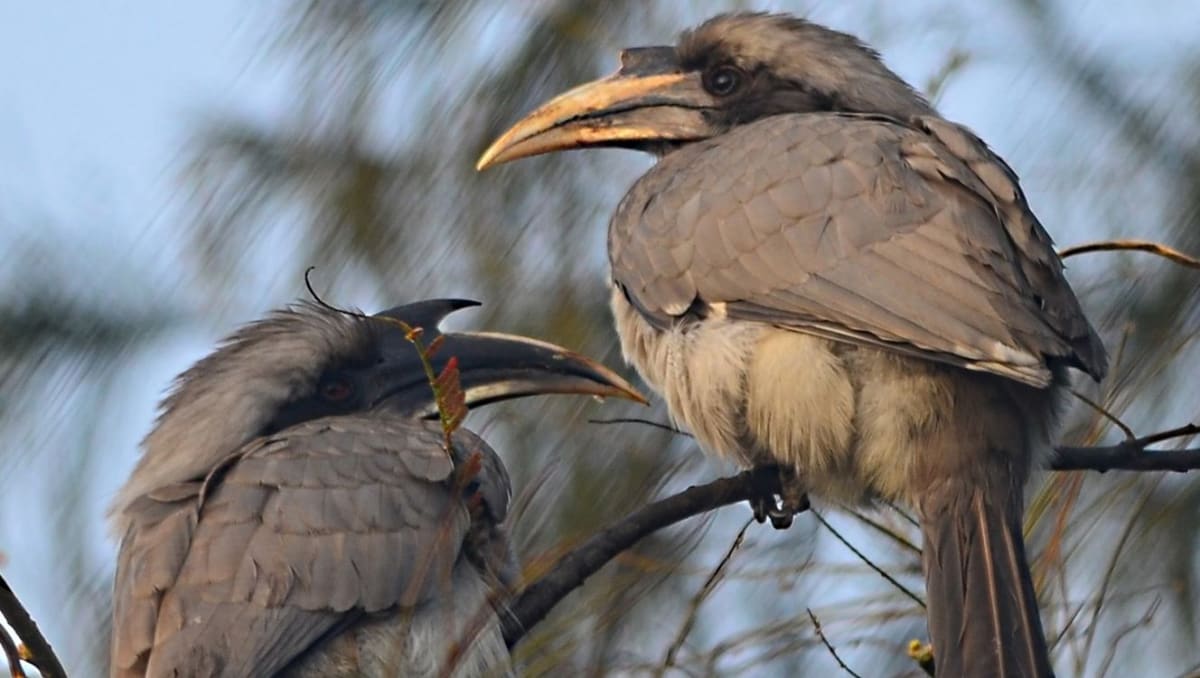
Indian Grey Hornbills Breed in Gujarat After 60-Year Absence
After vanishing from Gujarat's Gir National Park for six decades, Indian grey hornbills are thriving again thanks to a strategic conservation program. The population now numbers 40 birds breeding successfully on their own.
For the first time since the 1960s, Indian grey hornbills are raising chicks in Gujarat's Gir National Park, marking four consecutive years of successful breeding since their return.
The 24-inch birds disappeared from the 540-square-mile desert reserve decades ago, victims of habitat loss that robbed them of the one thing they desperately need: old trees. These social birds require massive, mature native trees with hollows large enough to nest inside, plus plenty of fruit-bearing trees nearby to feed their young.
In 2021, conservationists launched a reintroduction program, but bringing the birds back was only half the battle. Teams spent years restoring degraded areas inside Gir, protecting existing old-growth trees and allowing new ones to mature into the towering giants hornbills need.
The hard work paid off. The population has grown to 40 birds and counting, with breeding pairs successfully raising chicks each year since the program began.
The Ripple Effect
Indian conservationists consider the grey hornbill an indicator species, meaning its success signals a healthy ecosystem that benefits countless other animals. When hornbills thrive, the entire landscape is flourishing. When they disappear, it's an early warning that habitat degradation will soon threaten other wildlife.
The population has now reached a crucial milestone: self-sustaining breeding. Future generations of hornbills will raise their young in Gujarat without needing human intervention or additional reintroductions to keep the population alive.
The comeback proves that thoughtful habitat restoration, not just animal reintroduction, is the key to bringing vanished species home for good.
More Images



Based on reporting by Good News Network
This story was written by BrightWire based on verified news reports.
Spread the positivity!
Share this good news with someone who needs it