Indian Lab Breaks Solar Cell Efficiency Record at 29.8%
Scientists at IIT Bombay have cracked a ceiling that's limited solar panels for decades by stacking two different materials to capture more sunlight. Their breakthrough could make clean energy cheaper and more powerful.
Solar panels have been stuck for years, bumping against a wall that physics won't let them break through.
Silicon, the material in nearly every solar panel on the planet, can only convert about 29% of sunlight into electricity. It absorbs some wavelengths beautifully and wastes others, and no amount of engineering can change that fundamental limit.
A team at IIT Bombay just found the way around it. They built a solar cell that stacks a second layer on top of silicon, one that catches the wavelengths silicon misses.
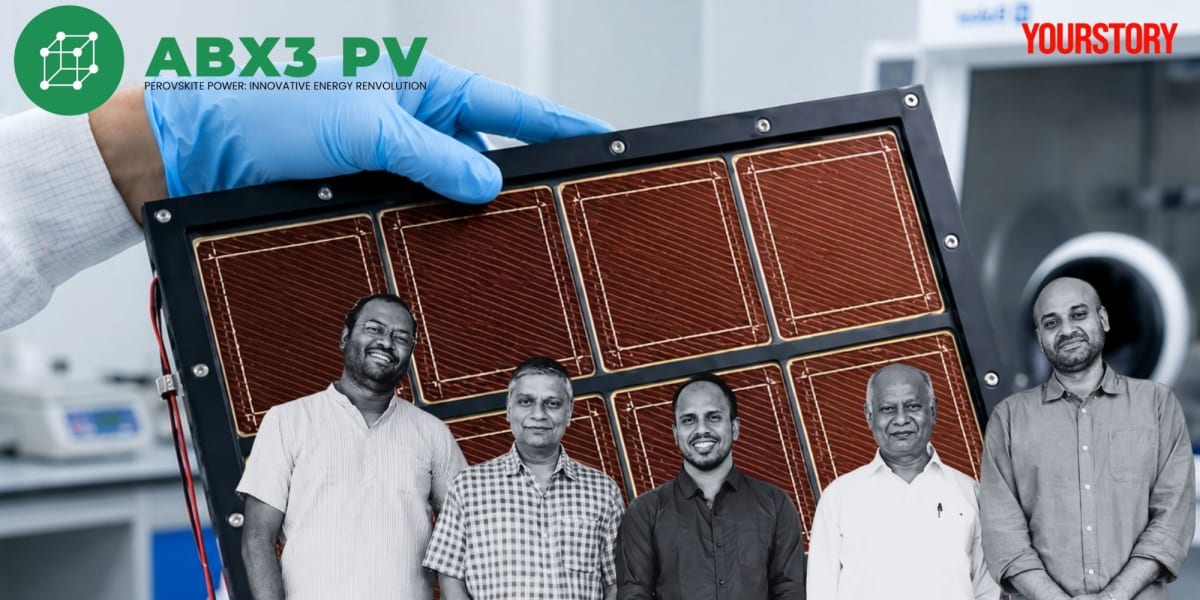
The company behind the work is called ART-PV, and it grew out of 15 years of research at India's National Centre for Photovoltaic Research and Education. Professor Dinesh Kabra leads the effort from IIT Bombay's research park in Mumbai.
Their tandem cell hit 29.8% efficiency in lab testing, already beating what any single layer of silicon can achieve. The top layer uses a material called perovskite, which can be tuned like an instrument to absorb exactly the light you need it to catch.
What makes this commercially interesting is compatibility. The technology works on both types of commercial solar panels: the crystalline silicon that dominates worldwide, and the thin film panels that are the main alternative.
Two of India's biggest solar manufacturers saw enough promise to become partners. Waaree, the country's largest crystalline silicon maker, and First Solar, which runs a thin film plant near Chennai, both hold preferential licensing rights in exchange for helping develop the technology.
The Indian government is putting $10 million toward a pilot manufacturing facility at IIT Bombay. It's designed to move beyond laboratory samples and start producing commercial cells that could go into actual panels.
The Bright Side
This isn't just about squeezing a few more percentage points from a solar panel. Breaking past silicon's limit means the same rooftop could generate more power from the same sunlight, making clean energy cheaper without needing more space.
India has been pouring resources into solar research for over a decade, and it's starting to pay off. The National Centre for Photovoltaic Research has received over $25 million in government funding since 2010, building the kind of institutional depth that usually takes startups years to acquire.
There's still work ahead. The team hasn't published durability results or a production timeline, and perovskite has a known weakness: it breaks down under heat, moisture, and UV light. Solving that degradation problem is the next challenge standing between lab results and commercial reality.
But for the first time in decades, there's a clear path past the ceiling that's held solar power back. The limit isn't permanent anymore.
More Images



Based on reporting by YourStory India
This story was written by BrightWire based on verified news reports.
Spread the positivity!
Share this good news with someone who needs it