James Webb Finds 'Naked' Black Hole Older Than Its Galaxy
Astronomers just weighed a black hole from when the universe was only 700 million years old and discovered something remarkable: it's so massive it likely formed before its own galaxy. The finding could finally explain how the universe's first supermassive black holes came to be.
Scientists using the James Webb Space Telescope have measured a black hole that breaks all the rules, and it might solve one of astronomy's biggest mysteries.
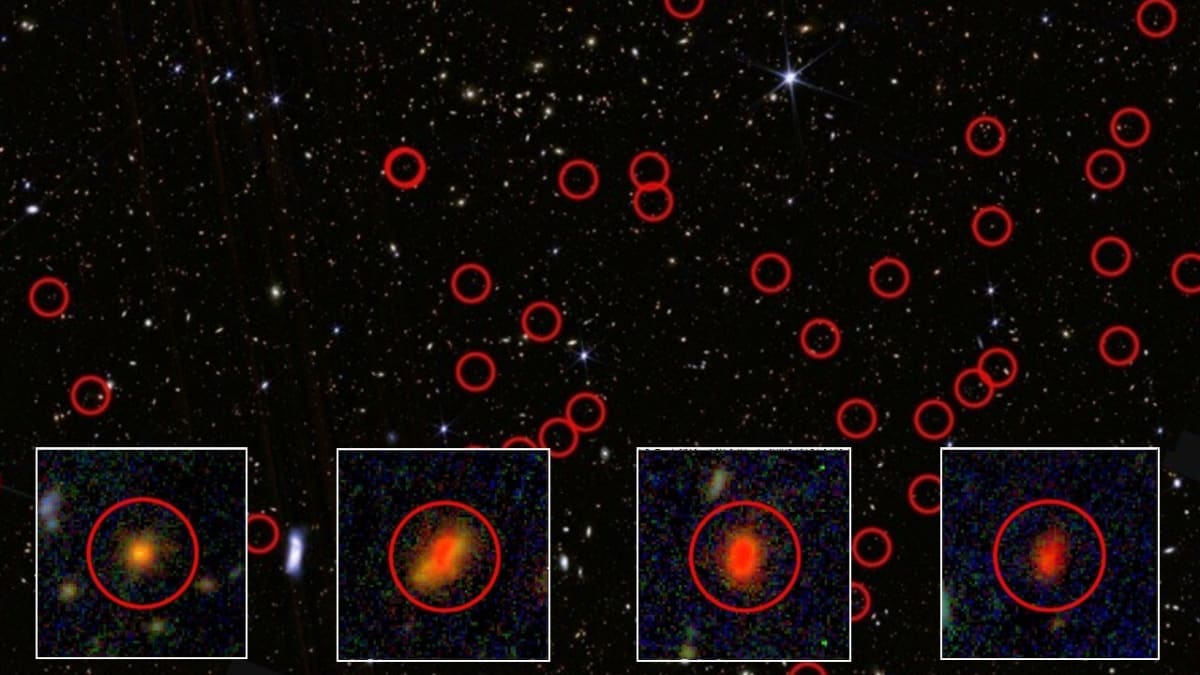
The black hole, spotted in a mysterious "little red dot" called QSO1, weighs about 50 million times more than our sun. What makes this discovery groundbreaking is that the black hole appears far too massive for the tiny galaxy surrounding it, suggesting it formed first and the galaxy grew around it later.
This flips our understanding of how galaxies and black holes develop together. Typically, galaxies form first and black holes grow at their centers over time, but QSO1 tells a different story.
Ignas Juodžbalis, a doctoral candidate at Cambridge University who led the study, used a clever technique to weigh the black hole. His team mapped how fast gas swirls around the black hole at different distances, using the speed to calculate its mass. The closer the gas gets, the faster it moves, like water circling a drain.
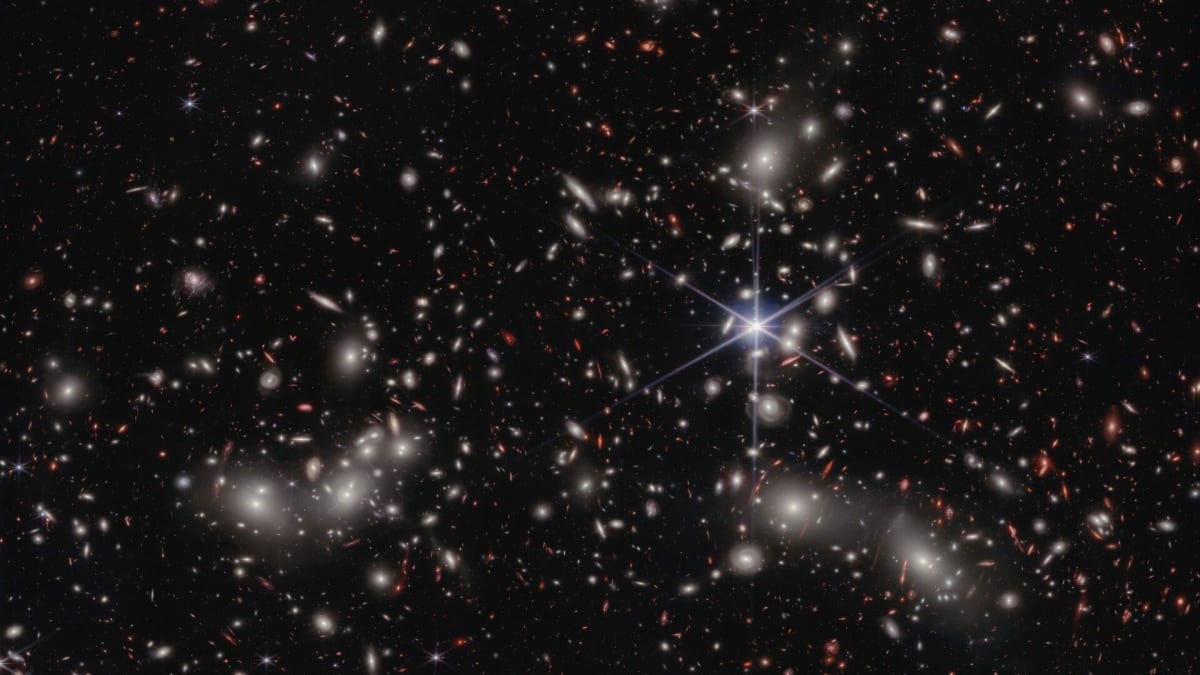
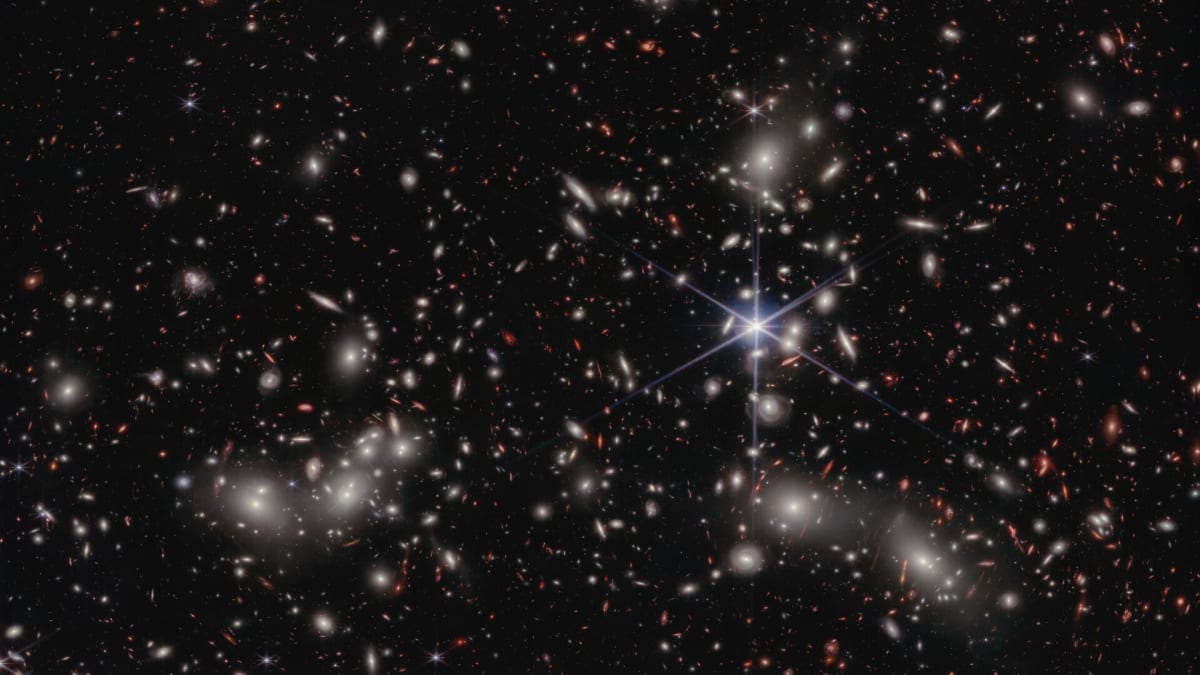
The measurement was tricky because QSO1 is incredibly small and distant. Luckily, a massive galaxy cluster between us and the black hole acts like a magnifying glass, making QSO1 appear six times brighter and 3.5 times larger than it would otherwise.
The team used spectroastrometry, which tracks tiny shifts in light to reveal details smaller than what the telescope normally sees. Co-author Cosimo Marconcini from the University of Florence independently verified the findings using a different analysis method, giving scientists confidence in the result.
Little red dots like QSO1 have puzzled astronomers since their discovery in 2023. These compact, reddish objects from the early universe don't behave like anything scientists expected to find. Some researchers wondered if completely new physics might be needed to explain them.
Why This Inspires
This discovery shows that the tools astronomers use to study nearby black holes work just as well for these ancient, mysterious objects. That means scientists can now confidently study the universe's earliest black holes without needing to throw out everything they know.
The finding also suggests that some supermassive black holes formed through a "direct collapse" process, where massive clouds of gas collapsed straight into black holes without forming stars first. These "naked" black holes then attracted gas and matter that eventually became the galaxies we see today.
Understanding how the first black holes formed helps scientists piece together how the universe evolved from a dark, empty place into the galaxy-filled cosmos we inhabit now.
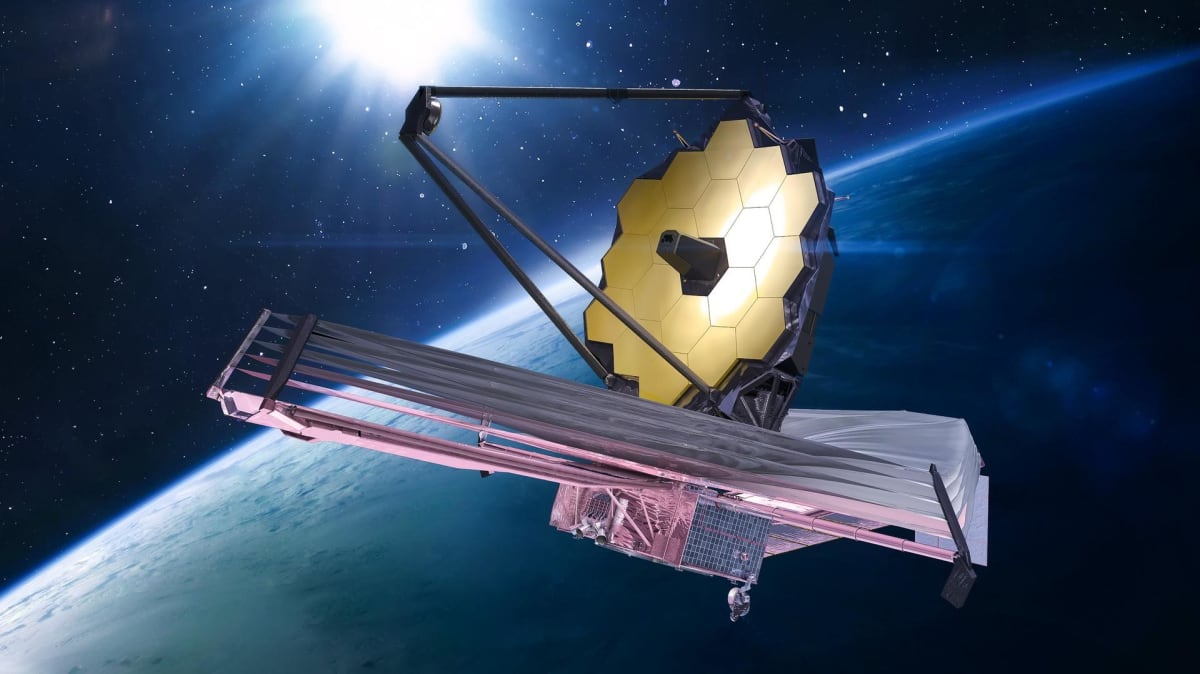
The James Webb Space Telescope continues revealing secrets from the universe's earliest days, turning what seemed impossible to measure into concrete answers about our cosmic origins.
More Images

Based on reporting by Google: James Webb telescope
This story was written by BrightWire based on verified news reports.
Spread the positivity!
Share this good news with someone who needs it