James Webb Finds 'Red Monster' Galaxy From Dawn of Time
Astronomers discovered a massive, dust-filled galaxy that existed just 400 million years after the Big Bang, defying everything scientists thought possible about how quickly galaxies can grow. It's like finding a fully grown redwood tree in a field of saplings.
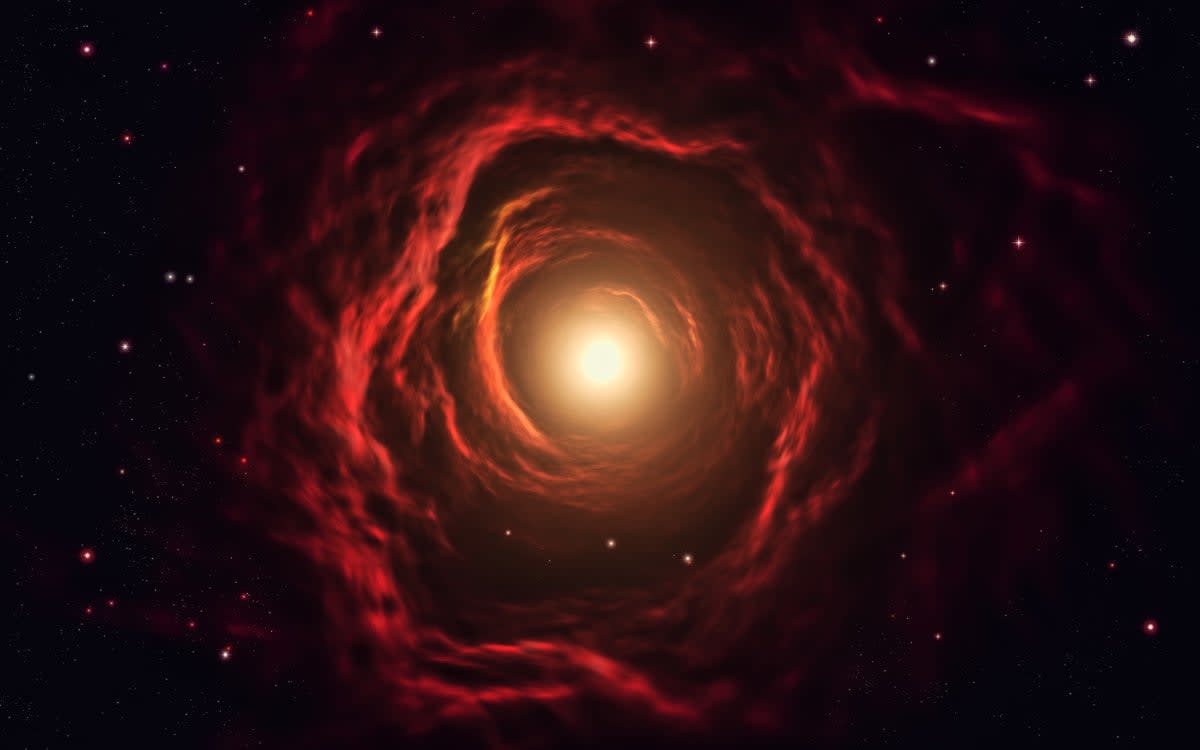
The James Webb Space Telescope just spotted something that shouldn't exist: a giant, dusty galaxy glowing crimson red from an era when the universe was barely out of diapers.
Scientists found this "red monster" galaxy, officially called EGS-z11-R0, shining brightly less than 400 million years after the Big Bang. That's remarkable because galaxies this mature typically need billions of years to accumulate the dust that gives this one its distinctive red glow.
"It's astonishing to think about how short these timescales are," says Yale astrophysicist Pieter van Dokkum. "Sharks and turtles have been around for about that long."
Lead researcher Giulia Rodighiero from the University of Padua wasn't even sure such early red monsters existed. She and her team combed through the Dawn JWST Archive looking for large galaxies hidden by their own dust, and this single clear candidate emerged from the data.
The galaxy's secret lies in its light signature. Abundant dust absorbed ultraviolet light from the galaxy's blue stars, creating a telltale flat slope that revealed its dusty nature. The team also found evidence of carbon, another sign this galaxy grew up way faster than cosmic speed limits should allow.
Why This Inspires
This discovery rewrites what's possible in our universe's story. Finding such a mature galaxy so early suggests that galaxies began forming even earlier than the current record holder at 280 million years post-Big Bang.
Van Dokkum believes astronomers could now spot galaxies as early as 200 million years after the universe began. That pushes back the timeline of cosmic history and shows that galaxies can grow from cosmic dust to thriving stellar cities in the blink of a cosmic eye.
The find also hints at an elegant connection between the red and blue monster galaxies JWST keeps discovering in the early universe. Rodighiero's team suspects blue galaxies might actually be born from red ones as their dust disperses, creating different galactic phases that astronomers are only now beginning to understand.
More discoveries await as the James Webb Space Telescope continues peering into our universe's earliest moments. Each new find helps scientists piece together how something as spectacular as a galaxy can emerge from primordial cosmic soup faster than anyone imagined possible.
The universe, it turns out, was in quite a hurry to get the party started.
More Images


Based on reporting by Scientific American
This story was written by BrightWire based on verified news reports.
Spread the positivity!
Share this good news with someone who needs it