James Webb Maps Universe's "Skeleton" Back 13 Billion Years
The James Webb Space Telescope has created the most detailed map ever of the cosmic web, revealing how galaxies formed and evolved since the universe was less than 1 billion years old. The breakthrough survey shows both the birth and death of stars across 13 billion years of cosmic history.
Scientists have mapped the universe's skeleton in stunning detail, peering back to when the cosmos was just an infant.
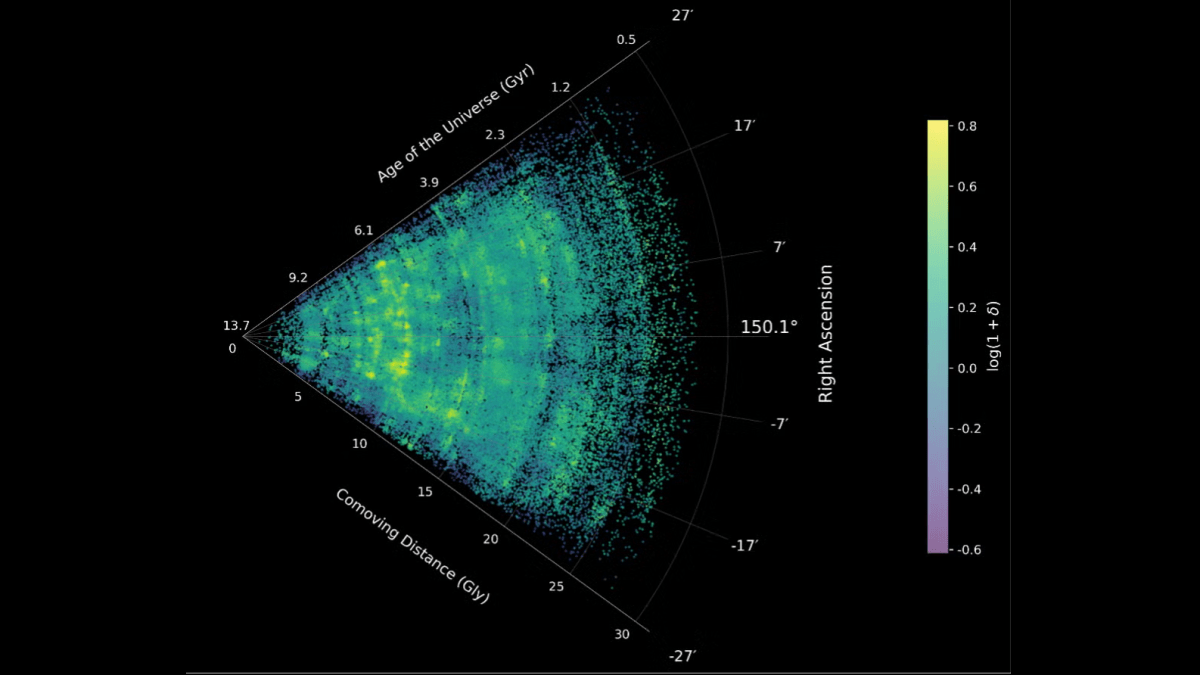
The James Webb Space Telescope completed its largest survey yet, creating an unprecedented map of the cosmic web. This vast structure is the biggest known organization in existence, a sprawling framework of gas, stars, and dark matter that holds everything together.
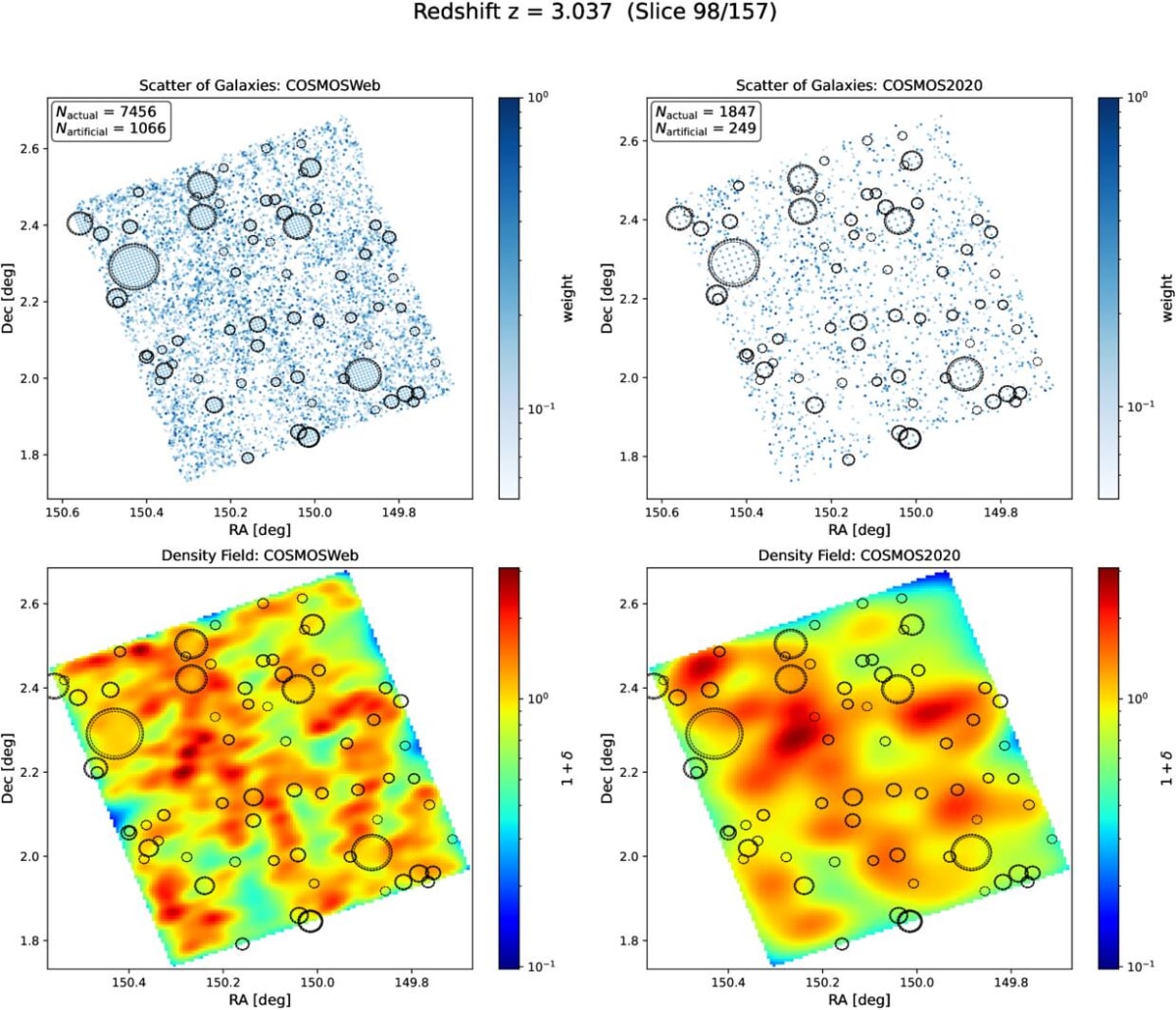
The COSMOS-Web survey took 255 hours and captured an area of sky roughly the size of three full moons. That might sound small, but it revealed 164,000 galaxies, including faint and distant objects invisible to previous telescopes.
"The jump in depth and resolution is truly significant," said Bahram Mobasher, a physics professor at the University of California, Riverside. The team can now see the cosmic web when the universe was only a few hundred million years old.
The map tells a fascinating story about how galaxies live and die. In the early universe, dense regions were bustling nurseries where galaxies grew rapidly. But massive galaxies in crowded neighborhoods eventually ran out of fuel for making new stars.
Why This Inspires
This research reveals something bittersweet yet beautiful about our universe. The peak era of star formation happened billions of years ago, and we're living in a quieter cosmic age.
But that slower pace has given us something precious: the time and stability for planets like Earth to form and life to flourish. The galaxy deaths the team observed aren't endings but transformations, as supermassive black holes and other forces reshape cosmic neighborhoods.
The map shows how location matters even on cosmic scales. Galaxies in different environments evolved differently, with their surroundings determining whether they thrived or faded.
Scientists discovered two main star-killing mechanisms at work. In younger galaxies up to 7 billion years ago, size mattered most. Once a galaxy's dark matter halo grew beyond 1 trillion solar masses, it heated surrounding gas too much for new stars to form.
In more recent cosmic time, the environment took over as the main star-quencher. Surrounding space either stripped galaxies of their star-forming material or prevented cold gas from accumulating.
The entire galaxy catalog is now publicly available, meaning astronomers worldwide can explore this cosmic treasure trove. Future discoveries are already waiting in the data.
This map transforms fuzzy blobs from previous surveys into sharp images of actual ancient galaxies, each with its own story spanning billions of years.
More Images

Based on reporting by Google News - Science
This story was written by BrightWire based on verified news reports.
Spread the positivity!
Share this good news with someone who needs it