James Webb Telescope Beat 344 Risks, Runs on a Kettle's Power
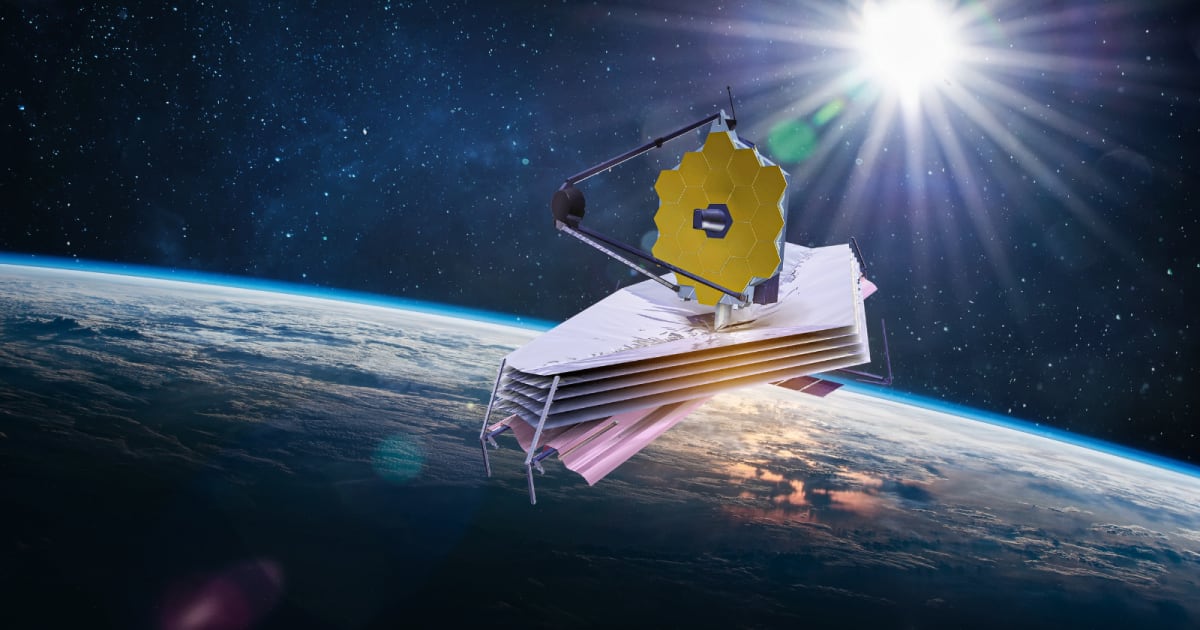
The James Webb Space Telescope survived 344 single points of failure during its deployment, any one of which could have destroyed the $10 billion mission. Now it explores the early universe from a million miles away, running on less electricity than your morning tea kettle.
A million miles from Earth, the most powerful telescope ever built is rewriting our understanding of the cosmos on the same power it takes to boil water.
When the James Webb Space Telescope launched on Christmas Day 2021, engineers held their breath through 344 single points of failure. Each one represented a moment where a single malfunction would end everything, with no astronaut rescue mission possible and no second chances.
Most spacecraft carry a handful of these critical failure points. Webb had hundreds.
About 80 percent of the risk came from the deployment itself, the delicate two-week process of unfolding a tennis court-sized telescope that had been origami-folded to fit inside its rocket. The sequence required roughly 140 release mechanisms, 70 hinge assemblies, eight motors, 400 pulleys, and a quarter mile of cable to work perfectly, in order, the first time.
The most nerve-wracking part was the sunshield, five ultra-thin layers that had to separate and tension without tearing or snagging. It's the most complex deployment ever attempted in space, and the reason project manager Bill Ochs told reporters that finishing it on January 4, 2022 retired up to 75 percent of those single-point failures in one go.
By the end of that fortnight, the rest had fallen away as mirror segments locked into place. The most dangerous machine NASA ever unfolded had unfolded.
Now comes the remarkable part about efficiency. Webb and its four instruments run on about one kilowatt of power, less than many household kettles draw. The secret is that massive sunshield, which keeps the telescope in deep shade and allows it to cool passively rather than burning electricity on refrigeration.
One of Webb's instruments operates at around 7 kelvin, cold enough to detect the faintest infrared light from the early universe. Normally, cooling like that devours power, but Webb's clever parking spot at the Sun-Earth L2 point keeps the Sun, Earth, and Moon all behind one shield.
Why This Inspires
The telescope represents something beyond technological achievement. It's a testament to what becomes possible when thousands of engineers refuse to accept that complex means impossible. Every one of those 344 potential failures was a moment where someone chose precision over shortcuts, where teams checked and rechecked knowing there would be no repair mission.
Webb has been returning science since July 2022, capturing images of galaxies formed just after the Big Bang and analyzing the atmospheres of distant planets. All of it happening a million miles away, unattended, running on the power of a tea kettle.
The list of 344 single points of failure is now history, exactly where lists like that belong.
More Images

Based on reporting by Google: James Webb telescope
This story was written by BrightWire based on verified news reports.
Spread the positivity!
Share this good news with someone who needs it