James Webb Telescope Maps Dark Matter Across the Universe
Scientists created the sharpest map ever of dark matter, the invisible substance that makes up 85% of everything in the universe. The breakthrough reveals how galaxies formed billions of years ago and confirms our best theories about how the cosmos works.
The James Webb Space Telescope just helped scientists see the invisible, creating the most detailed map ever of dark matter stretching across the cosmos.
Dark matter is one of the universe's greatest mysteries. It doesn't emit light or reflect it, making it completely invisible to our eyes and telescopes. Yet it makes up a whopping 85% of all matter in the universe, while everything we can see (stars, planets, even ourselves) accounts for just 15%.
Scientists can detect dark matter by watching how its gravity bends light from distant galaxies. Using this technique with Webb's powerful infrared vision, researchers at NASA's Jet Propulsion Laboratory analyzed 250,000 galaxies in a patch of sky nearly three times the size of the full moon.
The result is a map twice as sharp as previous versions, looking back 8 to 10 billion years into cosmic history. Lead researcher Diana Scognamiglio says it's like "putting on a new pair of glasses for the universe."
The map reveals the cosmic web in stunning detail: massive galaxy clusters connected by sprawling filaments of dark matter, with galaxies and gas distributed along these invisible highways. It also shows vast, emptier regions where less matter exists.
This isn't just pretty science. Dark matter "halos" act as nurseries where galaxies are born and grow. Understanding where dark matter sits helps scientists solve one of astronomy's biggest puzzles: how the universe went from a smooth, uniform soup after the Big Bang to the spectacular variety of galaxies we see today.
Why This Inspires
Every galaxy we see formed inside a cloud of dark matter billions of years ago. This map shows us the invisible scaffolding that built our entire universe, including the galaxy we call home.
The findings also confirm our best cosmological model, which explains everything from the Big Bang to the universe's ongoing expansion. We're getting the big picture right.
Jacqueline McCleary, a co-author from Northeastern University, explains that knowing where dark matter lives and how much exists "places an important boundary condition on models of galaxy formation and evolution." Translation: we can now test our theories about how the universe grew up.
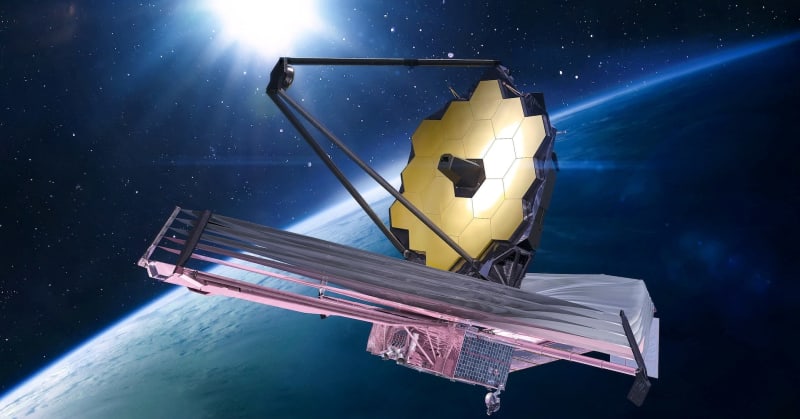
Webb launched in 2021 with six times Hubble's light-gathering power. It can spot fainter, more distant galaxies with sharper detail than ever before. More galaxies in the images mean more data points, which translates directly into sharper dark matter maps.
The telescope keeps proving it was worth the wait, giving us clearer views of the universe's hidden architecture and helping answer fundamental questions about our cosmic origins.
More Images
Based on reporting by Google: James Webb telescope
This story was written by BrightWire based on verified news reports.
Spread the positivity!
Share this good news with someone who needs it