James Webb Telescope Solves 'Little Red Dots' Mystery
Scientists using the James Webb Space Telescope have cracked the case of mysterious "little red dots" spotted in the early universe. These cosmic puzzles appear to be "black hole stars" with supermassive black holes wrapped in dense gas clouds.
Scientists just solved one of the universe's newest mysteries, and the answer is as wild as it sounds.
Since 2022, the James Webb Space Telescope has been spotting strange "little red dots" scattered across the early universe, appearing around 600 million years after the Big Bang. These mysterious objects seemed to vanish by the time the universe hit 2 billion years old, leaving astronomers scratching their heads about what they could be.
Now, researchers at the University of Texas at Austin have finally gathered solid evidence for what these cosmic oddities really are. They're black hole stars, which are exactly what they sound like: supermassive black holes feeding so rapidly that they're wrapped in massive cocoons of glowing gas.
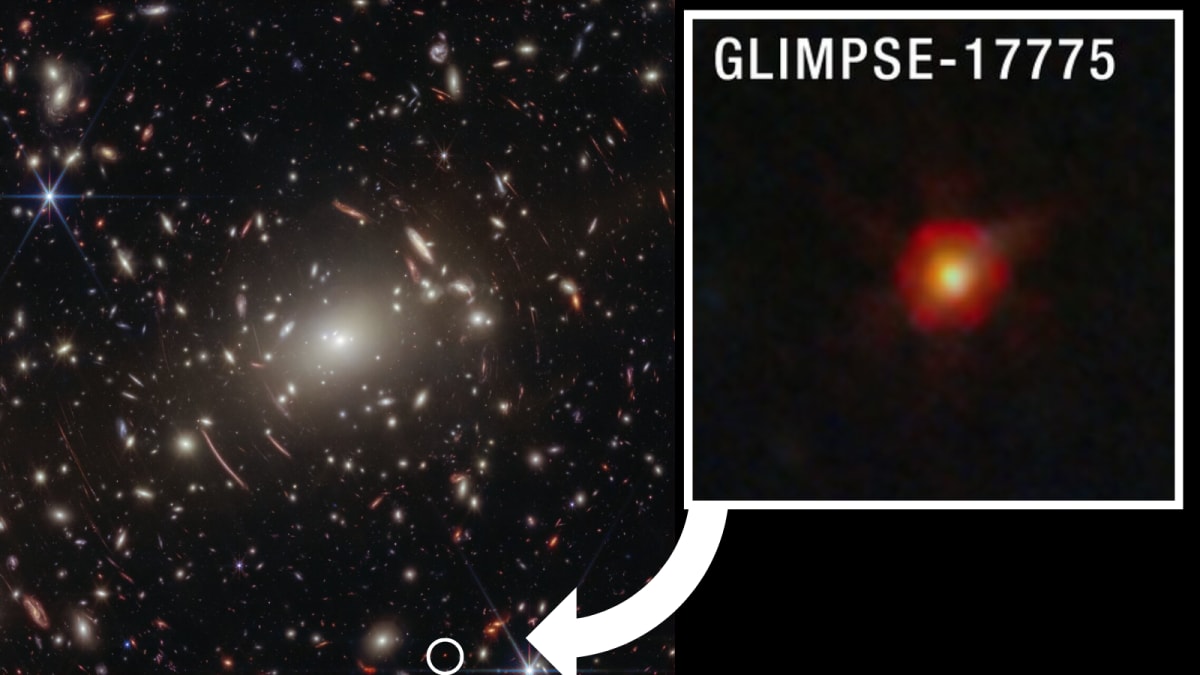
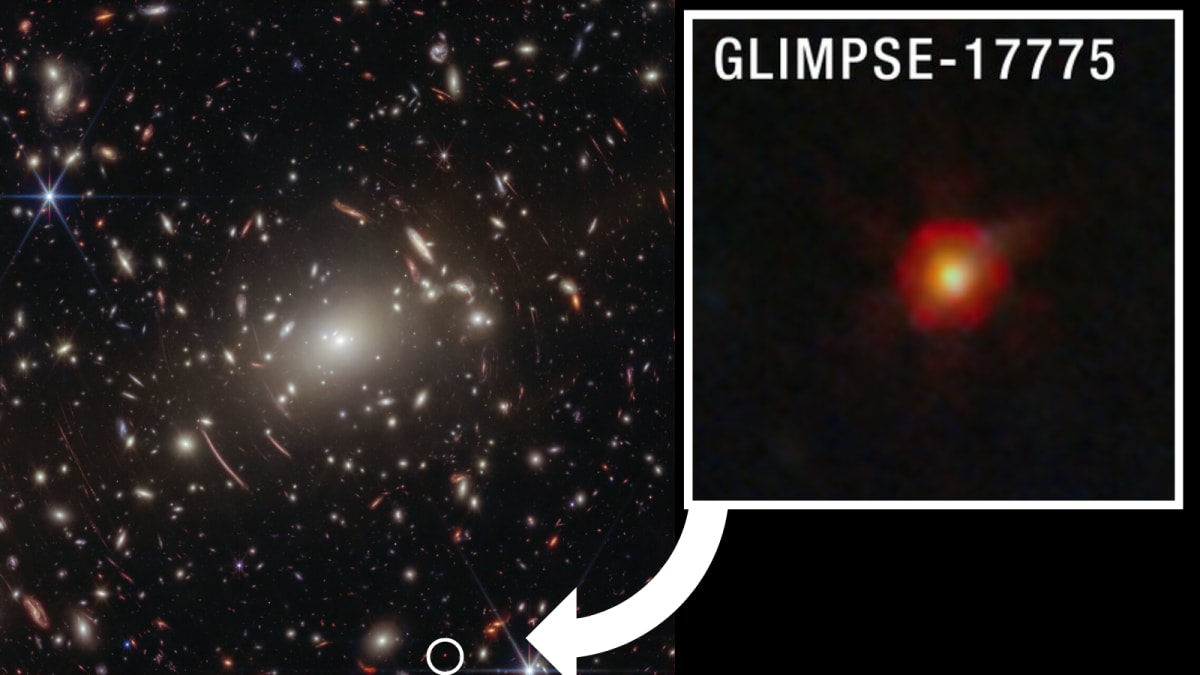
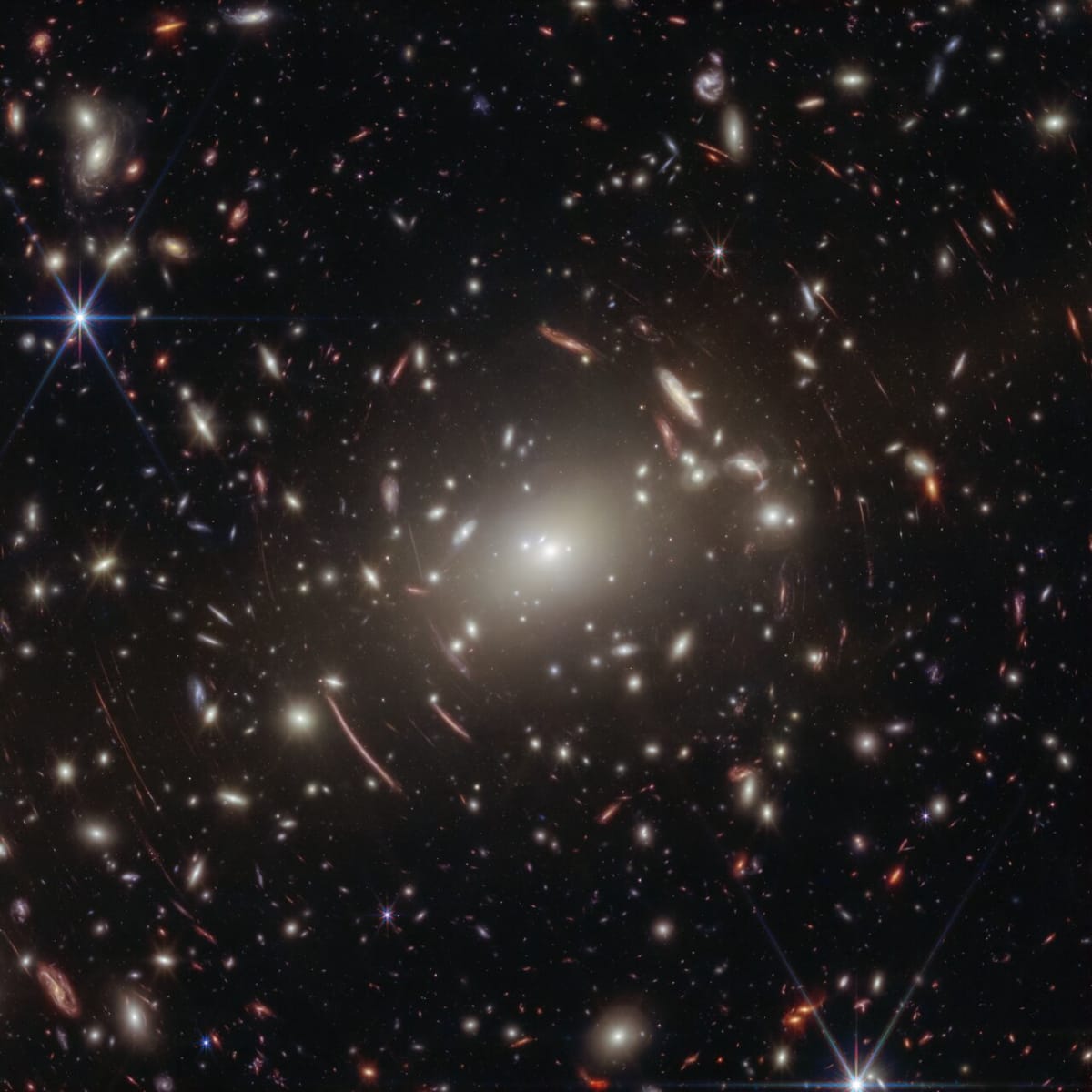
The breakthrough came when the telescope captured the deepest spectrum of light ever recorded from one of these dots, named GLIMPSE-17775. The team got lucky thanks to a natural cosmic magnifying glass. A galaxy cluster called Abell S1063 bent light around itself through its massive gravity, just as Einstein predicted it would, turning what should have been 80 hours of observation time into just 30.
Lead researcher Vasily Kokorev described the discovery like assembling a puzzle. The spectrum showed emission lines from scattered electrons, signs of fluorescence, and radiation-absorbing helium. Most tellingly, they spotted an "iron forest" in the data, which only appears near black holes feeding at extreme speeds.
The dense gas envelope explains why these objects look so different from normal galaxies and why they barely show up in X-ray observations. The cocoon absorbs most of that high-energy radiation, making them glow red instead.
The discovery also explains why little red dots disappear from view after a relatively short cosmic moment. Either their intense growth spurts burn them out quickly, or the central black holes eventually clear away their gas shrouds, transforming them into more typical active galaxies that blend into the cosmic crowd.
Why This Inspires
This discovery represents human curiosity at its finest. Scientists spotted something strange in telescope data and refused to give up until they understood it. The James Webb Space Telescope continues to reveal secrets about our universe's earliest days, showing us that even the cosmos has growing pains.
The research also demonstrates how collaboration between cutting-edge technology and fundamental physics (thank you, Einstein) can unlock answers to questions we didn't even know to ask two years ago. Each mystery solved brings us closer to understanding how our universe evolved from its fiery birth to the star-filled expanse we call home.
Kokorev expects the final answers about what powers these cosmic engines to arrive within a year or two, proving that some of the best cosmic discoveries are still ahead of us.
More Images

Based on reporting by Google News - Science
This story was written by BrightWire based on verified news reports.
Spread the positivity!
Share this good news with someone who needs it