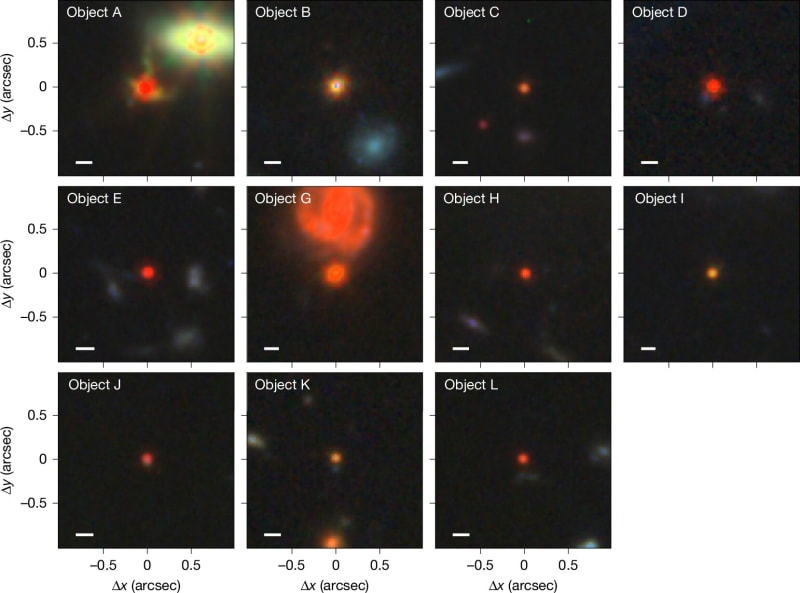
James Webb Telescope Solves Mystery of 'Little Red Dots
The James Webb Space Telescope's puzzling discovery of impossibly bright galaxies now has a hopeful explanation. Scientists believe these mysterious "little red dots" contain baby black holes, saving our understanding of the universe.
Astronomers just solved one of the James Webb Space Telescope's biggest cosmic mysteries, and the answer is surprisingly reassuring.
When the powerful telescope first spotted hundreds of extremely bright, red galaxies in the early universe, scientists worried. These "little red dots" seemed impossibly bright, suggesting the universe either contained far more stars than predicted or harbored monstrous black holes that shouldn't exist yet.
Either possibility would have forced astronomers to rewrite fundamental theories about how the cosmos formed. For months, these tiny crimson specks threatened to upend decades of carefully constructed science.
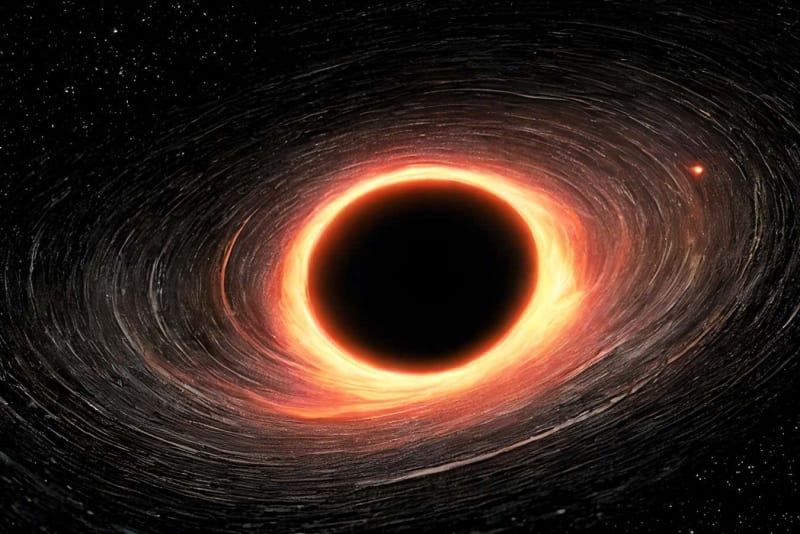
Now researchers have found a much simpler explanation. The galaxies likely contain young, developing black holes instead of the cosmic monsters scientists initially feared.
This discovery matters because it means our understanding of the universe remains intact. The baby black holes fit perfectly within existing models of how galaxies and black holes grow over time.
The James Webb Space Telescope continues proving its worth as humanity's most advanced cosmic detective. Launched just a few years ago, the instrument peers deeper into space and time than any telescope before it, revealing secrets from when the universe was still in its infancy.
Why This Inspires
This story shows how scientific mysteries often have elegant solutions waiting to be discovered. What seemed like a crisis for cosmology turned into confirmation that our theories work remarkably well.
The finding also demonstrates the power of careful observation and patient analysis. Rather than rushing to dramatic conclusions, astronomers took time to study these puzzling galaxies and found an answer that makes sense.
Young black holes growing in distant galaxies remind us that the universe follows understandable patterns. Even when something appears impossibly strange at first glance, nature tends toward order and predictability.
Scientists can now study these baby black holes to learn how massive black holes form and evolve. Each little red dot becomes a window into cosmic childhood, showing us what the universe looked like billions of years ago.
The telescope that spotted these mysteries will keep revealing wonders. Every image it captures helps humanity understand our place in an ancient, vast, and beautifully comprehensible cosmos.
More Images

Based on reporting by New Scientist
This story was written by BrightWire based on verified news reports.
Spread the positivity! 🌟
Share this good news with someone who needs it