James Webb Telescope Weighs Black Hole 10 Billion Light-Years Away
Scientists used the James Webb Space Telescope to measure a supermassive black hole 10 billion light-years away, weighing it at 6 billion times our sun's mass. This breakthrough marks the most distant black hole ever weighed and opens new doors for understanding how galaxies formed in the early universe.
Scientists just achieved what seemed impossible: weighing a sleeping giant black hole from when the universe was barely 4 billion years old.
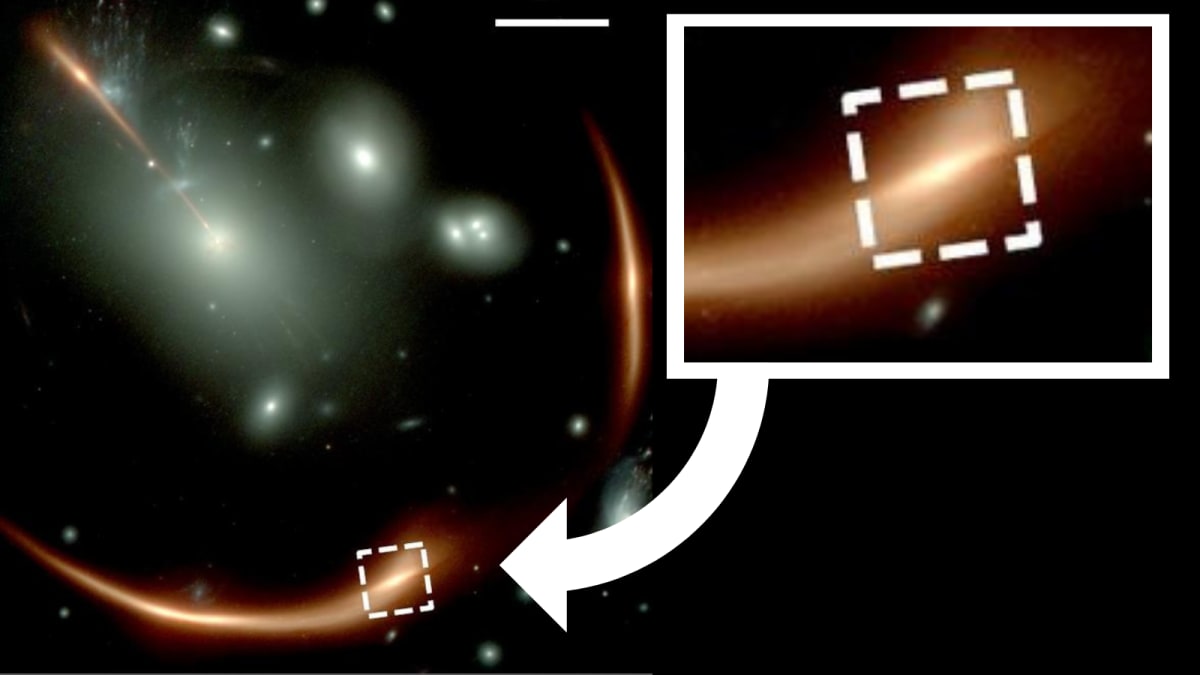
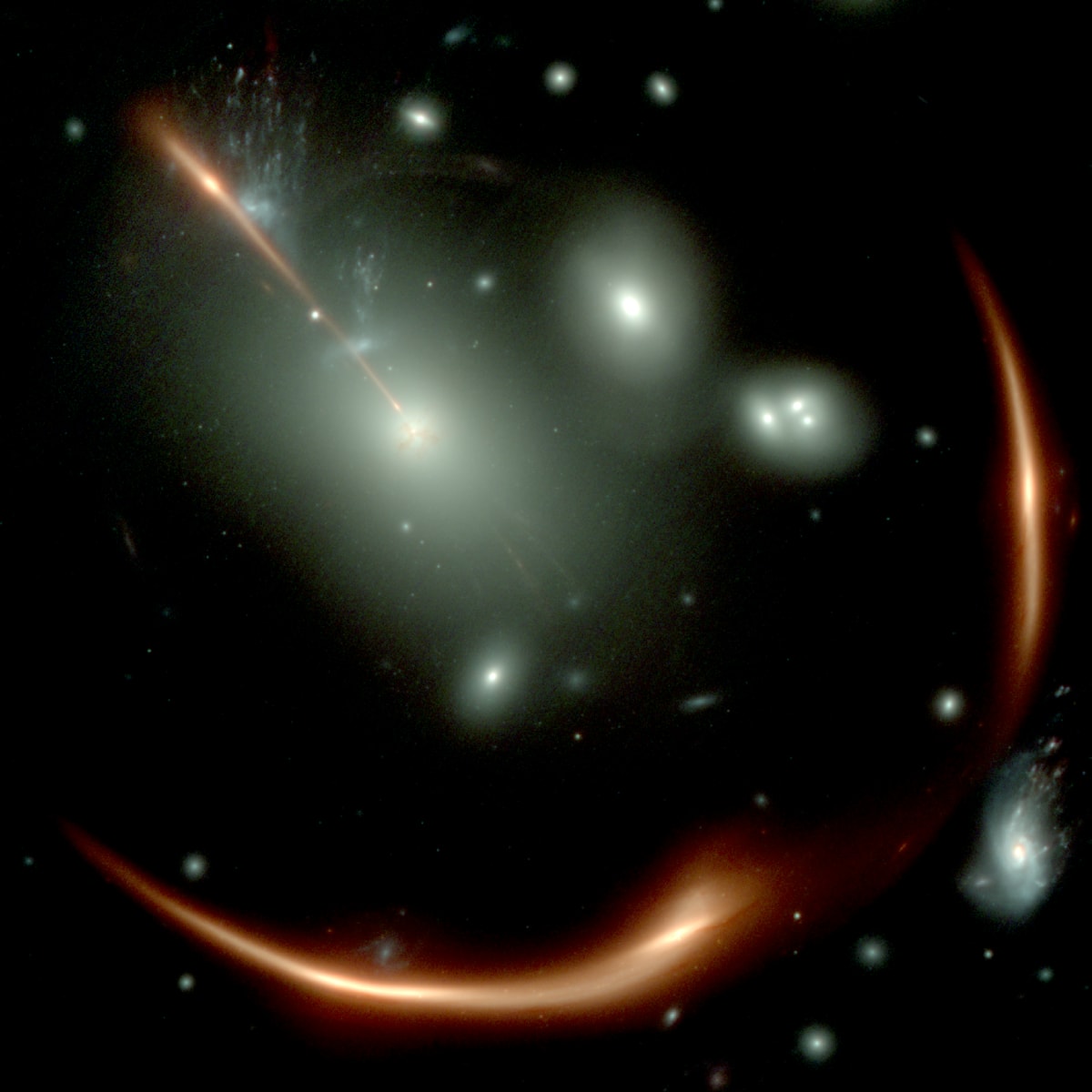
Using the James Webb Space Telescope, astronomers measured a supermassive black hole located at the heart of galaxy MRG-M0138, an incredible 10 billion light-years from Earth. The black hole tips the cosmic scales at 6 billion times the mass of our sun, making it the most distant black hole ever successfully weighed.
The achievement required brilliant detective work. Unlike active black holes that glow brightly while feeding, this one sits dormant and nearly invisible in the darkness of space.
Scientists tracked the motion of stars orbiting the black hole, watching how its massive gravity influences their dance through space. While this star-tracking technique has worked on closer black holes, including Sagittarius A* at the center of our Milky Way, applying it to something 10 billion light-years away breaks all previous records by 15 times.
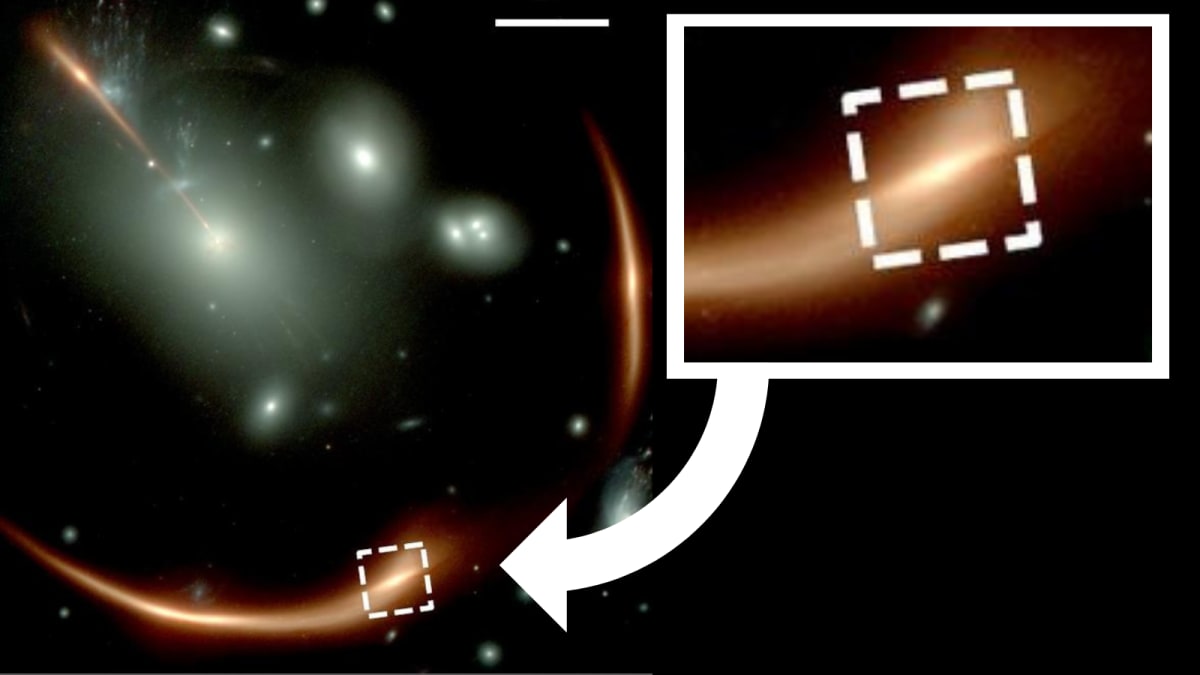
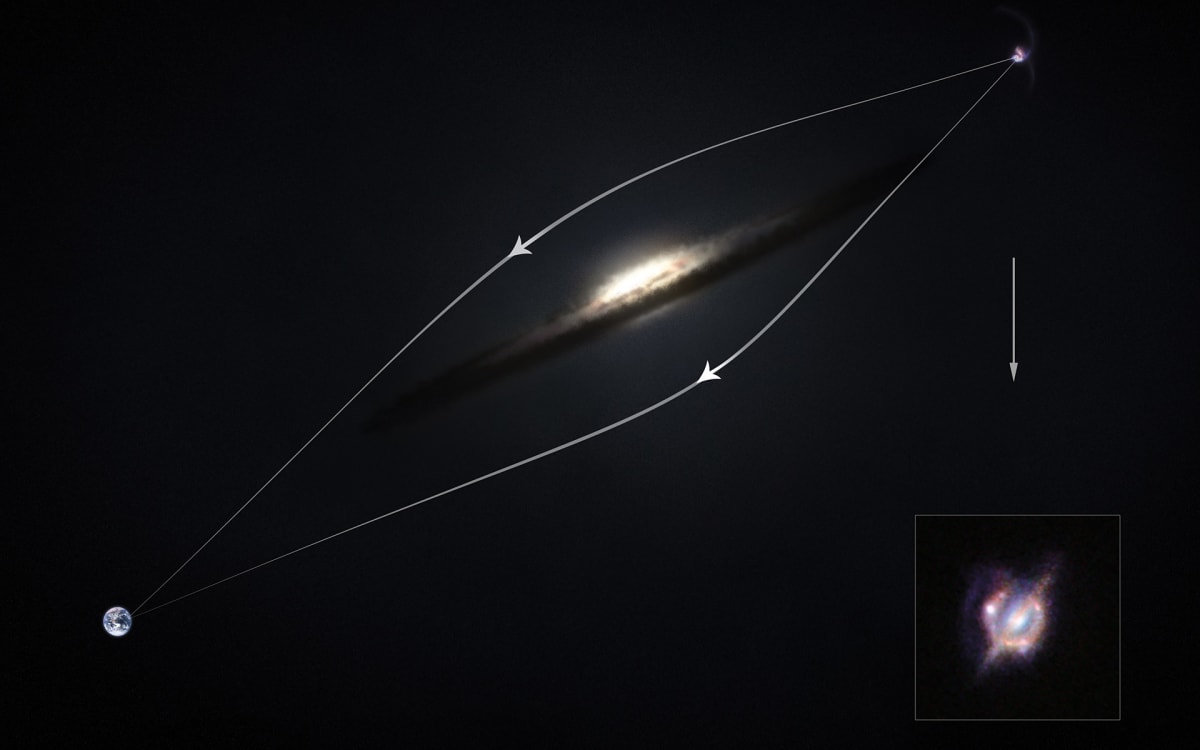
The team needed help from the universe itself to pull this off. A massive galaxy sitting between Earth and MRG-M0138 acted as a natural magnifying glass through gravitational lensing, an effect predicted by Einstein's theory of relativity.
This cosmic lens bent and magnified the distant galaxy's light by 30 times, allowing the telescope to see details that would otherwise remain hidden forever. Without this natural boost, even the powerful James Webb telescope couldn't have spotted the subtle movements of individual stars so far away.
The Ripple Effect
This breakthrough changes how we study the early universe. Scientists can now measure dormant black holes across vast cosmic distances, creating a complete census of how these mysterious giants grew and shaped galaxies over billions of years.
The technique opens a new window into cosmic history. By weighing black holes from different eras, researchers can piece together how they evolved from the universe's infancy to today.
Understanding these sleeping giants helps explain how galaxies like our own formed and developed. Black holes don't just exist in galaxies; they actively shape how galaxies grow, controlling star formation and galactic structure through their immense gravity.
This discovery proves that what once seemed beyond our reach is now possible with the right tools and cosmic cooperation.
More Images

Based on reporting by Space.com
This story was written by BrightWire based on verified news reports.
Spread the positivity!
Share this good news with someone who needs it