Latin America Reaches 10,000 Electric Buses on the Road
Cities across Latin America just hit a major climate milestone with 10,000 electric buses now running, saving 10 million tonnes of CO2 annually. Three cities are leading the charge, proving clean public transport works at scale.
Cities across Latin America are breathing cleaner air today thanks to a remarkable achievement: 10,000 electric buses now transport millions of people every day while slashing carbon emissions.
The milestone was announced at Lat.Bus 2026, the region's largest transport event, by organizations tracking the rapid growth of zero-emission public transit. Just seven years ago, electric buses were rare across the continent.
Now, 80 cities in 13 countries have embraced the technology, with three megacities showing what's possible when governments commit to clean transport. Santiago, São Paulo, and Bogotá together operate more than 7,000 electric buses, transforming how millions of people experience their daily commute.
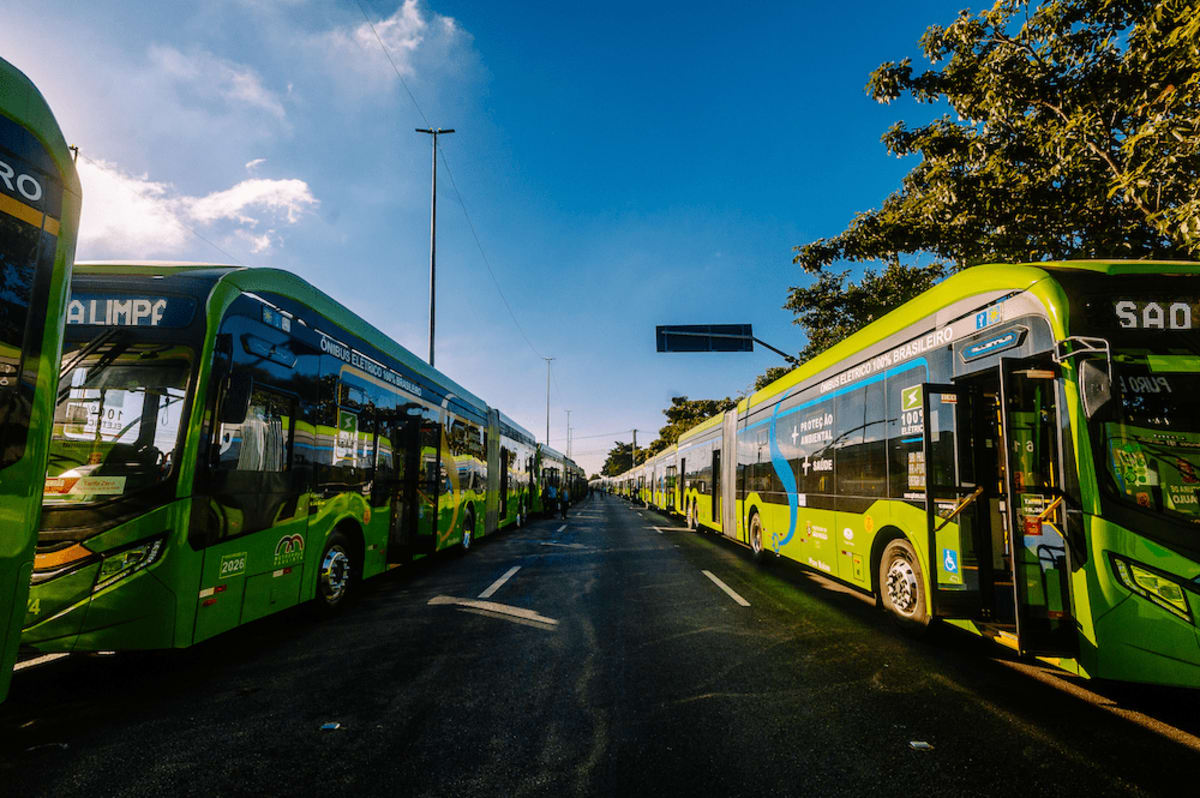
São Paulo recently added 500 new electric buses in a single delivery. That one expansion prevents 45,000 metric tons of CO2 from entering the atmosphere each year while eliminating the need for 20 million liters of diesel.
The environmental impact equals planting 3.2 million trees annually, but passengers notice other benefits too. Electric buses run quieter, produce no exhaust fumes at stops, and create healthier streets for everyone.
The Ripple Effect
The success in Latin America is proving that financing doesn't have to stop cities from going electric. Programs like the ZEBRA Alliance have helped municipalities navigate the upfront costs by connecting them with financing institutions and suppliers.
São Paulo created a roadmap other cities can follow: combine regulations requiring fleet renewal with financial packages that remove the burden from city budgets. Since 2019, organizations like C40 Cities have supported this model in Bogotá, Mexico City, Salvador, and Curitiba.
The Brazil Mutirão Program now helps local governments develop financial models and mobilize resources, making the transition easier for smaller cities. What started as an experimental policy in a few pioneering cities has become an expanding public commitment across the region.
"Financing does not have to be a barrier," said Ilan Cuperstein, C40 Cities Regional Director for Latin America. "Tested pathways exist, and the network is ready to support those willing to take them."
The transition delivers wins beyond climate action. Cities report improved air quality in neighborhoods along bus routes, better public transport experiences, and growing local expertise in maintaining electric fleets.
As more cities watch Santiago, São Paulo, and Bogotá succeed, the momentum keeps building toward cleaner air and healthier communities for millions across Latin America.
Based on reporting by Google: electric vehicle milestone
This story was written by BrightWire based on verified news reports.
Spread the positivity!
Share this good news with someone who needs it