Lost Space Lander Found on Comet After 2-Year Search
After bouncing across a comet and tumbling into darkness, the washing machine-sized Philae lander was finally spotted by its partner spacecraft in 2016. The discovery gave scientists closure on humanity's first-ever soft landing on a comet.
Sometimes the greatest discoveries come from finding what we thought we'd lost forever.
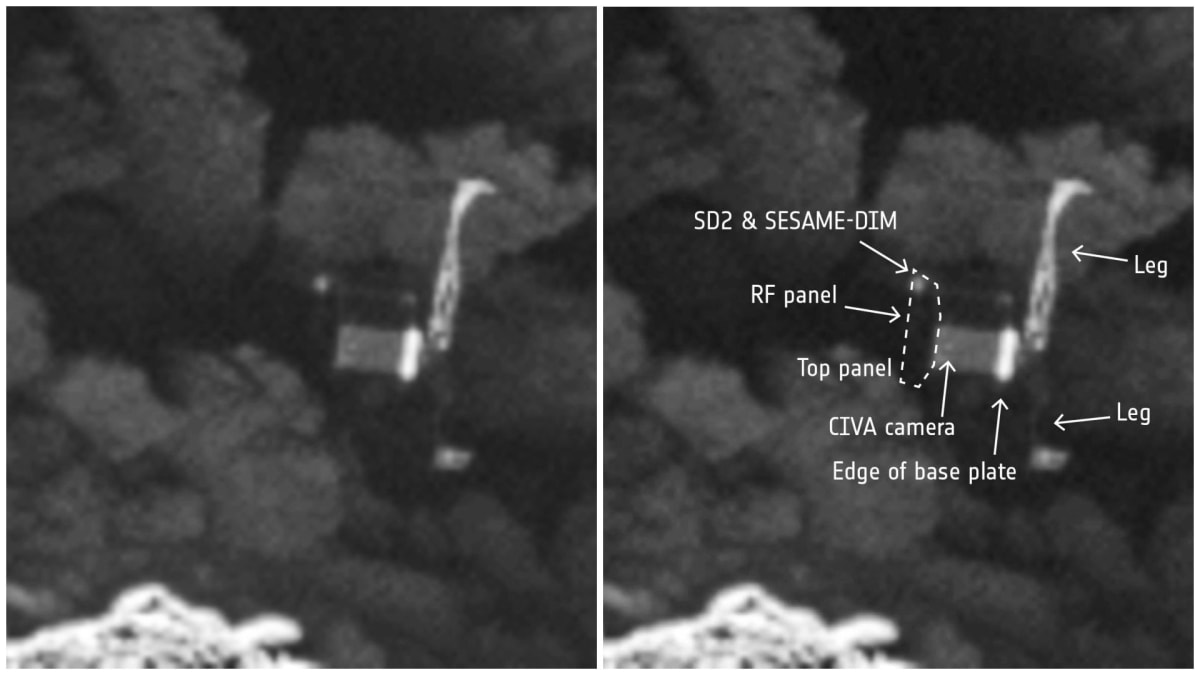
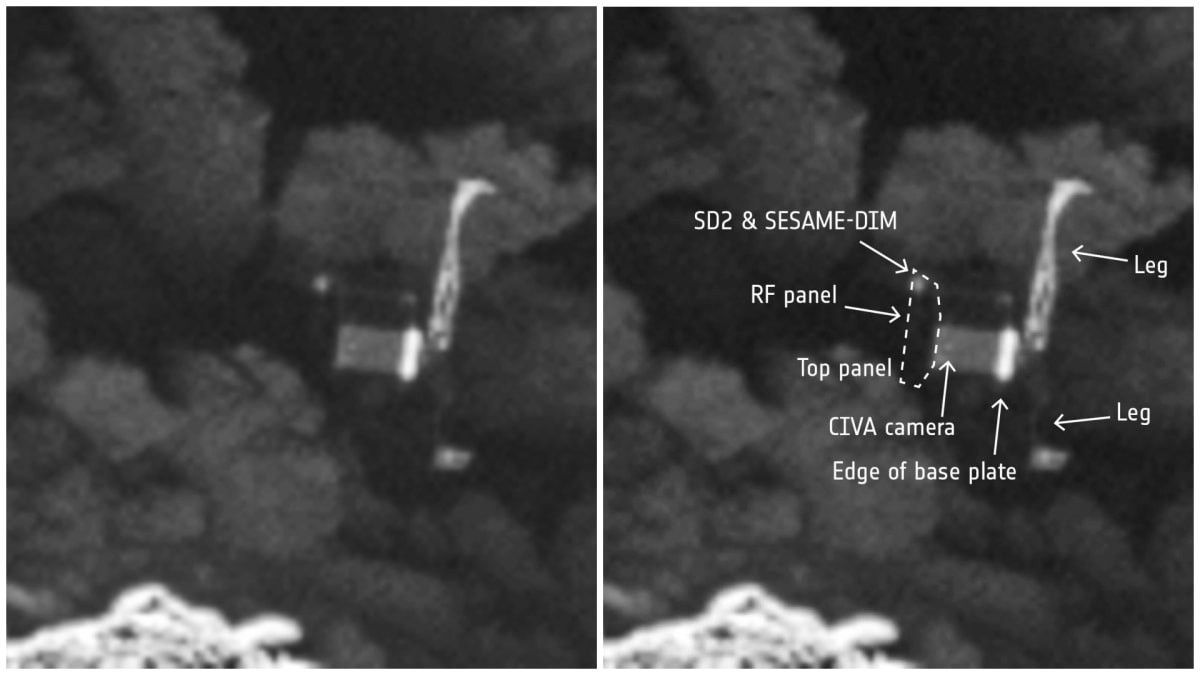
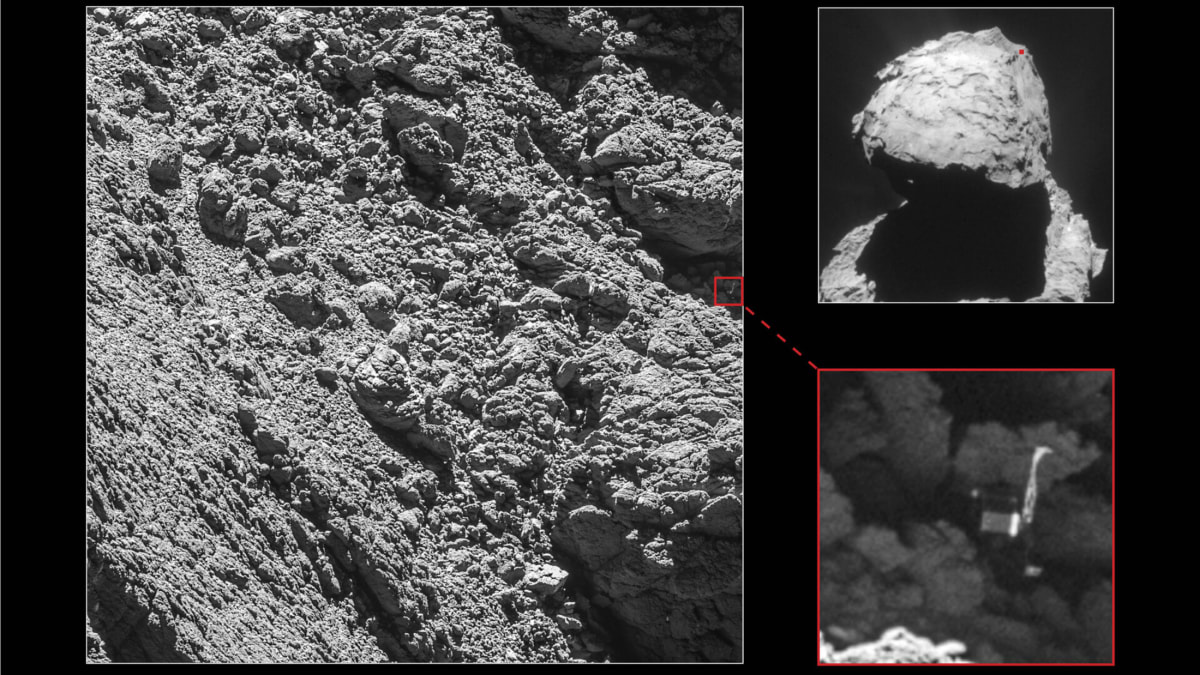
On September 2, 2016, the European Space Agency spotted Philae, a small spacecraft that had disappeared on the surface of Comet 67P two years earlier. The washing machine-sized lander was lying on its side in a dark, rocky crevice, exactly where it had tumbled after a dramatic landing in November 2014.
Philae's journey to the comet started with high hopes. Its mother ship, Rosetta, had dropped it off at Comet 67P to make history as the first spacecraft to softly land on a comet's surface. But when the landing harpoons failed to fire, Philae bounced twice across the comet before settling in the shadows.
The unlucky landing spot meant Philae's solar panels couldn't collect enough sunlight. Running on battery power alone, the little lander worked for 60 hours before going silent. During that brief window, it sent back precious data and even managed to detect organic molecules on the comet's surface.
Rosetta never gave up searching. For 22 months, the orbiter circled Comet 67P, snapping more than 80,000 photos while conducting its own science mission. The spacecraft scanned the rocky terrain below, looking for any sign of its lost companion.
Finding Philae just weeks before Rosetta's own planned landing on the comet felt almost poetic. Scientists finally had answers about what happened during those chaotic landing moments and where their brave little explorer had ended up.
Why This Inspires
Philae's story reminds us that setbacks don't erase achievements. Even though the lander's mission didn't go as planned, it still accomplished something no spacecraft had done before. Those 60 hours of data helped scientists understand comets better, and the search itself pushed the boundaries of what's possible in deep space exploration.
The mission proved that persistence pays off, even 300 million miles from home. Rosetta's tireless search for Philae showed the same determination that drives all great scientific endeavors: the refusal to give up, even when the odds seem impossible.
Today, both spacecraft rest on Comet 67P, frozen monuments to human curiosity and the drive to explore the unknown.
More Images

Based on reporting by Space.com
This story was written by BrightWire based on verified news reports.
Spread the positivity!
Share this good news with someone who needs it