Mangrove Forests Make Comeback After Decades of Loss
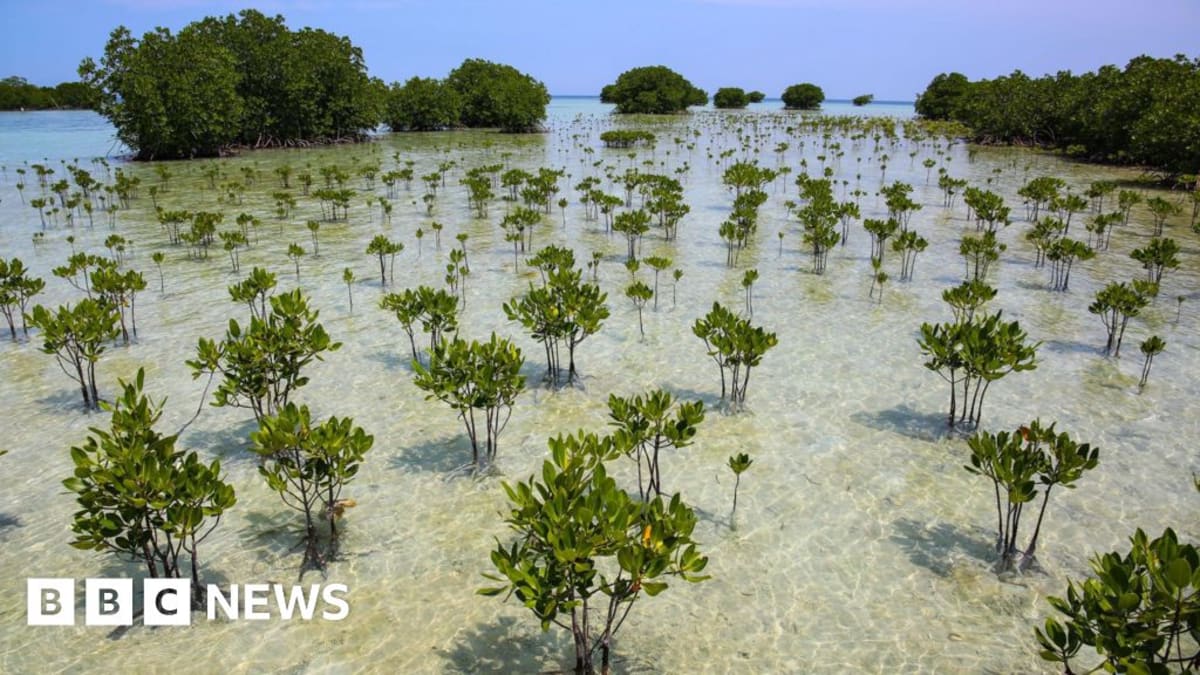
The world's mangrove forests are growing faster than they're disappearing for the first time since the 1980s. These coastal guardians protect millions from storms and store five times more carbon than regular forests.
After losing an area the size of Jamaica to chainsaws and development, the world's mangrove forests are finally healing themselves.
Scientists found that since 2010, Earth has been gaining more mangroves than it loses. The turnaround comes from stronger legal protections, increased public awareness, and the trees' remarkable ability to bounce back when people simply stop cutting them down.
Mangroves are environmental powerhouses hiding in plain sight. Their tangled roots slow waves and protect coastal communities from tsunamis and storm surges, while storing five times more planet-warming gases than land forests.
But between the 1980s and 2010, over 12,000 square kilometers vanished across Asia, Africa, and the Americas. Fish farms, coastal cities, and agriculture cleared these swampy forests at alarming rates.
The shift started with tragedy. When the 2004 Indian Ocean tsunami hit, communities noticed something striking: islands protected by mangroves survived far better than bare coastlines.
"Some islands were covered by mangroves and after the tsunami those islands were protected very well, so that increased public awareness," said lead author Dr. Zhen Zhang from Tulane University. Indonesia slowed its mangrove clearing for fish farming after seeing the evidence.
Myanmar had a similar awakening after Cyclone Nargis in 2008, eventually banning logging nationwide in 2016. The two countries, both mangrove-dense hotspots, saw their forests stabilize and even grow.
Better satellite imaging also revealed something previous studies missed: far more new trees taking root than anyone realized. The technology detected subtle canopy changes across coastlines worldwide.
The Ripple Effect
The recovery isn't perfect everywhere. West and Central Africa, especially Nigeria's Niger Delta, face serious threats from oil pollution and pipeline damage.
Some new growth comes with a catch. In Brazil and other countries, mangroves are expanding along rivers enriched by nutrients from upstream deforestation and mining. The trees thrive on the sediment pollution, even as other ecosystems suffer.
Tropical cyclones still pose major threats, causing some of the worst single-year losses from Australia to the Caribbean. And restoration efforts, while helpful, played second fiddle to nature's own recovery once human destruction slowed.
But the forests themselves tell an encouraging story. Since the 1980s, closed canopy mangroves (the richest and most carbon-dense type) have grown by nearly 20 percent.
"We are moving in the right direction because you can see a very clear trend of decreased loss rate," Dr. Zhang said.
The comeback proves a simple truth: sometimes the best way to help nature is to step back and let it heal itself.
More Images


Based on reporting by BBC Science
This story was written by BrightWire based on verified news reports.
Spread the positivity!
Share this good news with someone who needs it