Mars 'Bathtub Ring' May Prove Ancient Ocean Existed
Scientists discovered a geological feature on Mars that looks like a bathtub ring, potentially proving an ocean once covered a third of the Red Planet. The find could reshape our understanding of whether ancient Mars hosted life.
Imagine draining all of Earth's oceans and seeing what's left behind. That's exactly what scientists did to solve one of Mars' biggest mysteries.
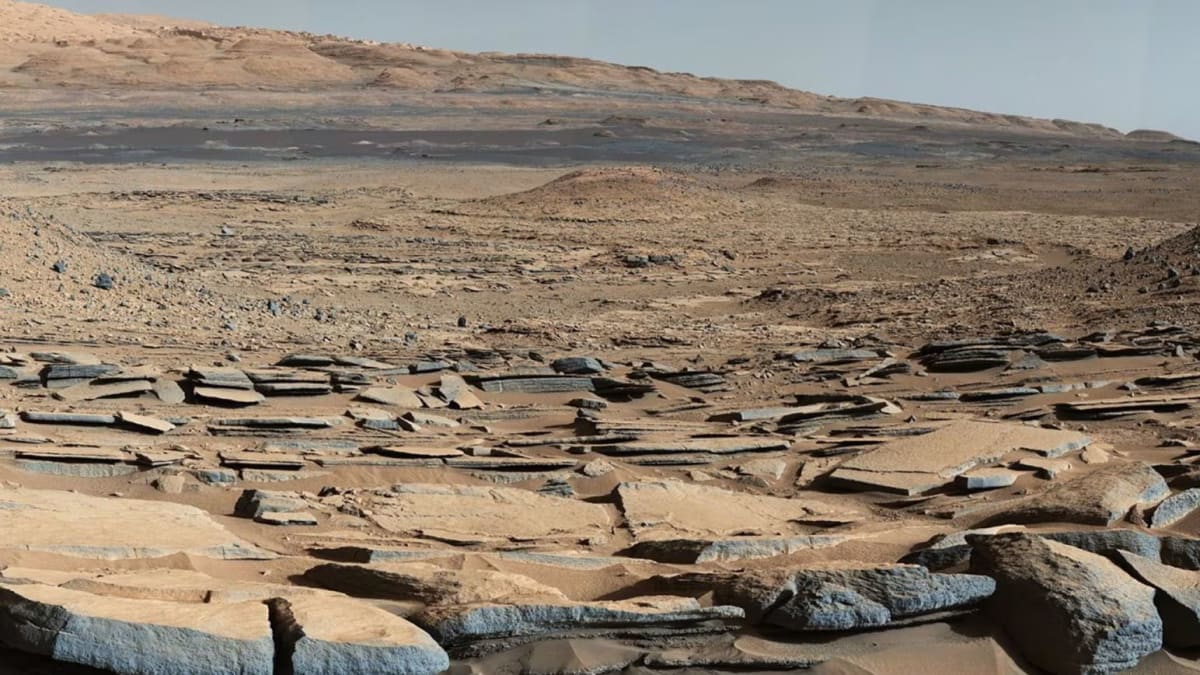
Researchers at the University of Texas at Austin found a massive flat zone on Mars that mirrors the coastal shelves surrounding Earth's oceans. This "bathtub ring" wraps around the Martian northern hemisphere, suggesting an ocean once covered a third of the planet's surface.
The discovery solves a puzzle that has frustrated scientists for decades. Previous Mars missions found features resembling shorelines, but they appeared at different elevations across the planet, making experts skeptical about ancient oceans.
Lead researcher Abdallah Zaki and his team took a creative approach. They used computer simulations to digitally drain Earth's oceans and studied what remained.
The answer was clear: flat bands of land called coastal plains and continental shelves, ranging from 50 to 1,345 feet below sea level. These features stay remarkably stable over time, even as shorelines shift with changing sea levels.
When the team analyzed topographic data from Mars orbiters, they found the same pattern. A flat zone sits between 1,800 and 3,800 meters below what would have been Martian sea level.
Here's why this matters: coastal shelves that size take a very long time to form. You wouldn't find them around lakes or temporary bodies of water.
The researchers also spotted something equally exciting. River deltas lined up perfectly with this coastal shelf, just like they do on Earth.
Why This Inspires
This discovery isn't just about ancient geology. It's about the possibility of ancient life.
An ocean stable enough to carve coastal shelves would have persisted for millions of years. That kind of stable, long-lasting water source could have been the perfect ingredient for life to emerge and thrive on the Red Planet.
The sedimentary deposits in these coastal areas might hold fossils or chemical signatures of ancient Martian organisms, similar to how Earth's coastal sediments preserve evidence of prehistoric life. Future missions now have a specific target to explore.
The research, published in the journal Nature, gives scientists their most compelling evidence yet that Mars wasn't always the dry, dusty world we see today. It was once a planet of oceans, rivers, and deltas.
As Zaki put it, this coastal shelf adds "a simple new piece of evidence for the presence of an ocean" that fundamentally changes how we think about our neighboring planet's past and its potential for life.
More Images


Based on reporting by Space.com
This story was written by BrightWire based on verified news reports.
Spread the positivity!
Share this good news with someone who needs it