Mars Discovery Changes What We Know About Solar Storms
NASA scientists discovered an "impossible" phenomenon squeezing Mars' atmosphere during a 2023 solar storm. The find could protect future astronauts and missions to the Red Planet.
Scientists just spotted something on Mars they thought could never happen, and it might help keep future astronauts safe.
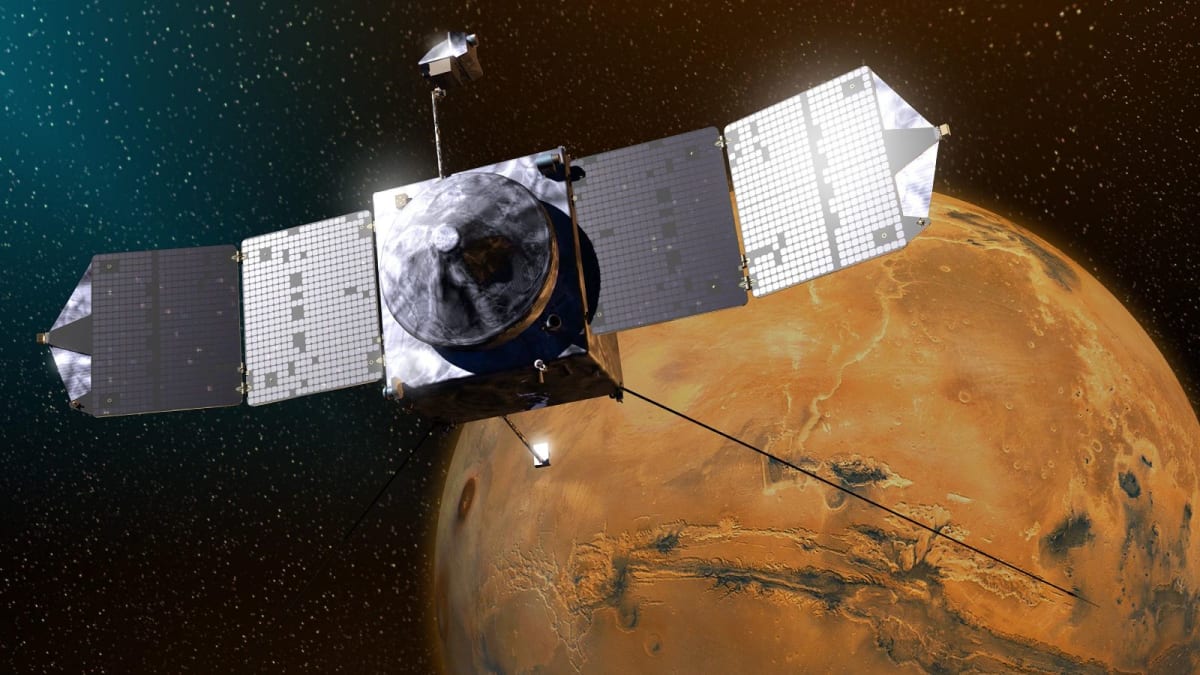
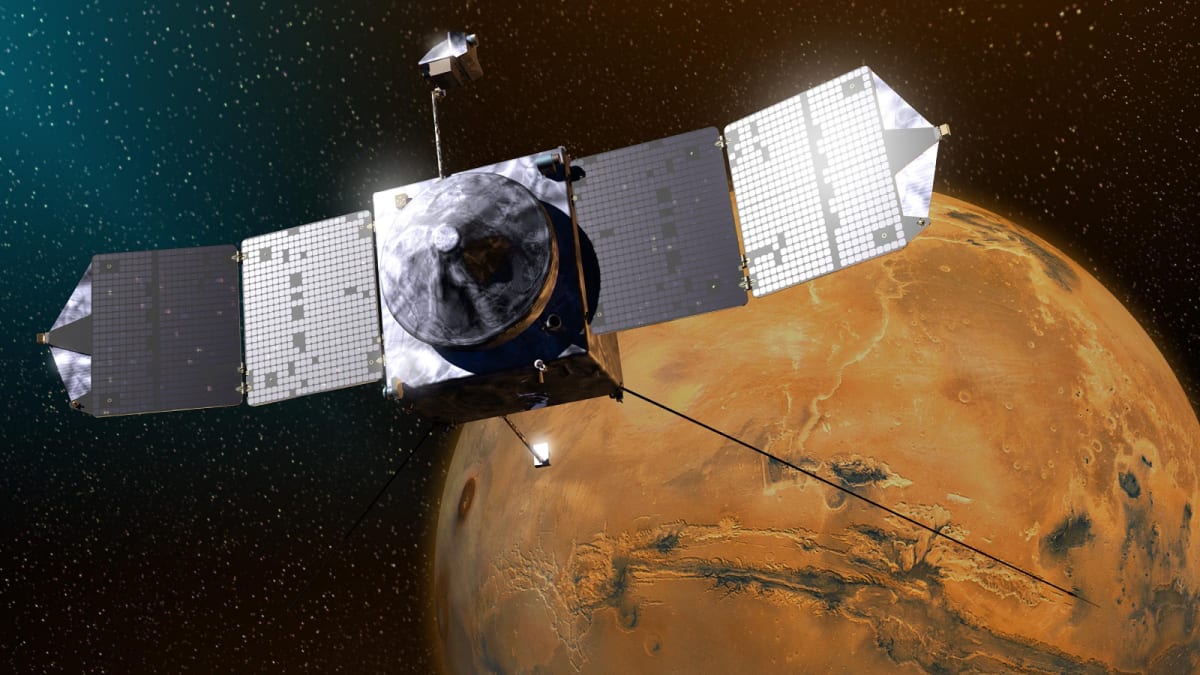
NASA's MAVEN spacecraft caught strange wiggles in Mars' atmosphere after a powerful solar storm slammed into the planet in December 2023. These unusual fluctuations turned out to be the Zwan-Wolf effect, a phenomenon experts believed was impossible on Mars.
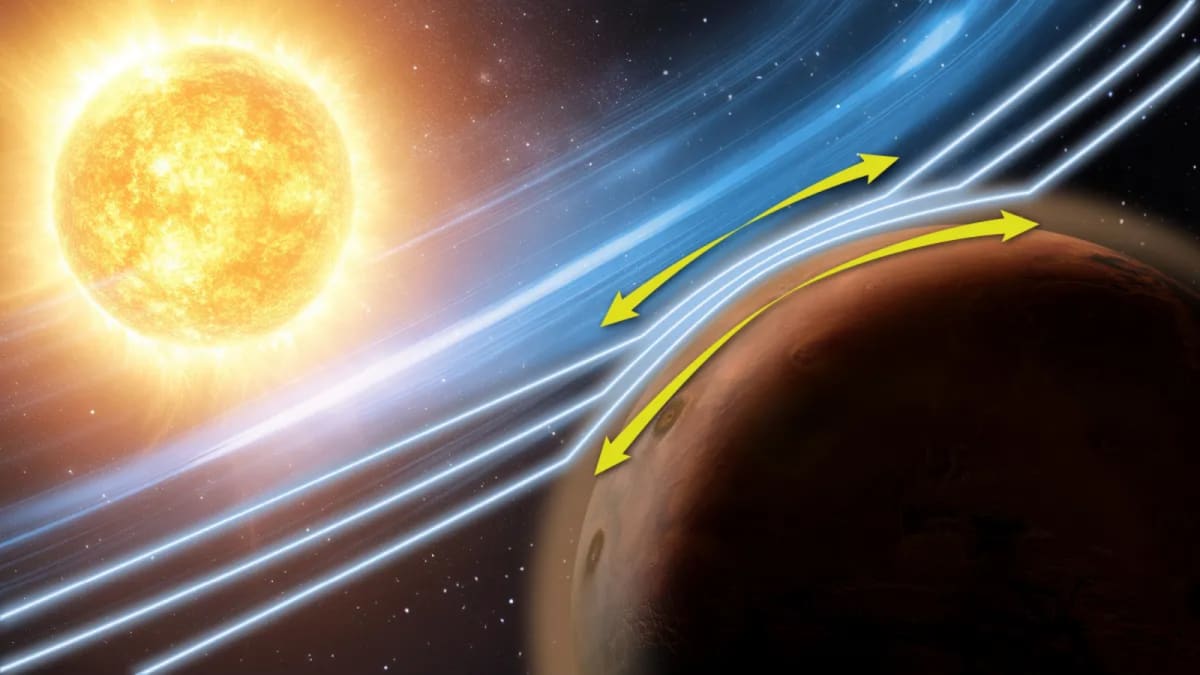
The Zwan-Wolf effect works like squeezing toothpaste from a tube, pushing charged particles through invisible magnetic structures. On Earth, this happens tens of thousands of miles above our planet, protected by the magnetic field our molten core generates.
Mars doesn't have that protection anymore. Its core solidified long ago, which is why the planet lost most of its atmosphere to solar storms over billions of years.
"When investigating the data, I all of a sudden noticed some very interesting wiggles," said study lead author Christopher Fowler, a planetary scientist at West Virginia University. "I would never have guessed it would be this effect."
The team found the phenomenon happening much closer to Mars' surface, just 125 miles up in the ionosphere where the atmosphere meets space. A localized magnetic field at the boundary where solar wind crashes into Mars' upper atmosphere powers the effect.
Why This Inspires
This discovery isn't just cool space science. Understanding how solar storms interact with Mars is essential for planning future missions and keeping astronauts safe.
Changes to the ionosphere affect spacecraft orbits, communication equipment, and radiation levels that reach the surface. Now that scientists know this phenomenon exists on Mars, they can better predict and prepare for these space weather events.
The findings also open doors to new discoveries. Researchers believe similar effects might be happening on Venus and Saturn's moon Titan, giving us a whole new way to understand how planets without magnetic fields respond to solar storms.
What seemed impossible a year ago is now revealing secrets that could protect the first humans who walk on Mars.
More Images

Based on reporting by Live Science
This story was written by BrightWire based on verified news reports.
Spread the positivity!
Share this good news with someone who needs it