Mars Express Reveals 3.5-Billion-Year-Old Ancient River
A stunning new image from space shows dark volcanic ash scattered across a massive Martian valley where water once flowed 3.5 billion years ago. The discovery adds another piece to the puzzle of Mars' watery past and hints at conditions that may once have supported life.
Scientists just released a breathtaking image of an ancient Martian river valley that tells the story of a world once filled with rushing water and volcanic fire.
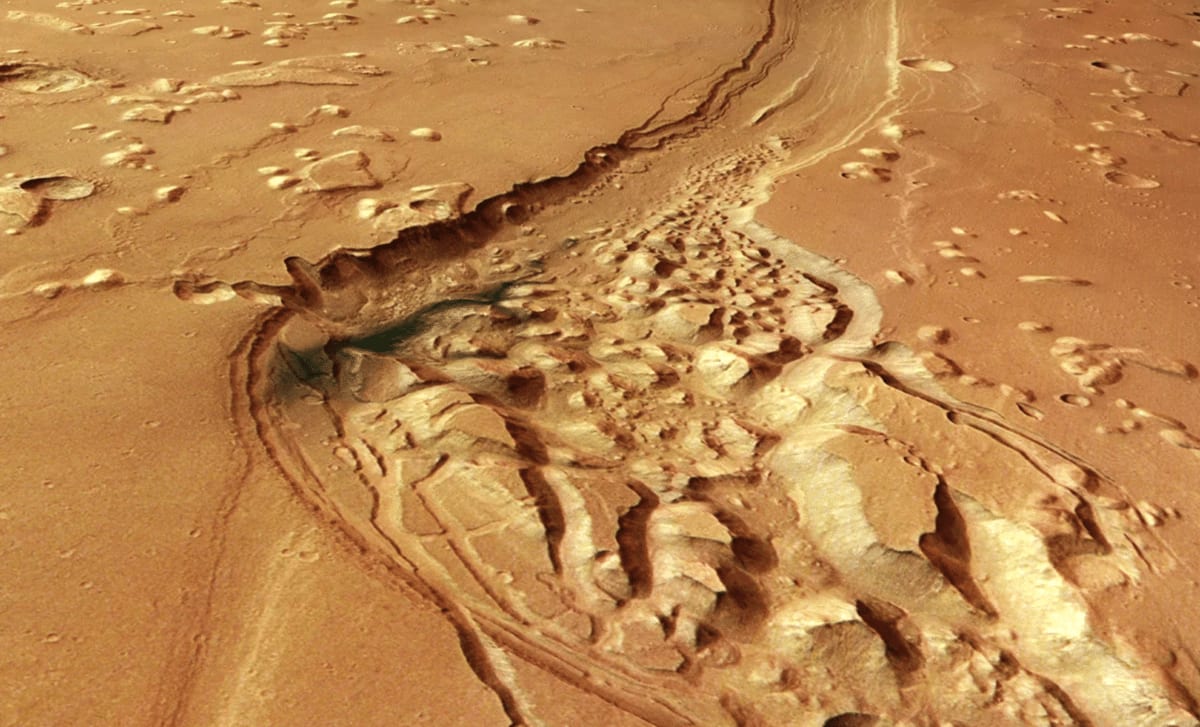
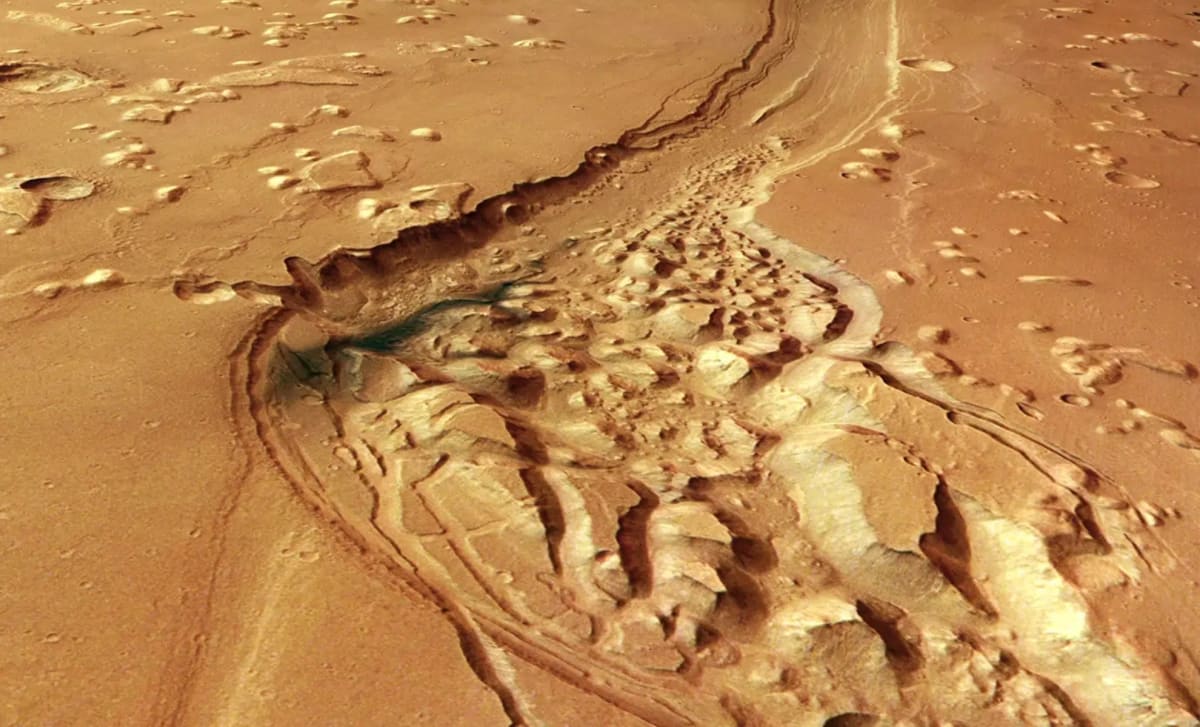
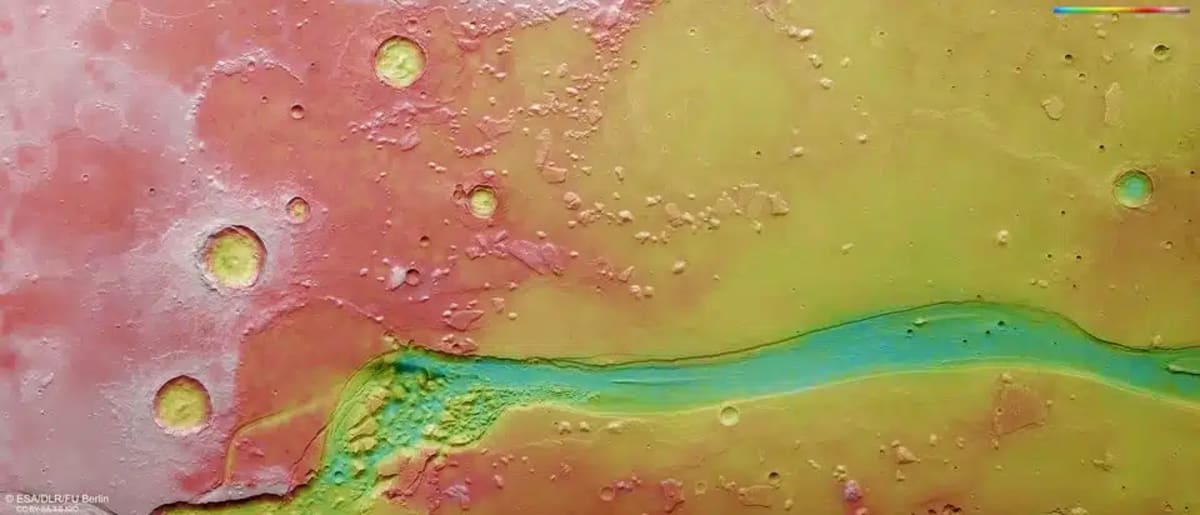
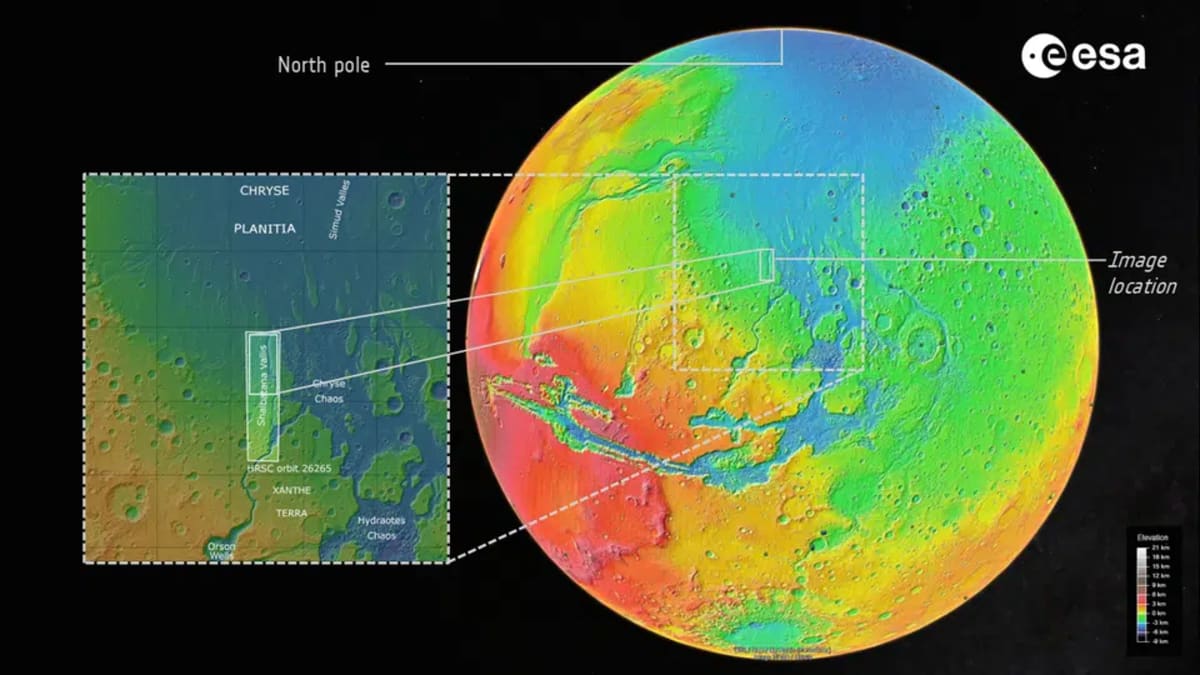
The European Space Agency's Mars Express spacecraft captured detailed views of Shalbatana Vallis, an enormous channel stretching nearly 800 miles across Mars' equator. The valley formed roughly 3.5 billion years ago when massive floods carved through the Martian surface, creating a waterway 6 miles wide and over 1,600 feet deep.
The most striking feature in the new images is mysterious dark material spread across the valley floor. Scientists believe powerful Martian winds swept volcanic ash into the ancient channel, painting it in shades of dark blue and black that remain visible today.
This discovery matters because it shows how multiple forces shaped early Mars. Water carved the valleys while volcanoes blanketed the landscape with ash and lava. Together, these processes may have created temporary conditions suitable for microbial life.
Researchers think the valley formed during catastrophic flooding events when underground water reservoirs burst onto the surface. These floods released enormous volumes of water in relatively short periods, carving channels at extraordinary speed and reshaping entire regions of the planet.
The Ripple Effect
Mars Express has been orbiting the red planet since 2003, quietly revolutionizing our understanding of our planetary neighbor. The spacecraft's high-resolution cameras reveal geological structures invisible in earlier observations, transforming Mars from a barren mystery into a world with a rich, complex history.
The mission has mapped ancient river networks, identified minerals formed in water, and documented sedimentary layers that prove Mars once supported stable liquid water. Each discovery strengthens the case that early Mars looked remarkably different from the cold desert we see today.
The dark ash deposits also point to Mars' volcanic past, when eruptions from giants like Olympus Mons blanketed huge regions. Scientists spotted unusual bulging structures near the ash that likely formed when buried ice melted and the ground above collapsed, creating distorted terrain still visible billions of years later.
Impact craters scattered throughout the area add yet another chapter to this geological storybook. Without plate tectonics or a dense atmosphere to erase them, these ancient scars preserve Mars' history across immense time spans.
This single valley contains evidence of water, ice, volcanoes, and asteroid impacts all in one location. Scientists continue studying whether these overlapping environments created pockets where early Martian life might have gained a foothold.
After two decades in orbit, Mars Express continues revealing extraordinary details about a world that once flowed with rivers under volcanic skies.
More Images

Based on reporting by Google News - Science
This story was written by BrightWire based on verified news reports.
Spread the positivity!
Share this good news with someone who needs it