Michigan Town Saved a Bird Species From 167 to 4,500
A tiny Michigan town with fewer than 2,000 people became the center of one of conservation's greatest comebacks, saving the Kirtland's warbler from near extinction. What started with just 167 birds in 1974 became a recovery story that rewrote the rules on how to save disappearing species.
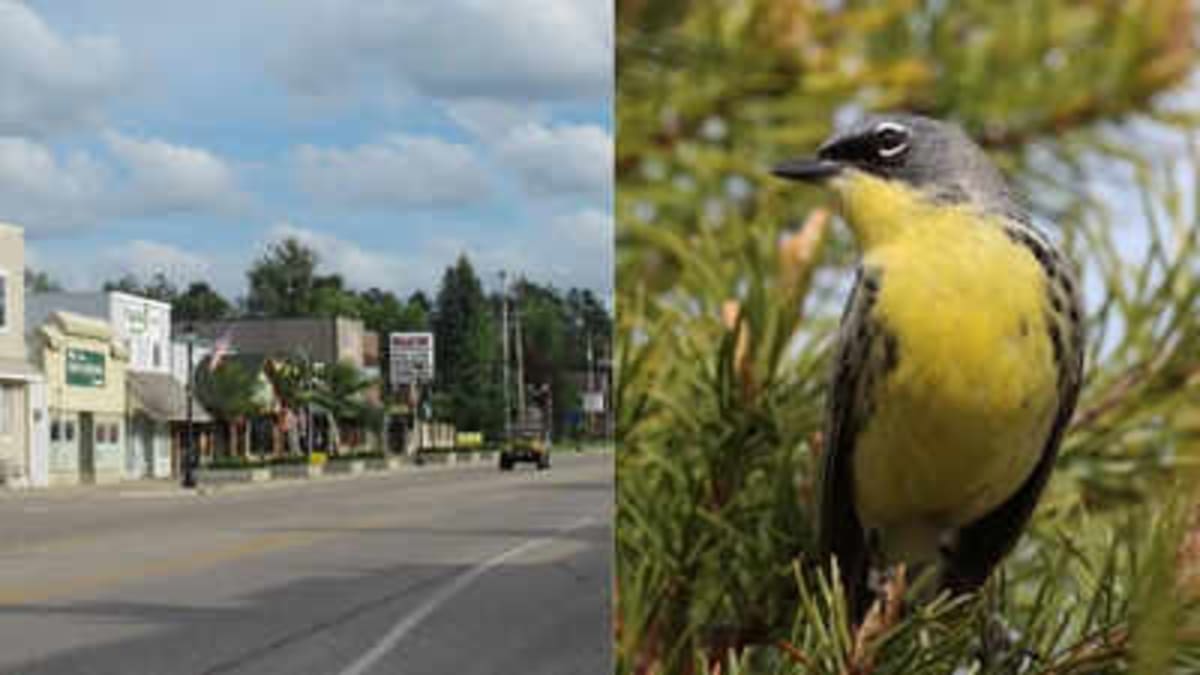
Mio, Michigan looks like any other small rural town, with fewer than 2,000 residents and miles of quiet forest. But this unassuming community pulled off something extraordinary: it helped save an entire bird species from the brink of extinction.
In 1974, only 167 male Kirtland's warblers remained in the wild. The small grey-and-yellow songbird was disappearing because its home was vanishing.
Unlike birds that can adapt to different environments, the Kirtland's warbler is extremely picky. It nests almost exclusively in young jack pine forests between five and 20 years old.
For centuries, wildfires naturally created these habitats by clearing old trees and making room for new growth. When fire suppression became common across Michigan, the cycle broke down.
As fewer fires occurred, fewer young forests appeared. The trees that remained simply grew too old for the warblers to use.
Wildlife agencies and forestry experts developed a bold plan centered around Mio, where much of the remaining habitat existed. Instead of waiting for natural fires, they would actively recreate the conditions the birds needed.
Teams harvested aging forests and replanted them with jack pine in a continuous cycle. They used controlled burns and clear-cutting to mimic what wildfires once did naturally.
The program eventually grew to manage 76,000 hectares of land specifically for the warbler. Conservationists also controlled brown-headed cowbirds, which laid eggs in warbler nests and reduced breeding success.
The strategy required extraordinary patience. Trees take years to mature, and the work had to continue season after season with no guarantee of success.
The Ripple Effect
The results exceeded every expectation. From just 167 singing males in 1974, the population climbed steadily over decades until it surpassed 4,500 birds.
In 2019, the Kirtland's warbler was officially removed from the endangered species list. The milestone once seemed impossible.
The recovery proved that focusing on habitat restoration rather than just protecting individual animals can reverse even the most dire declines. It showed that small communities can lead massive conservation wins.
The work continues today because young forests don't stay young forever. Without ongoing management, suitable habitat would disappear within decades.
But Mio's commitment hasn't wavered. The town that helped rescue a species from extinction continues to give it a future, one forest at a time.
More Images



Based on reporting by Google News - Species Saved
This story was written by BrightWire based on verified news reports.
Spread the positivity!
Share this good news with someone who needs it