MIT Student Creates Devices That Decode Body's Hidden Signals
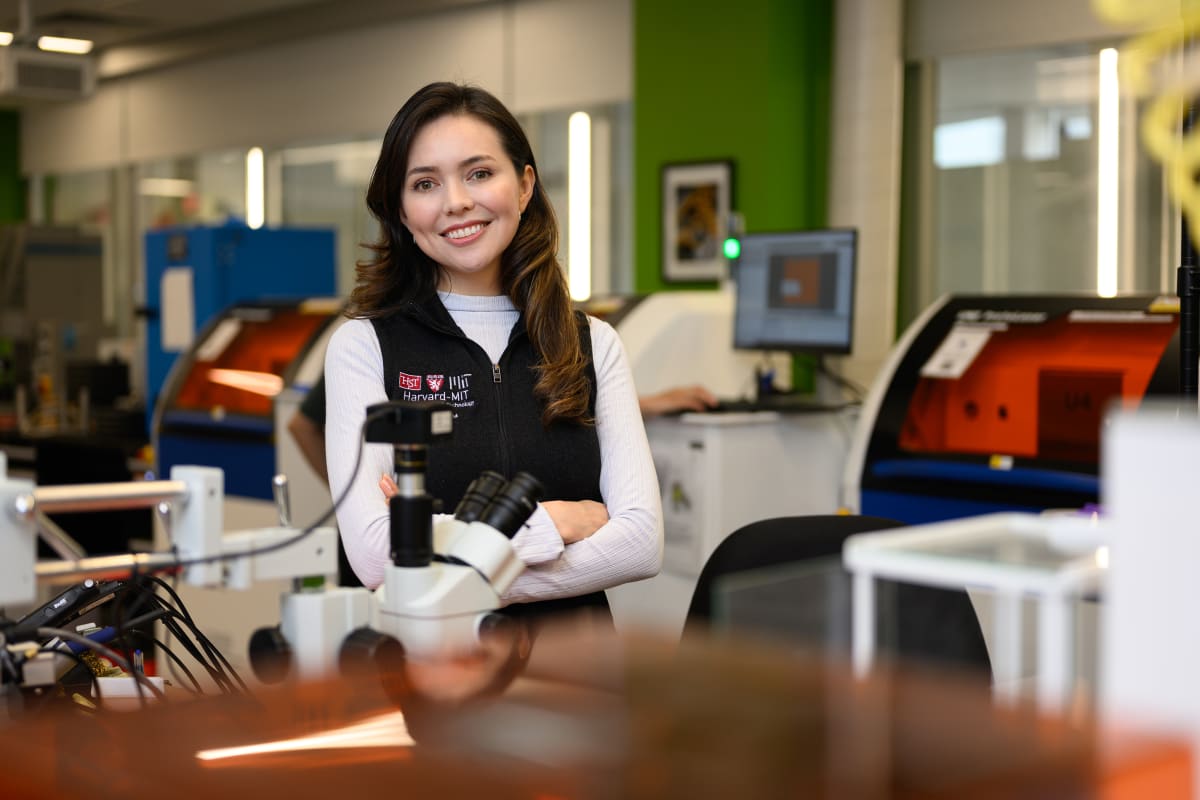
Diana Grass is developing soft technology that listens to how your brain and body talk to each other. Her work could help doctors catch diseases before symptoms even appear.
A medical interpreter from Colombia is building technology that could transform how doctors understand what's happening inside your body right now.
Diana Grass, a PhD candidate at MIT, spent years translating conversations between doctors and patients with neurological disorders. She watched clinicians rely on snapshots like lab tests and scans to understand constantly changing biological processes. "The body is communicating all the time," she realized. "We still lack the tools to understand its language."
Now she's creating those tools. Grass develops soft bioelectronic devices that slip seamlessly into the body's tissues without causing damage. These tiny technologies continuously monitor the signals your nervous system sends to coordinate everything from your immune response to organ function.
Her journey to this breakthrough started in an unexpected place. Before becoming a neuroscientist and engineer, Grass studied philology, the evolution of language and human communication. When people told her goals were impossible, she had a simple response: "I'll figure it out."
That determination carried her from Colombia to the United States, where her work as a medical interpreter sparked fascination with the brain. She returned to school for neuroscience, then joined an immunology lab that changed everything. "My work in immunology made me realize that the nervous system doesn't function in isolation," she says. It constantly talks to the immune system and organs to maintain the delicate balance that keeps us healthy.
Understanding that continuous conversation became her mission. Traditional medical tools capture isolated moments, but Grass's devices track the ongoing dialogue between brain and body. This window into real-time physiological communication could enable doctors to spot disease patterns before symptoms emerge.
The Ripple Effect
The implications reach far beyond the lab. Earlier disease detection means earlier treatment, when interventions work best. More precise therapies mean fewer side effects and better outcomes. Grass envisions a future where medicine predicts problems instead of just reacting to them.
For Grass, now a mother of two school-age children, the stakes feel personal. She's not just advancing science. She's working toward a world where families get more healthy years together, where her children's generation experiences medicine that truly understands the body's language.
Her devices represent a new frontier in bioelectronic medicine, technologies that could give doctors the ability to listen to what our bodies are trying to tell us all along. From studying ancient languages to decoding the body's hidden signals, Grass has found her life's work at the intersection of communication and healing.
The girl who refused to accept "impossible" is now making the impossible real, one soft device at a time.
Based on reporting by MIT News
This story was written by BrightWire based on verified news reports.
Spread the positivity!
Share this good news with someone who needs it