Moon and Mercury Meet Wednesday in Rare Sky Show
Skywatchers will witness a stunning celestial pairing on February 18th when a paper-thin crescent Moon drifts just minutes away from Mercury at sunset. Five planets will crowd the western sky in this rare alignment that marks the unofficial arrival of spring.
Nature is putting on a five-planet show this week, and you won't need a telescope to catch the main event.
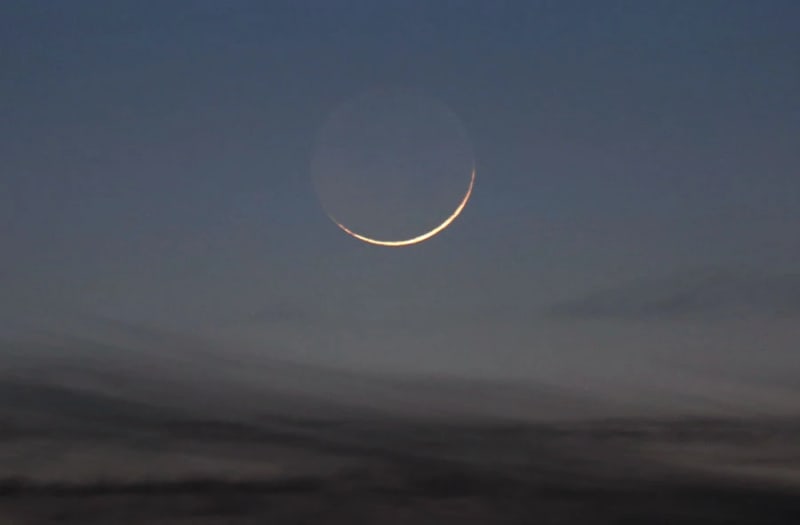
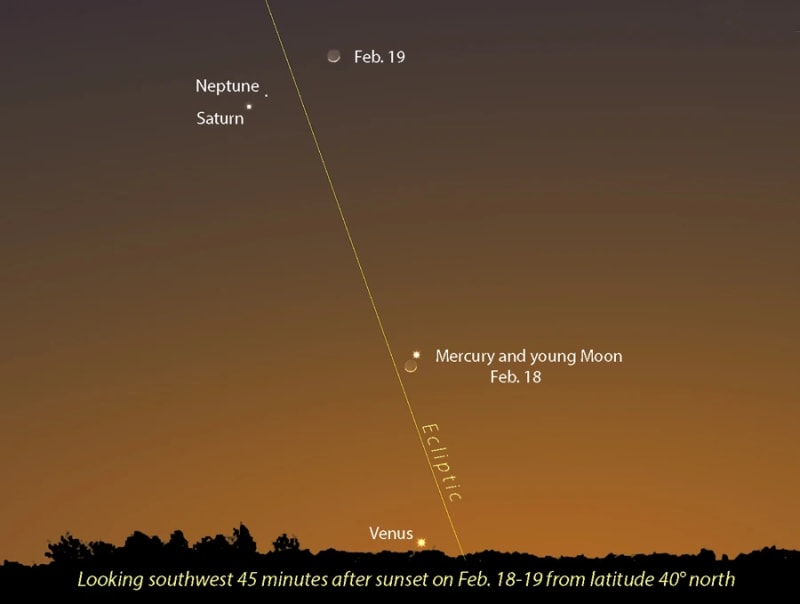
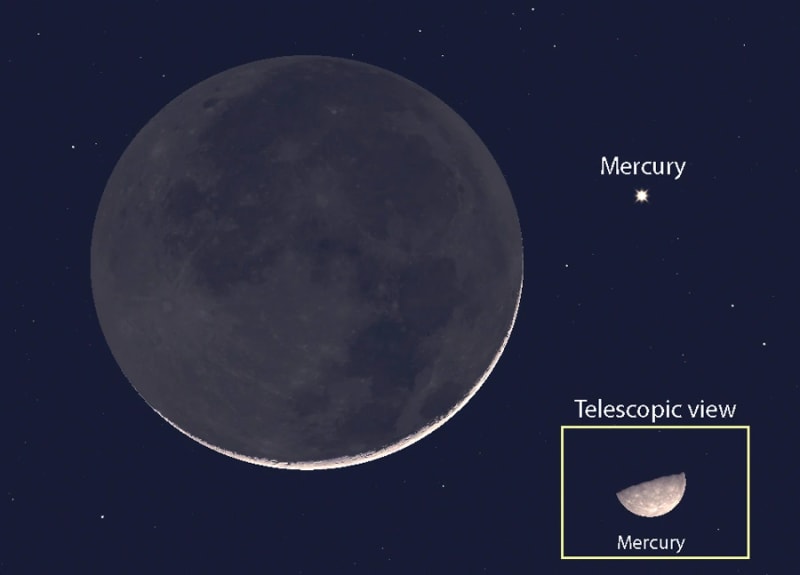
On Wednesday evening, February 18th, a crescent Moon just 1.5 days old will float incredibly close to Mercury in the western sky. The Moon will be so thin that only 2.4% of it will be lit, making it look more delicate than a bread crust. For viewers in the central United States, the Moon will pass within just 10 minutes of arc from Mercury, about one-third of the Moon's width.
The timing couldn't be better for Northern Hemisphere observers. In fall and winter, young Moons hug the horizon where bright twilight washes them out. But by February, the Moon's path tilts steeply upward, vaulting it almost directly above the sunset into darker sky.
Start watching about 30 minutes after sunset. As darkness deepens, you'll see something magical: the Moon's dark side glowing with Earthshine, light reflected from our own planet. Binoculars will reveal lunar seas and craters illuminated by this gentle blue-gray glow.
Mercury will shine at magnitude negative 0.6, nearly as bright as one of the sky's brightest stars. A small telescope at 100x magnification will show the planet's gibbous phase, giving you two crescents for the price of one. Both worlds share surprisingly similar reflectivity, each bouncing back only 9 to 12% of the sunlight they receive.
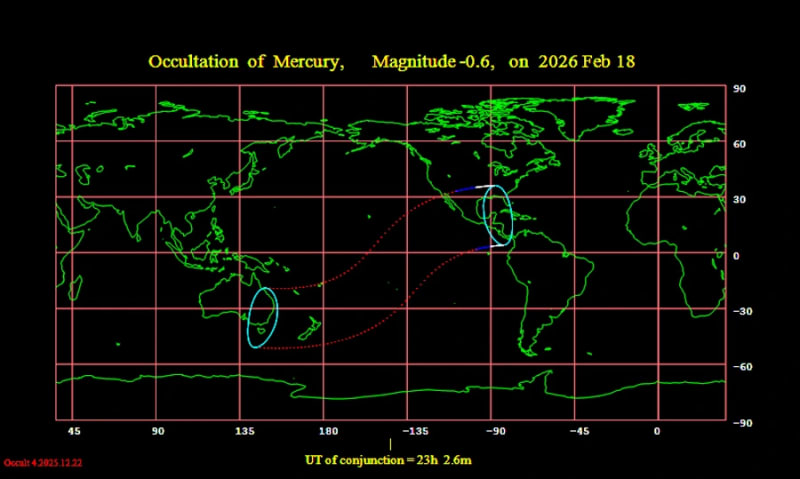
Lucky observers in southern states from western Florida through far southern Arizona will see the Moon actually pass in front of Mercury, blocking it completely. Cities including Miami, Atlanta, Dallas, and New Orleans fall within this narrow occultation zone.
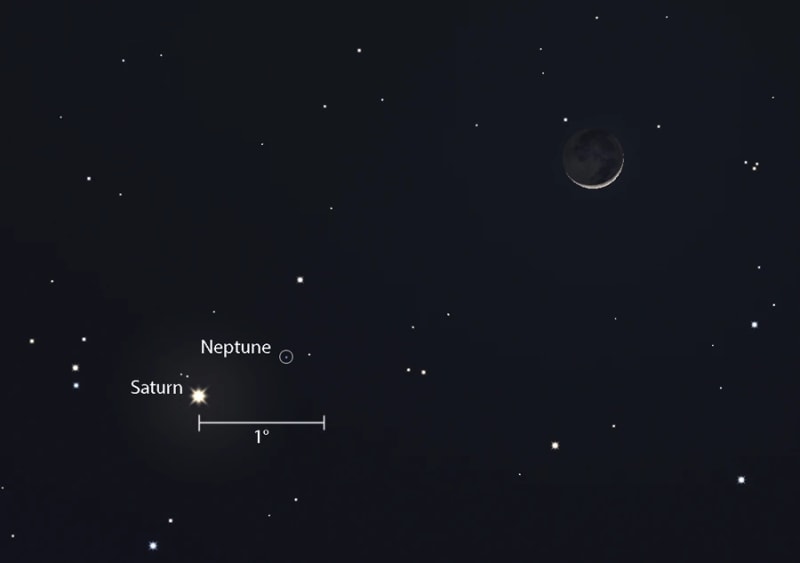
The celestial traffic jam doesn't end there. Venus will hover 7 degrees below Mercury, while Saturn and Neptune sit higher in the sky. The next evening, February 19th, the Moon will drift past Saturn and Neptune, which recently completed their own rare triple conjunction.
Why This Inspires
This alignment reminds us that cosmic clockwork continues its ancient dance regardless of what happens on Earth. The same Moon that guided ancient navigators and inspired poets still performs its monthly ballet, and now we can share these moments instantly with skygazers worldwide. These fleeting celestial meetings cost nothing to witness and belong equally to everyone under the same sky.
Find a spot with a clear western horizon and bring binoculars if you have them. The show begins at sunset and lasts until twilight fades completely.
More Images
Based on reporting by Sky & Telescope
This story was written by BrightWire based on verified news reports.
Spread the positivity!
Share this good news with someone who needs it