Moon's Deep Secrets May Wait at Artemis Landing Sites
Scientists discovered that an ancient impact scattered rocks from deep inside the Moon right where future astronauts plan to land. These rare mantle rocks could reveal secrets about the Moon's earliest history.
Future astronauts exploring the Moon's south pole might walk right over some of the most valuable rocks in the solar system without even knowing it.
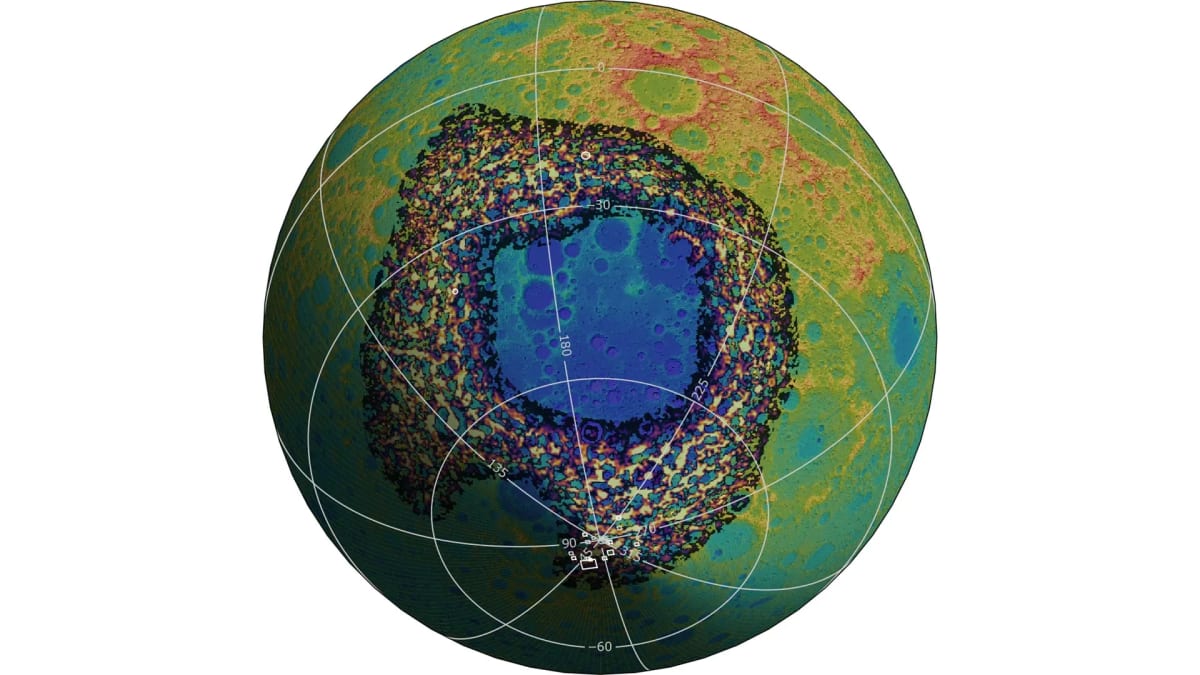
Scientists studying the Moon's largest crater just made an exciting discovery. The ancient South Pole-Aitken basin, formed billions of years ago by a massive collision, may have scattered pieces of the Moon's deep interior across regions where NASA's Artemis astronauts plan to land.
Researchers from Southwest Research Institute recreated the colossal impact using advanced computer simulations. They found that a large object with an iron core struck the Moon at a shallow angle, carving out a basin so deep it punched through the outer crust and blasted material from the lunar mantle into space.
Much of that ejected material eventually fell back down. Some of it landed in areas astronauts could actually reach during upcoming missions.
"The basin offers scientists a rare opportunity to study the Moon's earliest history," said Dr. William Bottke, director of the Center for Lunar Origin and Evolution. The collision struck with such force that it excavated portions of the lunar mantle normally buried miles below the surface.
A second study used high-resolution gravity measurements to map where this precious material ended up. The team discovered that mantle rocks aren't just sitting in the deepest parts of the basin far from exploration sites. Instead, they're spread throughout the south polar region, including areas on the Artemis mission shortlist.
Later impacts inside the massive basin may have dug into these buried deposits and exposed them at the surface. That means astronauts won't need specialized drilling equipment to study rocks that formed in the Moon's deep interior billions of years ago.
Why This Inspires
This discovery transforms the Artemis missions from historic achievements into scientific goldmines. Astronauts won't just be returning to the Moon. They'll be collecting samples that reveal what our nearest neighbor looked like in its infancy, shortly after it formed from the debris of another massive collision with early Earth.
The mantle rocks contain clues about the Moon's composition, how it cooled and solidified, and what happened during the chaotic early days of our solar system. Questions that have puzzled scientists for decades might finally get answers from rocks sitting right where astronauts plan to step.
Previous ideas suggested the most valuable material would be concentrated far from potential landing sites. The new research changes everything, showing that scientific treasure is within reach of carefully planned missions.
"The combination of impact and gravity modeling gives us a powerful roadmap," Bottke said. "It tells us not just how the basin formed, but where to look for the rocks that can answer some of the Moon's deepest questions."
The South Pole-Aitken basin ranks among the oldest preserved structures in our entire solar system, making it an irreplaceable time capsule from an era we can barely imagine.
Based on reporting by Science Daily
This story was written by BrightWire based on verified news reports.
Spread the positivity!
Share this good news with someone who needs it