NASA Balloon Mission Hunts Universe's Most Powerful Particles
A NASA experiment just spent 23 days floating above Antarctica, using an ice sheet the size of a continent to catch signals from the most energetic particles in the universe. The mission could reveal secrets about black holes, neutron stars, and physics beyond anything we can create on Earth.
Scientists just turned Antarctica into the world's largest particle detector, and the data they collected could unlock mysteries about the most extreme corners of our universe.
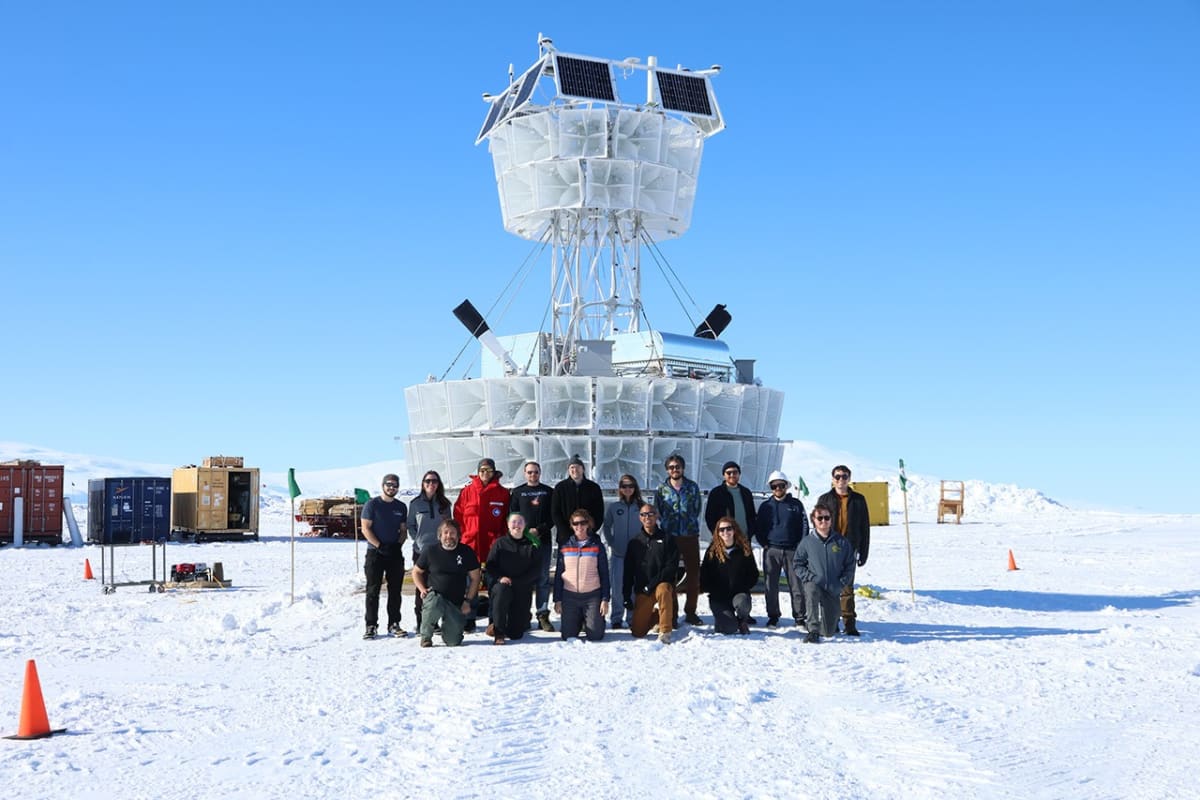
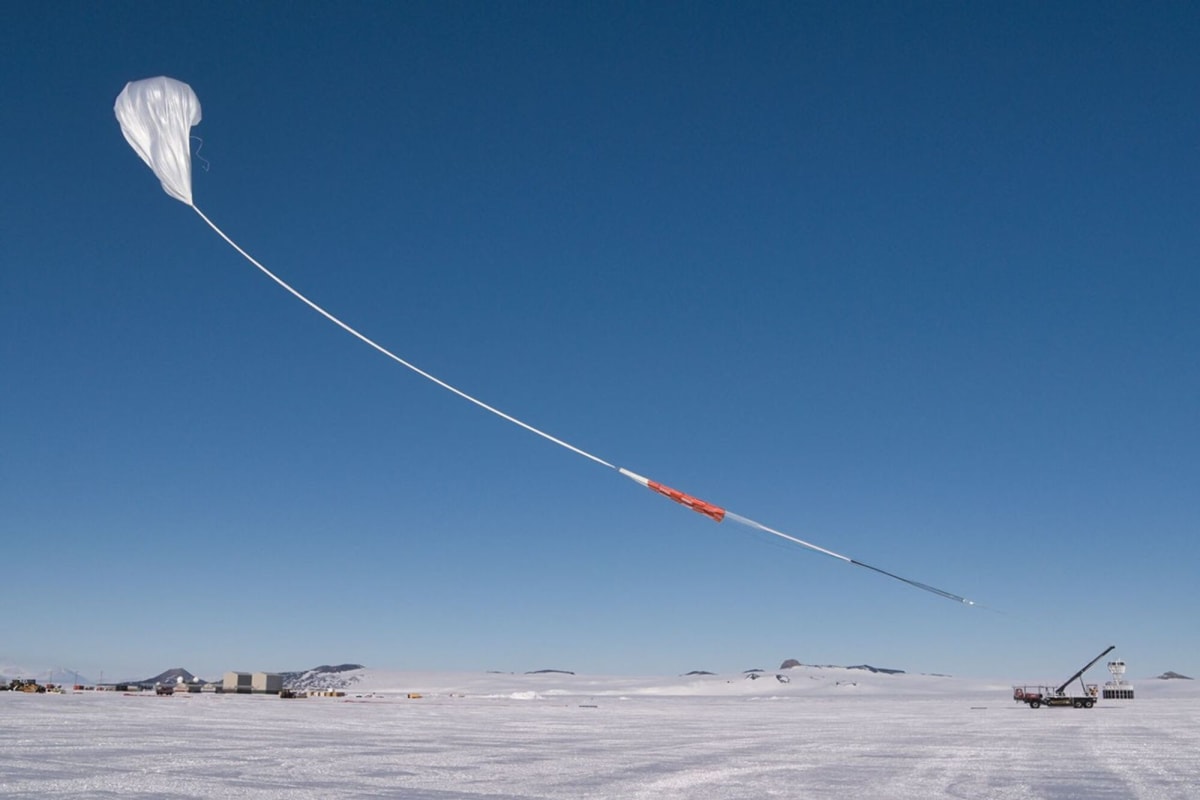
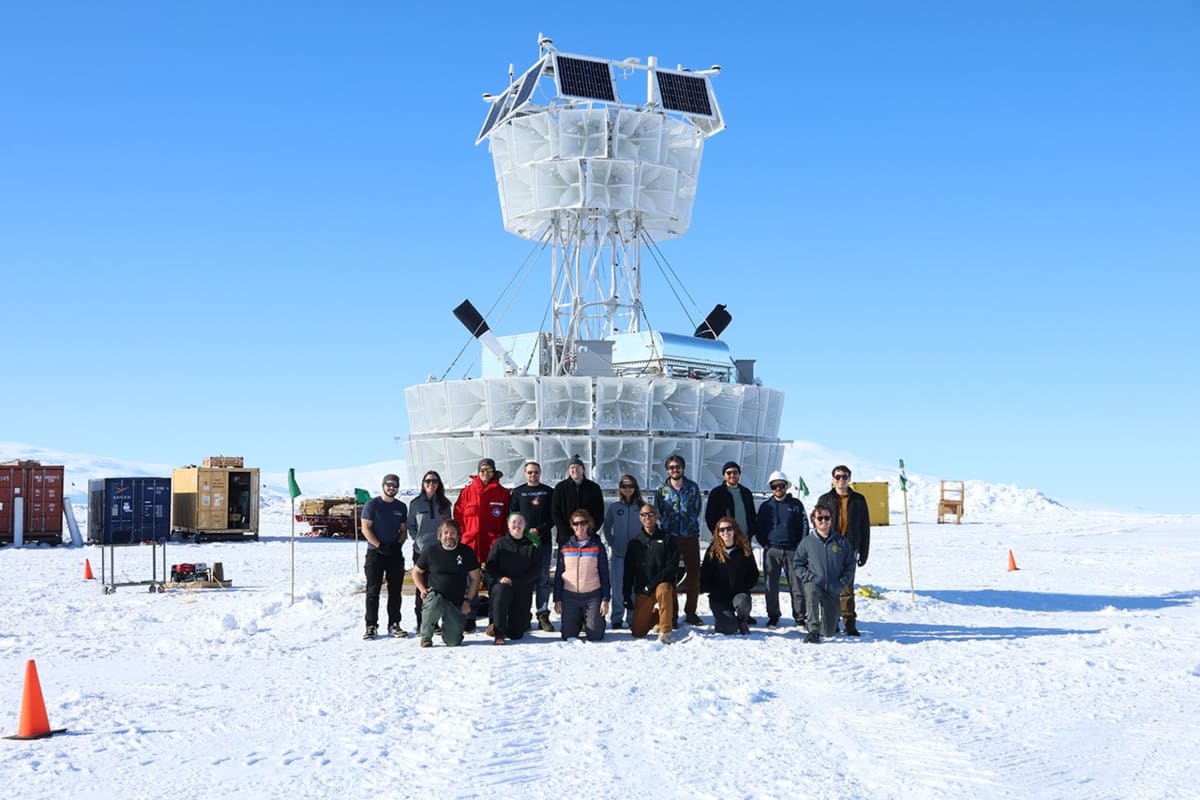
The Payload for Ultrahigh Energy Observations, or PUEO, launched on December 20, 2025, from a NASA facility near McMurdo Station. For 23 days, this instrument floated 120,000 feet above the frozen continent, scanning for radio signals from ultra-high energy neutrinos passing through the ice below.
These aren't ordinary particles. Neutrinos at this energy level come from the universe's most violent events: supermassive black holes devouring matter, neutron stars colliding, and cosmic accelerators we're only beginning to understand. Because they travel in straight lines across vast distances without being absorbed, they carry pristine information about places and processes we can't observe any other way.
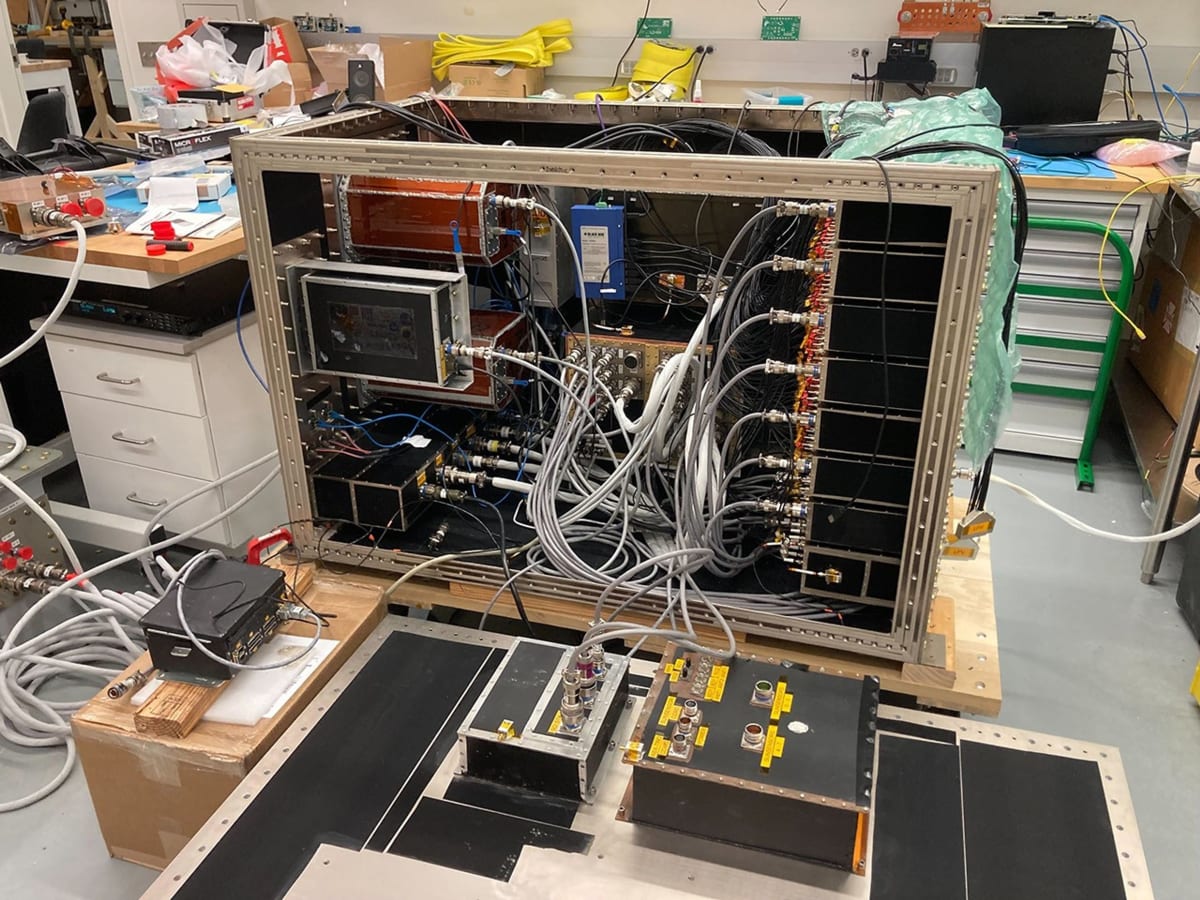
PUEO represents a giant leap forward from its predecessor, ANITA, which flew four successful missions between 2006 and 2016. The new instrument packed twice the antenna collecting area into the same space, thanks to clever engineering that made the antennas smaller and more efficient. A breakthrough trigger system allowed PUEO to detect much weaker signals by combining input from multiple antennas in real time.
The mission also featured a deployable low-frequency instrument that unfurled after reaching altitude. This addition extended PUEO's ability to detect cosmic ray showers in Earth's atmosphere, either directly or reflected off the ice below.
After landing just 120 miles from the South Pole, the entire payload was successfully recovered, including all data drives. The team is now beginning the painstaking work of analyzing what they found, a process that could take up to a year given the complexity of the signals.
Why This Inspires
What makes this mission particularly exciting is how it pushes boundaries on multiple fronts. PUEO tests fundamental physics at energies far beyond what the world's most powerful particle accelerators can achieve. The Large Hadron Collider, humanity's most advanced physics lab, can't come close to the energies these cosmic particles carry naturally.
The technological innovations developed for PUEO won't stop in Antarctica. Engineers are already applying these advances to future missions that could use the moon's surface as a detector for ultra-high energy cosmic rays, opening entirely new ways to study the universe.
Led by Dr. Abigail Vieregg at the University of Chicago, the PUEO team demonstrated how creative problem-solving can turn natural environments into scientific instruments. They transformed an ice sheet into a detector millions of times larger than anything we could build.
The mission proves that some of science's biggest questions don't always require the biggest facilities, just the right combination of innovation, persistence, and looking at the world in new ways.
More Images
Based on reporting by NASA
This story was written by BrightWire based on verified news reports.
Spread the positivity!
Share this good news with someone who needs it